

VOO shattered a barrier no ETF has cracked, here’s what it means
A significant portion of an investor’s equity exposure may already reside within their retirement account, often without their full awareness.
Vanguard’sS&P 500 ETF, trading under the ticker VOO, officially crossed $1 trillion in net asset value on June 2. A $1.7 billion single-session inflow pushed the fund past the threshold and secured a first in ETF industry history, Bloomberg reported.
VOO now commands the title of the world’s largest exchange-traded fund, with its closest competitors trailing by hundreds of billions of dollars. But the record also raises a sharper question about whether one fund has accumulated too much weight in too few stocks.
How VOO raced from third place to the trillion-dollar threshold
Five years ago, VOO held roughly $225 billion in assets and ranked as the smallest of the three major S&P 500 ETFs, Morningstar reported.
That standing has since reversed entirely, driven by a relentless tide of new investor capital favoring low-cost indexing over active management.
Between June 2021 and May 2026, investors poured more than $400 billion of net new money into VOO, Morningstar analyst Daniel Sotiroff confirmed.
The iShares Core S&P 500 ETF attracted an estimated $250 billion over the same stretch, and the SPDR S&P 500 ETF drew roughly $88 billion, Sotiroff noted.
When VOO hit $1 trillion, the iShares fund held just under $861 billion, and the SPDR product sat at about $786 billion.
The cost advantage behind VOO’s rise is simple but compounds powerfully across decades inside retirement plans and taxable accounts. The fund charges an annual expense ratio of 0.03%, which translates to $3 for every $10,000 invested, while SPY charges 0.09%.
The concentration risk is building inside VOO’s top holdings
Technology stocks currently account for over 35% of the index, nearly triple the financial sector's 12% weighting, according to Vanguard's VOO fund profile.
The so-called Magnificent Seven group of tech giants now represents just over one-third of the S&P 500’s full market value.
The ten largest individual holdings control roughly 35% to 39% of VOO’s portfolio, and that share rises whenever large-cap tech outperforms the rest.
More Vanguard:
- Vanguard names 401(k) oversights that hurt your retirement
- Vanguard drops playbook on retirement income
- Vanguard warns workers losing thousands in 401(k)s
“When a few richly valued companies or sectors power most of the market gains, market-cap weighting may overexpose the strategy to the fluctuations of one stock or sector," Morningstar associate manager research analyst Brendan McCann wrote in his April 2026 research note on VOO.
A meaningful selloff in Nvidia, Apple, or Microsoft would cascade through VOO far harder than the decline of any single mid-cap holding would.
The S&P 500 trades near a forward price-to-earnings ratio of about 21, above both its five-year average of 19.9 and its 10-year average of 18.9, according to FactSet, leaving limited room for the kind of valuation expansion that powered recent gains.
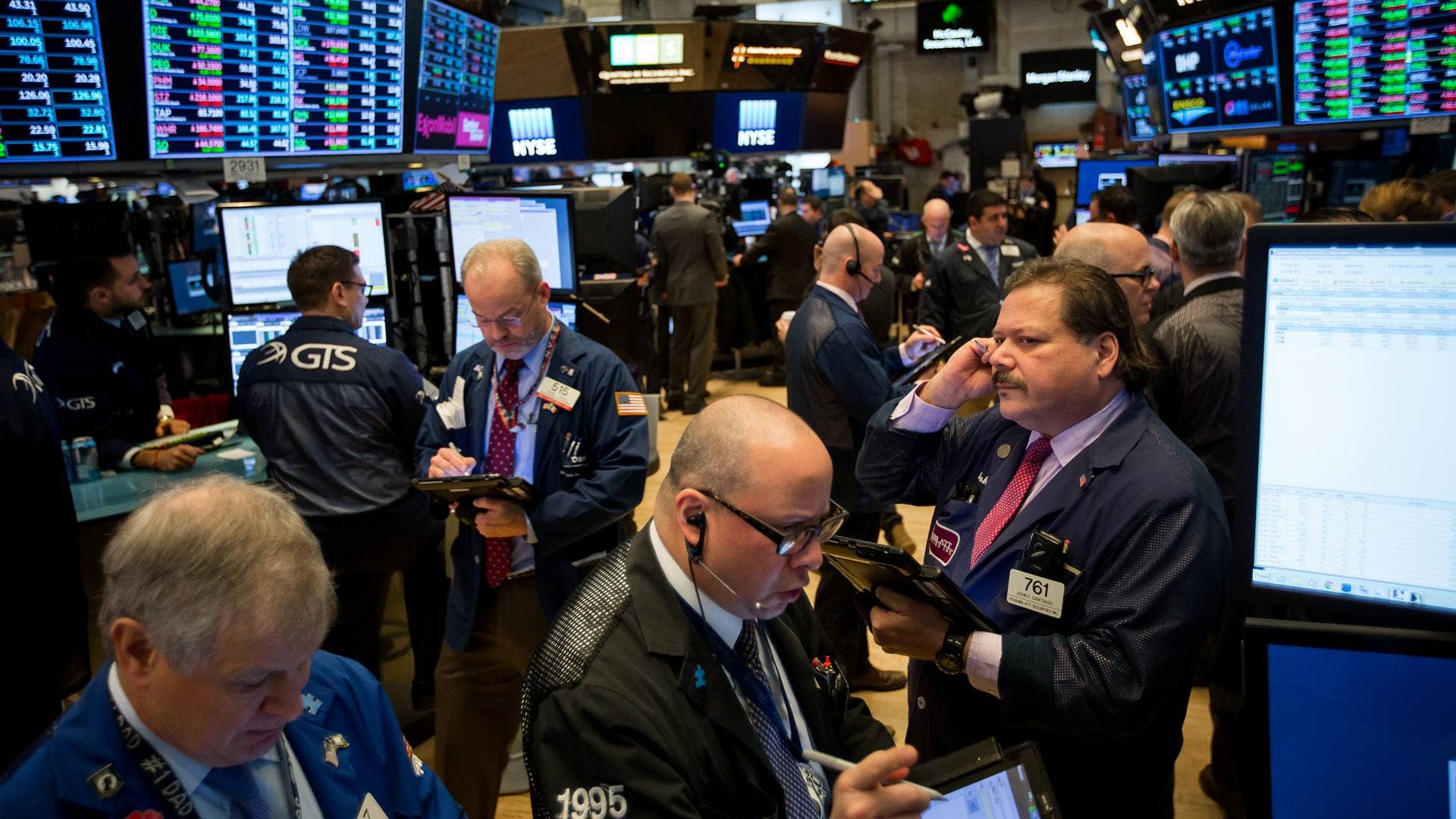 VOO’s heavy tech concentration is raising risk as top stocks dominate returns and valuations sit above long-term averages.
Bloomberg&solGetty Images
What the record reveals about passive investing’s hold on global capital
VOO’s milestone is part of a structural shift now spanning the entire global investment industry with no clear sign of reversal.
Exchange-traded funds worldwide held nearly $22 trillion in assets at the end of April, more than tripling from about $6.4 trillion at the beginning of 2020, according to ETFGI .
The ETF industry has logged more than six consecutive years of monthly net inflows, drawing capital largely from traditional actively managed mutual funds.
VOO alone attracted about $69 billion in net inflows through early June 2026, leading all global ETFs in capital-gathering capacity.
Ben Johnson, head of client solutions and asset manager at Morningstar, told Bloomberg in June 2026 that VOO's $1 trillion milestone reflects how completely the ETF has shifted from a niche product to the mainstream default for retail investors worldwide.
If newly public companies such as SpaceX or Anthropic ultimately meet S&P 500 eligibility criteria, their inclusion would trigger mechanical rebalancing in index funds like VOO, redirecting passive capital in proportion to their index weight.
Hidden portfolio overlap in 401(k) accounts most investors miss
Investors who own VOO inside a 401(k) or individual retirement account may not realize they already carry substantial overlap with other funds in their lineup.
Many target-date retirement funds and balanced portfolios allocate a large share of domestic equity holdings to the same mega-cap names that dominate VOO.
That duplication amplifies the impact of any technology-driven selloff, because positions across funds that seem distinct all track the same underlying basket of securities.
The information technology and communication services sectors are highly correlated because they share exposure to cloud, advertising, and AI tailwinds.
Whether VOO still belongs as a core portfolio position from here
VOO delivered an annualized return of 14.8% over the ten years through year-end 2025, and the S&P 500 gained about 11% year-to-date in 2026, Morningstar confirmed.
McCann acknowledged that VOO’s low turnover and broad diversification across roughly 500 stocks outweigh the concentration risks for investors who maintain long time horizons.
For those seeking to reduce mega-cap tilt without abandoning the S&P 500, equal-weight index funds cap every constituent at an identical portfolio share, McCann noted.
The Vanguard Total Stock Market ETF offers another path by layering mid-cap and small-cap companies onto the same low-cost passive structure.
VOO’s $1 trillion milestone confirms that passive index investing has moved from an alternative strategy to the dominant force in American wealth building.
Related: Fidelity reveals ETF trading traps to avoid


You May Also Like

Critical USDT0 Response to Drift Hack Exposes Stark Contrast in Stablecoin Security Protocols
CNN's Brianna Keilar levels Republican's defense of Trump election scheme with fact-check

Kalshi sues Illinois officials over new prediction market law, citing federal conflict



