

The Iran Deal Just Pushed the Dow Up 400 Points — But One Risk Remains
TLDR
- The Dow Jones rose around 419 points after the US and Iran signed an interim peace deal
- The S&P 500 gained 1.1% and the Nasdaq climbed 1.4%, led by tech stocks
- Brent crude oil fell about 3%, with national gas prices dipping below $4 a gallon
- The Federal Reserve held rates but nine policymakers now forecast a hike by end of 2026
- Thursday is the last trading day this week as markets close Friday for Juneteenth
President Donald Trump and Iran’s president signed a memorandum of understanding on Wednesday. The interim peace deal raised hopes of more oil supply reaching global markets.
The signing came earlier than expected. It had previously been scheduled for Friday.
The deal went into effect Thursday, potentially reopening the Strait of Hormuz to commercial traffic and lifting sanctions on Iranian oil. Talks on longer-term issues, including Iran’s nuclear program, are set to continue over the next 60 days.
Markets responded quickly. The Dow Jones Industrial Average gained around 419 points, or 0.8%, on Thursday morning.
The S&P 500 rose 1.1% and the Nasdaq Composite gained 1.4%. Tech stocks led the recovery after being hit hard the day before.
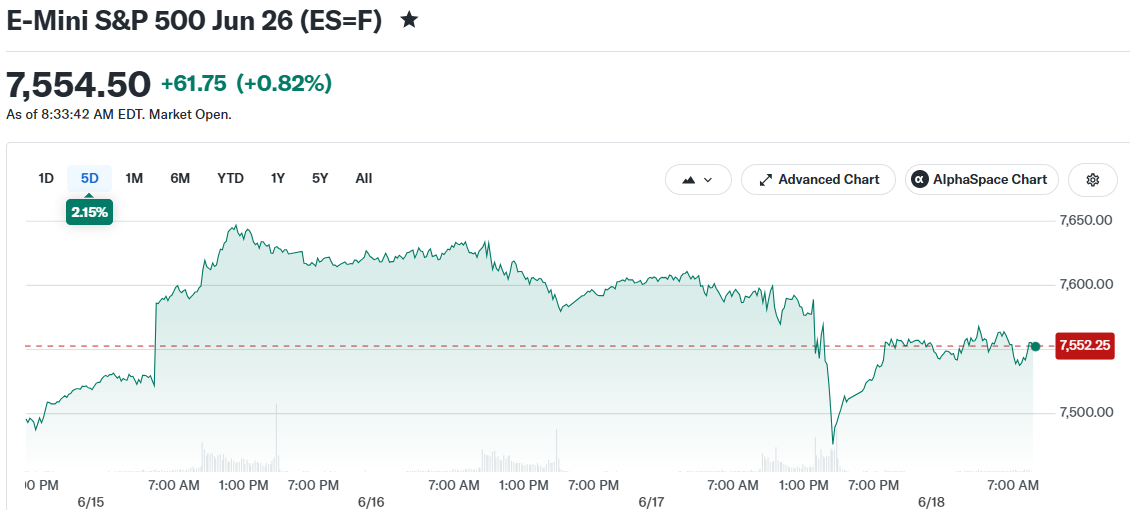 E-Mini S&P 500 Jun 26 (ES=F)
Oil Prices Drop, Gas Falls Below $4
Brent crude futures fell as much as 3% after the deal was announced. The drop reversed most of the price gains tied to the recent conflict in the region.
Oil prices recovered some ground as the first ships crossed the strait. Brent settled around $78 a barrel and West Texas Intermediate came in just above $74.
The national average price for a gallon of regular unleaded gasoline dropped to $3.9987 on Thursday. That is the lowest price since March 30, according to Dow Jones Market Data.
Lower oil prices have helped ease inflation worries. Bond yields also fell as Treasury prices rose.
Analysts at 22V Research said lower oil prices and falling 10-year Treasury yields would be positive for tech, consumer discretionary, and communications stocks.
Fed Rate Hike Concerns Linger
The Federal Reserve held rates steady on Wednesday. But the central bank’s tone shifted in a hawkish direction.
Nine Fed policymakers forecast at least one rate increase before the end of 2026. That came as inflation remained elevated and the job market stayed steady.
Jobless claims data released Thursday came in slightly above forecasts but cooled compared to the prior week. The mixed data did little to change the Fed’s outlook.
Analysts warned that a rate hiking cycle could raise recession risks. One research note described the market as likely to be “violently flat,” bouncing between gains and losses without a clear trend.
The Bank of England held its rates steady too, as central banks around the world watched the Iran situation.
Thursday was the final trading day before the long weekend. US markets will be closed Friday in observance of the Juneteenth holiday.
The post The Iran Deal Just Pushed the Dow Up 400 Points — But One Risk Remains appeared first on CoinCentral.


You May Also Like

Why Bitcoin Just Captured Attention with the Parabolic 7 Launch

Bitcoin World Reveals Top 5 Stunning Gainers And Losers
Global Bond Markets Split as Fed Rate-Hike Fears Collide with Iran Peace Hopes



