

👨🏿🚀TechCabal Daily – MTN is going green
Good morning 
What’s your internet like? Due to the rain, service has been intermittent, and I’ve been on the hunt for a semi-decent Internet Service Provider. Despite all my searching, it’s not been great. But the Ivorians are getting Starlink, which marks another notch in the satellite provider’s achievements.
—Zia
Get smarter about Francophone Africa with our newsletter, Francophone Weekly—the startups, tech policies, and institutions building the pipelines for ecosystem growth.
- Bolt is verifying its South African passengers
- Starlink is starting operations in Côte d’Ivoire
- Gabon’s national centre is coming soon
- MTN is going for clean energy
- World Wide Web 3
- Job Openings
mobility
Bolt is making South African passengers verify their identity before booking a ride
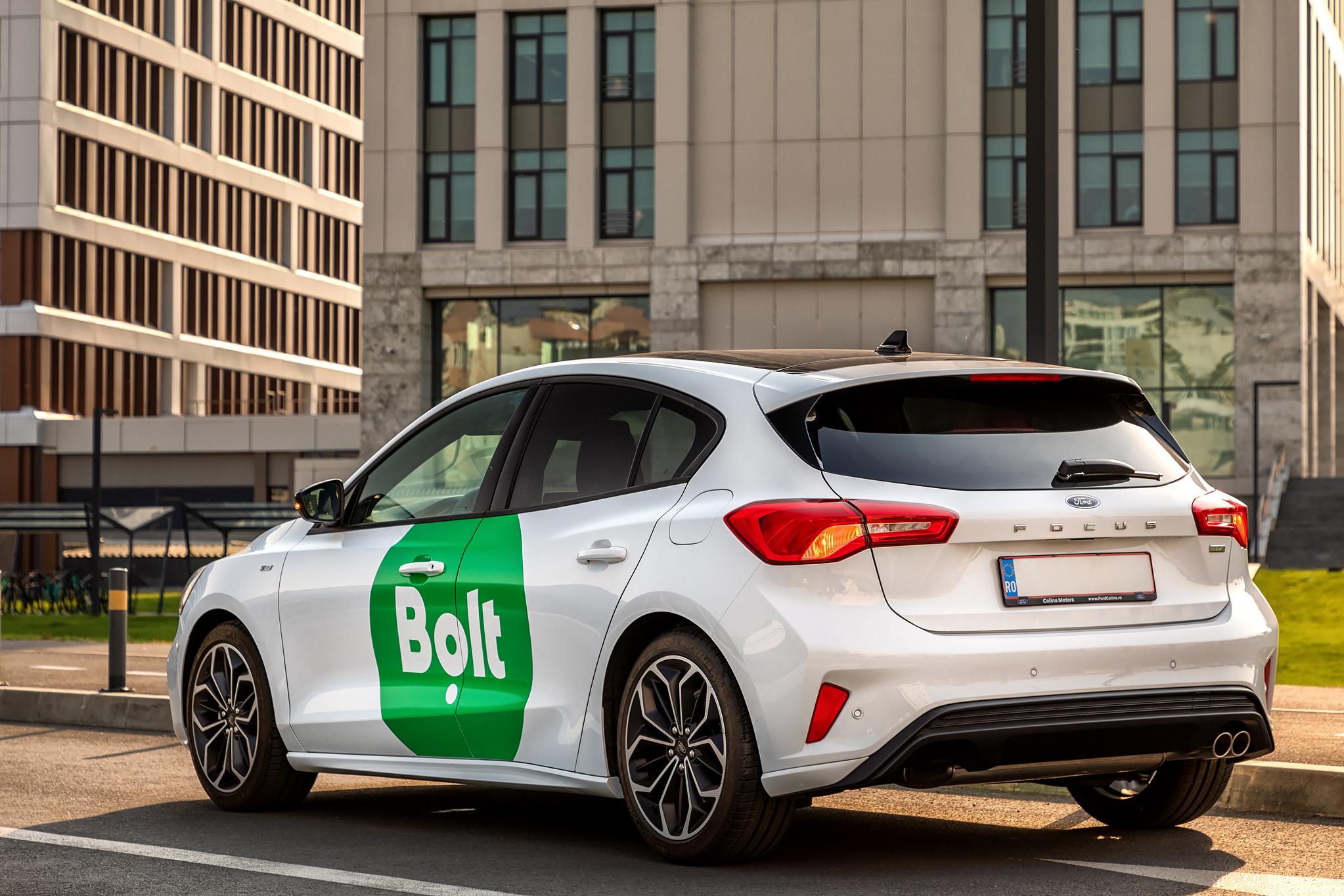 Image: Bolt
The days of ordering a ride with nothing more than a phone number may be numbered.
What happened? On Monday, Bolt announced updates to its South African platform that require passengers to upload their ID numbers and selfies before they can book rides. Bolt says the move is about safety and accountability.
Before anyone blames Bolt, drivers have been asking for this: If you’ve followed South Africa’s ride-hailing industry, you’d know that safety has become one of its major battlegrounds. Drivers have raised concerns about robberies, hijackings, and violent attacks, and driver associations, including the National E-Hailers Federation of South Africa, have pushed for platforms to verify riders the same way drivers are verified. They argue that drivers hand over licences, permits, vehicle information, and personal details to work on these platforms, so why should passengers remain anonymous?
It’s not happening in isolation: The rollout aligns with South Africa’s amended National Land Transport Act (NLTA), which seeks to formalise the country’s ride-hailing industry and introduce stronger safety measures for drivers and passengers. Still, not every proposal has been popular. Drivers have questioned requirements like vehicle branding, arguing that clearly marked e-hailing cars can become easier targets for criminals.
Is Bolt the first domino? When a major platform introduces identity verification and regulators push for greater accountability, competitors often move in the same direction. After all, nobody wants to be known as the platform where bad actors can hide behind fake profiles.
Still, whether riders see uploading a selfie as a reasonable trade-off for a safer trip may determine how quickly the rest of the industry follows.
We Have Secured the Bank of Ghana EPSP Licence.
Fincra has officially secured its Enhanced Payment Service Provider licence. This regulatory milestone authorizes Fincra to directly collect, process, and settle payments in Ghanaian Cedis, offering a highly streamlined financial pipeline for businesses operating within the region. Start here.
connectivity
Starlink to begin operations in Côte d’Ivoire
 Image: Tenor
For a company that seems to spend half its time arguing with regulators, Starlink is having a pretty good run in Africa.
What happened? Starlink has secured the licences it needs to begin operations in Côte d’Ivoire, where it will offer satellite internet services via its network of low Earth orbit satellites. The satellite internet provider will launch in Côte d’Ivoire in July, making the country its 27th African market.
What makes this different? Unlike many of Starlink’s earlier African launches, Côte d’Ivoire is not a market waiting for its first serious satellite internet provider. In countries like Nigeria, Starlink entered some African markets where satellite internet was expensive or not widely available to consumers. Côte d’Ivoire is different.
Here, Starlink will go head-to-head with MTN and Orange, two telecom giants that already offer satellite and hybrid connectivity services through a partnership with Eutelsat. In addition to introducing its technology, Starlink will attempt to convince customers to switch from providers they already know and use.
There’s another challenge: Starlink may have trouble convincing customers to pay for the hardware or kits. In 2025, Starlink’s Standard Kits cost about $406.83 in Nigeria and $386.07 in Kenya. To put that into perspective, Côte d’Ivoire’s monthly minimum wage for non-agricultural workers is about $132.85. For many households, buying a Starlink kit could cost nearly three months’ wages before they even pay for a subscription.
It’s a challenge the company has encountered elsewhere. In Kenya, the company introduced flexible payment plans and rental options to lower the upfront cost of joining the network. Côte d’Ivoire may present a similar test.
Naira Life 2026 is here!

The theme for this year’s Naira Life Conference by Zikoko is “All About Wealth.”
Join 2,000+ in Lagos on August 22 for a day of practical money conversations and workshops designed to move you from simply earning an income to building lasting wealth. Get 15% off early bird tickets.
countries
Gabon is switching on its first national data centre on June 30
 Image source: Tenor
Until now, Gabon has hadthree basic data centres. None offer colocation, cloud hosting, or remote services. On June 30, that changes.
ST Digital, a Gabonese operator that has already builtTier III-certified facilities in Cameroon, will inaugurate the country’sfirst national data centre at the Nkok Special Economic Zone (SEZ) near Libreville. The facility meets international Tier III standards—meaning redundant power and cooling systems for high availability—and will offer colocation, cloud computing, and AI-ready hosting to government institutions, businesses, and individuals.
The timing is deliberate. Yesterday 5, we reported that Gabon’s XAF 82 billion ($133 million) digital economy budget for 2026 is part of the government’s broader push to reduce dependence on foreign digital infrastructure. The data centre is the most concrete deliverable in that strategy; it has a date, a location, a named builder, and a certification that means something.
What’s new? Most of Gabon’s public- and private-sector data currently sits on servers in Europe or South Africa, a common situation across francophone Central Africa, where local digital infrastructure has historically been thin. Local hosting offers lower latency, greater control over sensitive government data, and reduced costs on international data transfers. ST Digital’s Director General, Laïka Mba, has put it plainly: this is Gabon’s first sovereign data hosting tool.
Central Africa is the continent’s most digitally underserved region. A Tier III data centre in Libreville does not close that gap on its own, but it gives Gabon something to build on, and gives the region a proof of concept that sovereign digital infrastructure is achievable without waiting for a large foreign investor to show up first.
Digital PayExpo 2026.
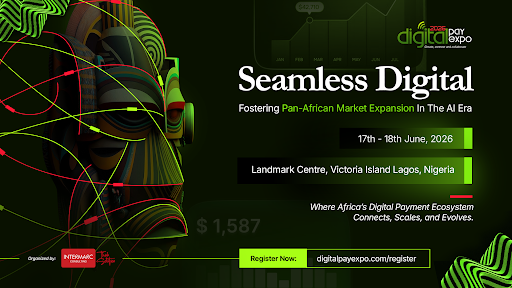
What happens when regulators, fintech leaders, investors, financial institutions, payment providers, and technology innovators come together in one room?
Digital PayExpo 2026.
Date: June 17–18, 2026
Location: Landmark Centre, Lagos
Register now
telecoms
MTN wants to stop running on diesel.
 Image Source: MTN
Last week, MTN Group unveiled its Ambition 2030 strategy:triple its fibre footprint to 420,000km, connect 20 million homes, and grow its mobile money business 13-fold.
It is an ambitious vision for a company operating across 19 African markets. It is also a vision that runs entirely on power, power that, until now, has largely come from diesel generators.
Energy first: On Monday, MTN Nigeria announced it ispartnering with First WATT Renewable Limited, a renewable energy company, to deploy 34 megawatts-peak (MWp) of solar photovoltaic generation and 40 megawatt-hours (MWh) of battery storage across its most critical facilities, including data centres, switching centres, cable landing stations, and customer service locations. The deal also includes 60-kilowatt electric vehicle (EV) charging stations across eight MTN locations in Lagos, Abuja, Port Harcourt, Kano, and Ibadan.
What this means: As wereported in May, diesel accounted for58.11% of MTN Nigeria’s total energy consumption in 2025, while renewable energy contributed just 0.05%. MTN nearly doubled its capital expenditure in Q1 2026 to₦390.3 billion ($283.74 million) partly to accelerate this transition. The 34MW solar deal is the largest single step yet.
Zoom out: The infrastructure ambition and the energy transition are the same problem. A 420,000km fibre network across Africa, running through markets where grid electricity is unreliable, cannot be powered by diesel at scale.
Showcase Your Brand at Moonshot by TechCabal

Founders. Investors. Policymakers. Enterprise leaders. Moonshot 2026 brings together the people shaping Africa’s technology ecosystem across AI, commerce, climate, enterprise, and culture. Spotlight your brand today.
CRYPTO TRACKER
The World Wide Web3
Source:

|
Coin Name |
Current Value |
Day |
Month |
|---|---|---|---|
| Bitcoin | $65,987 |
+ 0.40% |
– 15.54% |
| Ether | $1,761 |
+ 2.56% |
– 19.47% |
| XRP | $1.22 |
+ 3.20% |
– 13.61% |
| Solana | $73.63 |
+ 3.60% |
– 15.26% |
* Data as of 06.34 AM WAT, June 16, 2026.
JOB OPENINGS
- Kredete — Blockchain Engineer — Lagos, Nigeria
- BBC — Video Journalist, BBC News Igbo — Lagos, Nigeria
- Bank of Taiwan, South Africa —Chief Risk Officer — Gauteng, South Africa
- Busha— Senior Backend Engineer — Hybrid (Lagos, Nigeria)
- M-KOPA— Group Tax Manager, Finance Business Partnering Manager — Nairobi, Kenya
- Britam— Quality Assurance Officer — Nairobi, Kenya
- IQVIA— Senior Statistical Programmer — Nairobi, Kenya
- Realist Optimist— Correspondent Writer — Not specified
- Communiqué— Reporter, Creative Economy & Media Business — Remote (Nigeria)
Looking for more opportunities? There are additional openings on TechCabal’s job board. We’ve also cleared out outdated listings to keep opportunities fresh for job seekers. If you’re hiring and would like to feature an open role, please submit it via this form.
- Ask An Investor: Why Launch Africa returned $2.5 million to investors after 11 exits
- Why Africa’s electric mobility is no longer a venture bet
Written by: Opeyemi Kareem and Zia Yusuf
Edited by: Ganiu Oloruntade
Want more of TechCabal?
Sign up for our insightful newsletters on the business and economy of tech in Africa.
- The Next Wave: futuristic analysis of the business of tech in Africa.
- Francophone Weekly by TechCabal: insider insights and analysis of Francophone’s tech ecosystem
P:S If you’re often missing TC Daily in your inbox, check your Promotions folder and move any edition of TC Daily from “Promotions” to your “Main” or “Primary” folder and TC Daily will always come to you.



You May Also Like

Michael Saylor Unveils Bitcoin-Centered Digital Asset Stack After Strategy Buys 1,587 BTC
Bitcoin surges to $66,468 as $100 million bought

Two soldiers killed in explosion during training exercise in Kedah



