

Humanity Protocol’s H Token: Why Proof-of-Human AI Coins Are Defying the Selloff
Altcoins bled across the board, yet Humanity Protocol’s H kept printing higher highs. In a week when risk assets chopped, H’s tape showed relentless bids, fat volumes, and a steady stream of headlines.
The reason feels counterintuitive: in an AI-saturated market, the scarce asset is not compute — it’s verifiable humans. Tokens tied to proof-of-humanity are suddenly trading like indispensable infrastructure.
This is the story behind that resilience, what’s actually under the hood, and how to assess the trade without drinking the Kool‑Aid.
The Big Picture: Humans Become the Premium in an AI Market
AI tools have lowered the cost of generating content, accounts, and interactions to near zero. For Web3 apps, that makes bots cheaper than users — and sybil attacks cheaper than growth. Proof‑of‑human networks aim to reverse that equation by making “being human” a verifiable, portable credential that apps can price into incentives, governance, and access.
Who’s affected? Any protocol paying rewards, running governance, or selling attention. That includes L2s, social platforms, creator marketplaces, airdrop farmers, and even advertisers looking for real eyeballs.
What Proof‑of‑Human Tokens Aim to Solve
The bot problem is now an economic problem
Sybil‑driven growth has hard costs: distorted analytics, mispriced airdrops, spam governance, and inflated DAU that breaks business models. As AI turbocharges the cost curve for fakes, applications need a way to set rate limits, payouts, and voting weight by “human‑ness,” not raw wallet count.
Why a token exists in this stack
Proof‑of‑human systems commonly use a token for several reasons:
- Incentives: reward verifiers/validators for attestation work and penalize fraud via slashing or bonds.
- Access pricing: meter API calls, social actions, or airdrop eligibility with per‑human quotas.
- Governance: align decision rights with verified participation rather than capital alone.
- Security budget: pay for audits, bug bounties, and anti‑abuse R&D from a native treasury.
Designs vary widely — from attestations anchored on-chain to privacy‑preserving proofs via zero‑knowledge. The through‑line is portable identity assurance without forcing apps to build their own KYC stack.
Humanity’s H: Momentum, Liquidity, and Milestones
Performance snapshot
H’s outperformance hasn’t been subtle. Messari’s project page for Humanity shows H up roughly +164.84% over the past month, underscoring a strong momentum regime even as broader altcoins struggled (Messari, June 2, 2026). CoinStats’ fundamental analysis highlighted a +168.72% seven‑day spike with 24‑hour trading volume around $357,382,031 — a sign that the move was backed by turnover, not just thin liquidity (CoinStats, June 1, 2026).
CoinMarketCap lists Humanity’s all‑time high at $0.8534 on June 2, 2026, framing the timing of the surge (CoinMarketCap). As of June 3, CMC’s live page showed a market cap near $1.87 billion and approximately $555 million in daily volume — significant scale for a category that until recently sat at the edge of DeFi conversations (CoinMarketCap).
Timeline of episodic strength
Date Event Noted Impact May 20, 2026 Selective altcoin bounce H rose ~19% during the session, per CMC’s update (CoinMarketCap (CMC AI)) June 1, 2026 Weekly momentum +168.72% 7‑day performance; $357M 24h volume (CoinStats) June 2, 2026 Price milestone ATH recorded at $0.8534 (CoinMarketCap) June 3, 2026 Liquidity snapshot ~$1.87B market cap; ~$555M 24h volume (CoinMarketCap)
Liquidity and market structure
Liquidity matters in selloffs. H’s turnover — reflected in both CoinStats’ and CMC’s tallies — suggests multiple venues and active market makers rather than a single exchange‑driven pump. That doesn’t immunize the asset from volatility, but it does create more two‑sided flow, which can reduce gap risk during risk‑off days.
Under the Hood: Verification, Attestations, Rate Limits
Because proof‑of‑human designs differ, think in building blocks rather than a single canonical flow. A typical lifecycle might look like this:
- User enrollment: A participant generates a pseudonymous identifier and opts into verification via an approved method (e.g., attestations from trusted verifiers or privacy‑preserving checks).
- Verification event: The system records a proof or attestation that a unique human controls the identifier, usually without revealing private data to relying apps.
- Credential issuance: The network mints a non‑transferable credential or proof (often revocable) linked to the identifier.
- Rate‑limited actions: Apps query the credential to meter actions — one vote per human, daily mint quotas, ad impressions per unique user, or airdrop eligibility.
- Challenge and fraud handling: Disputes trigger re‑verification, slashing of malicious verifiers, or credential revocation.
- Incentives and fees: Tokens pay verifiers, underwrite disputes, and potentially fund grants for integrations.
Privacy trade‑offs
Approaches range from social‑graph attestations to hardware‑assisted checks to biometrics, with varying privacy and UX profiles. Projects increasingly emphasize zero‑knowledge proofs so users can show “one human, one account” without revealing who they are. The details matter for regulatory exposure and user trust.
Composability with apps
The real value emerges when many dApps verify once and accept the same credential. That unlocks shared anti‑sybil logic across governance, rewards, and reputation — and gives the token measurable utility beyond speculation.
Why Proof‑of‑Human AI Coins Are Bucking the Selloff
Structural demand amid AI uncertainty
As bots get better, the cost of not filtering them rises for every app paying users or routing attention. That creates semi‑inelastic demand for human verification — a quality more akin to middleware than a memecoin narrative. When macro beta knocks risk assets down together, investors sometimes rotate toward tokens with clearer near‑term utility.
Incentives aligned with integrations
Proof‑of‑human tokens benefit from integration flywheels: each new dApp that gates access by “one human” deepens credential value for all others. Markets often front‑run those integrations, assigning a premium to networks that show traction or credible partnership pipelines. While specifics should be verified from official disclosures, the category logic is straightforward: more integrations, more recurring demand for verification and associated token sinks.
Liquidity and narrative timing
H’s data points — new ATH on June 2 and sustained volumes into June 3 — landed precisely as AI discourse re‑centered on authenticity. The May 20 rally noted by CMC’s updates suggests that episodic risk‑on pockets can compound into month‑long momentum when a narrative has fundamental tailwinds (CoinMarketCap (CMC AI)).
Demand Driver How It Supports Resilience Sensitivity to Macro Risk‑Off App integrations using human‑gated access Recurring credential checks; potential fee flows Medium — usage can persist even during drawdowns Governance weighted by verified users Reduces sybil governance capture, adds stickiness Low to Medium — governance continues through cycles Airdrops and incentive programs Filters bots, improves ROI of campaigns High — marketing budgets shrink in bear phases Advertising and social platforms Improves ad spend efficiency with real users Medium — ad markets are cyclical but persistent
A Practical Framework to Evaluate H and Its Peers
Signal over noise
Avoid chasing green candles. Instead, work through a checklist that surfaces durability over hype.
- Credential model: Is the proof privacy‑preserving? Is revocation possible? Is there a credible path to portability across chains?
- Verifier economics: Who can verify? What are the incentives and penalties? Are there decentralization targets and timelines?
- Integration depth: Count live integrations (not MoUs). Do they cover social, governance, rewards, and ads — or just a demo app?
- Token function: Map token sinks (fees, staking, bonds) against emissions/unlocks. Are there demand drivers beyond speculation?
- Concentration: Check on‑chain distribution, market‑maker inventory, and treasury transparency. Are liquidity and governance overly concentrated?
- Regulatory surface: Does the flow resemble KYC? How is data handled? Could rules force changes in verification methods?
- UX friction: How many steps does verification take? What’s the drop‑off? Are there alternatives that are “good enough” without a token?
What to Watch Next for H and the Category
Bullish signals to track
- Net‑new, high‑DAU integrations adopting “one human” gates for rewards or governance.
- Evidence of privacy‑first verification at scale, with transparent audits.
- Clear token utility — fees or staking that correlate with credential usage rather than pure narrative flows.
Neutral/base path
Momentum consolidates while developers build integrations, and the market digests the early run‑up in H’s market cap and volumes (near $1.87B and ~$555M 24h respectively as of June 3 per CoinMarketCap).
Bearish tells
- Verification bottlenecks or data‑handling controversies that erode user trust.
- Emission overhangs, unlocks, or market‑maker withdrawals that drain liquidity into dips.
- Regulatory actions that reclassify verification as de facto KYC without compliant pathways.
Risks & What Could Go Wrong
- Privacy/security incidents: Any leak or misuse of sensitive data (even metadata) can be existential.
- Centralization of verifiers: Small verifier sets become chokepoints and governance attack vectors.
- Token‑economics mismatch: If utility doesn’t scale with credential usage, price can decouple from fundamentals.
- Regulatory friction: Jurisdictions may view certain verification flows as regulated identity services.
- Model drift and adversarial AI: Attackers evolve, requiring continuous upgrades and funding for anti‑abuse.
- Unlocks and distribution cliffs: Large insider or ecosystem unlocks can overwhelm demand during risk‑off periods.
- Composability breakage: If major dApps adopt competing standards, network effects weaken.
If you want ongoing context across price action, integrations, and regulatory shifts, Crypto Daily tracks the category with a focus on data‑backed analysis and risk framing. You can follow coverage and market updates at Crypto Daily.
Frequently Asked Questions
What exactly is Humanity’s H token used for?
Projects in the proof‑of‑human category commonly use their native token for verifier incentives, governance, and potentially fees tied to credential usage. The precise mechanics vary by protocol and should be confirmed via official documentation before taking risk.
Why did H rally while many altcoins sold off?
Data shows strong momentum and liquidity — with a June 2 ATH and substantial daily volumes per CoinMarketCap — supported by a narrative that treats verified humans as essential infrastructure in an AI‑heavy internet. That combination can create pockets of decorrelation, though it doesn’t remove downside risk.
Is proof‑of‑human the same as KYC?
No. Many implementations aim for privacy‑preserving uniqueness proofs (one human, one account) rather than identity disclosure. However, design choices may create regulatory exposure depending on jurisdiction and data handling.
How reliable are the performance numbers?
As of early June 2026, Messari reported ~+164.84% 30‑day gains, CoinStats noted ~+168.72% for seven days, and CoinMarketCap showed a June 2 ATH and sizable market cap/volume. Always check timestamps and methodology on each platform.
What are the main risks to watch with H?
Privacy/security incidents, verifier centralization, token unlocks, and regulatory friction are top of mind. Liquidity can vanish in risk‑off regimes, so position sizing and scenario planning matter.
How can dApps integrate proof‑of‑human without hurting UX?
Best practice is “verify once, use everywhere,” ideally with zero‑knowledge credentials that minimize friction. Rate limits and rewards can then reference the credential without repeated checks.
Could other AI or identity tokens outpace H?
Yes. This is a competitive space. Execution quality, integrations, and credible privacy guarantees will likely determine long‑term winners more than first‑mover status.
Disclaimer: This article is provided for informational purposes only. It is not offered or intended to be used as legal, tax, investment, financial, or other advice.


You May Also Like

Meet Kobushi, The Tiny Pygmy Hippo Who Just Made The Entire Internet Cry Happy Tears
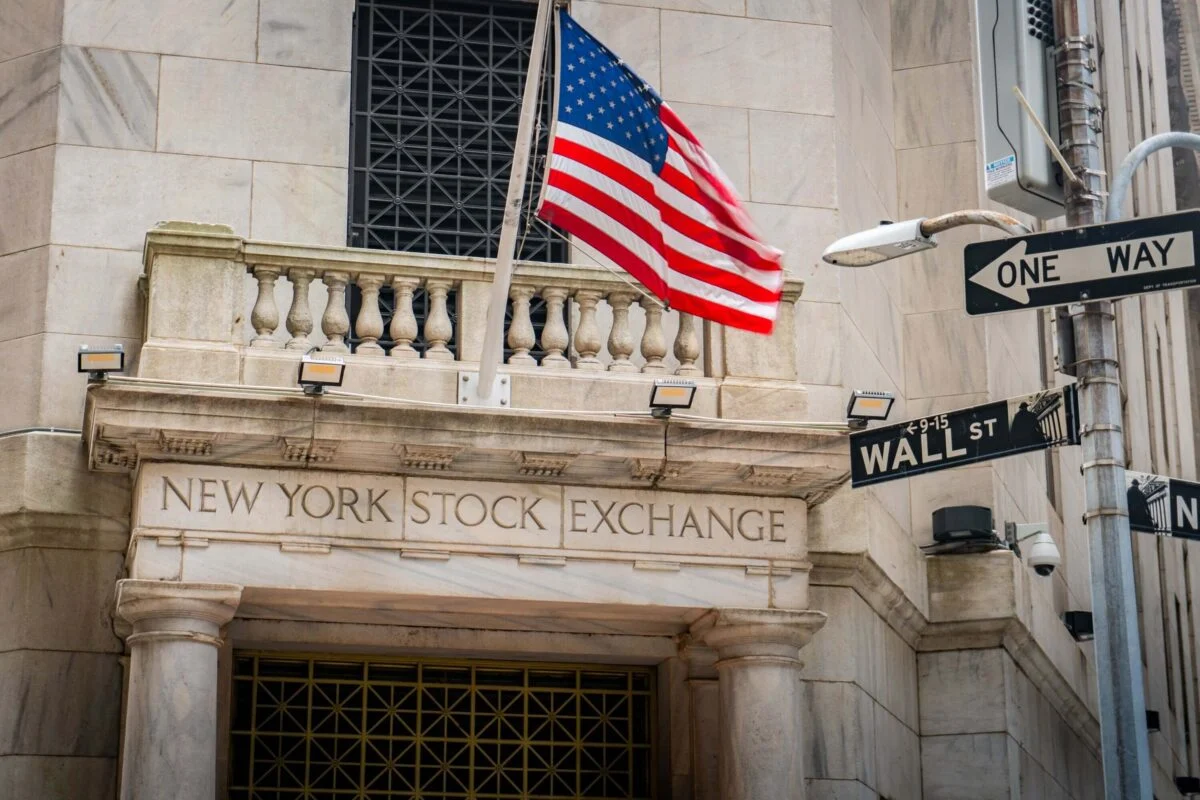
Pre-Market Update: S&P 500 Seeks Longest Winning Streak Since 1995 as Oil Prices Rise

New fund set up to build $500m mixed-use project in Riyadh



