

Must Read
Composite image of Lopez cousins Manuel "Beaver" Lopez (left) and Federico "Piki" Lopez.Composite image of Lopez cousins Manuel "Beaver" Lopez (left) and Federico "Piki" Lopez.
The business case of the Lopez-Razon gas and hydro deals
For feedback or concerns regarding this content, please contact us at crypto.news@mexc.com
“In stewardship, it reminds us that direction matters, because what compounds ultimately shapes resilience or fragility.”
That was how Federico “Piki” Lopez opened First Gen’s annual stockholders’ meeting on May 28. It sounded like one more Piki Lopez line: abstract, reflective, a little high-minded. But this time the philosophy had already been translated into deals, debt, and a set of decisions that now sit at the center of the Lopez cousins’ dispute.
What First Gen chair Piki and president Giles Puno laid out that day was a story in two moves. First, the listed energy company sold 60% of its gas business to Enrique Razon Jr.’s Prime Infrastructure for an adjusted P48.8 billion and kept the other 40%. Then, through its subsidiary FG Aqua Power, it bought 33% stake in Prime Hydropower Energy Inc. (PHEI) for about P61.9 billion. PHEI is the company behind the 600-megawatt Wawa project in Rizal and the 1,400-megawatt Pakil project in Laguna. Beginning in 2031, Puno said, those hydro projects are expected to contribute around P16 billion a year to First Gen under a 20-year contract. (READ: Lopez vs Lopez: The secrecy fight behind the Razon power deals)
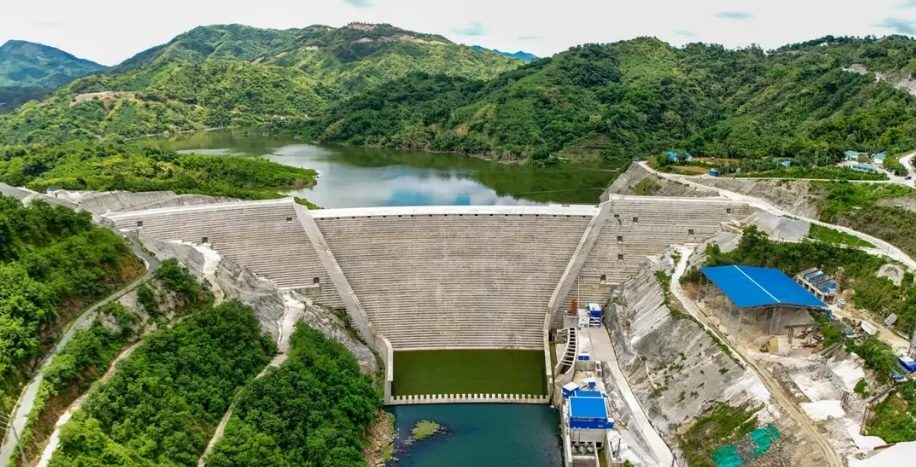 WAWA. The Upper Wawa Dam has a capacity of up to 710 million liters per day, and is projected to benefit more than 700,000 households, or approximately 3.5 million people in Manila Water’s East Zone and nearby areas. Courtesy of Manila Water
That is the deal in plain English. First Gen loosened its grip on an older gas business and placed a much bigger bet on large hydro projects that can store electricity and release it later when the grid needs it. Management says that is what prudence looks like in an energy system under stress. The majority Lopez cousins say it is what surrendering control looks like.
That is why this is not just a business story and not just a family story. It is a governance story. It is about how one side of a family explained a major strategic turn, how the other side attacked it, and what the contracts reveal about where power really sits when billions of pesos are at play.
Selling gas to buy hydro
The transaction is easy to lose in the jargon, so it helps to state it plainly.
First Gen did not walk away from gas. It sold majority control, pocketed cash, and kept a 40% stake. Meaning, it still has exposure to the business, but now as a large minority owner rather than as the sole operator of the whole platform.
Then it used that financial room to buy into pumped-storage hydro, which is basically a giant water battery: power is used to pump water uphill when electricity is abundant, then released later to generate power when the grid needs it. That is the heart of the strategy. The company is arguing that in the next phase of the Philippine power sector, storage and flexibility may become more valuable than full control of a mature gas fleet.
 Diagram of the 1400 MW Paki Pumped-storage Hydroelectric Power Project in Pakil, Laguna. Image from Ahunan Power Environmental Impact Statement
That matters because the Philippine grid is changing. Puno told shareholders that “one of the central challenges facing power systems is no longer simply generation, but operational flexibility.” Then he delivered the line that explains why First Gen got interested in Wawa and Pakil in the first place: “This is where pumped storage becomes critical.”
That is the business case.
That framing matters because it shifts the argument away from family drama and into corporate judgment. First Gen is saying that in the next decade, flexibility, storage, and energy security will matter more than clinging to every inch of an ageing gas platform, even if natural gas still plays “an important stabilizing role in the Philippine power system.” Seen that way, the deal is being sold not as a retreat from gas, but as a repositioning for a grid that is becoming more renewable, more volatile, and more dependent on storage.
The majority cousins, however, have attacked exactly that logic, asking why Piki Lopez would “give up control of our gas assets, our crown jewels” and then buy back only a minority position in hydro. One side sees a portfolio shift. The other sees surrender.
From brownouts to Batangas
For the Lopezes, gas is not just another line item. It grew out of the country’s scramble to end the 1990s power crisis and build more reliable capacity for Luzon. In the early 2000s, as the Malampaya gas field off Palawan went into commercial production and a 500-plus-kilometer pipeline was laid to Batangas, First Gen built its Santa Rita and San Lorenzo plants along that corridor and later added San Gabriel and Avion, giving it a gas fleet of about 2,000 megawatts.
Those plants have long supplied Meralco and the grid under long-term contracts. When one part of the Lopez family now asks why Piki would “give up control of our gas assets, our crown jewels,” this is the history they are invoking.
Play Video 
Why let go of gas
The old gas business was built for a different moment.
At the ASM, Puno said the decision to sell was based on “a realistic appreciation and broader view of changing market conditions and long-term commercial feasibility.” He said several long-term contracts across the gas portfolio had already expired (in August 2025) and that the Santa Rita plant’s contract had been extended only until June 2026, underscoring how uncertain the market had become.
In other words, the old certainty was thinning out. These plants were once part of the country’s answer to the power insecurity that followed the 1990s crisis, and natural gas still plays, in Piki’s words, “an important stabilizing role in the Philippine power system.”
What the Razon deal does, in management’s telling, is push that legacy further to the side of the balance sheet and pull more of First Gen’s future into assets it can count as renewable — geothermal, solar, wind, and now large hydro with built-in storage — a direction the group has been signaling since its “no more coal” call in 2016.
But the company is no longer pretending that gas — a cleaner fossil fuel than coal but still not renewable — is the future around which everything else should revolve. In Piki’s framing, selling down gas and buying into hydro is what nudges the portfolio where he has wanted it to go for years: from about 70% renewables on the balance sheet in 2025 to roughly 92% once the gas sale and hydro investment are in place.
Ten years after First Gen decisively announced in 2016: “no more coal” — that it would no longer build, own, or operate coal plants — he reminded shareholders that the company’s major calls were not supposed to follow fashion. “It was not a decision made in response to prevailing sentiment. It was a decision grounded in trajectory.”
That quote does a lot of work. It is not saying gas suddenly became bad business. It tells shareholders that the Razon deal should be read as part of a longer strategic drift, away from coal, away from heavy dependence on imported fuels, and toward assets the company believes will matter more in a hotter, more volatile, more energy-insecure future. That does not prove the move was wise. But it does show the argument management wants to win on.
That is as close as he came to saying why his part of the Lopez family chose to do a deal with Razon. The choice was not framed as personal alignment. It was framed as risk management in a country still vulnerable to imported fuel shocks, climate strain, and grid instability.
Why Prime matters
First Gen did not sell gas to just any buyer.
Prime Infra, through its energy arm, had already taken over Shell’s 45% operating stake in Malampaya in 2022, giving the Razon group control of the country’s main indigenous gas field and the upstream end of the same corridor that feeds First Gen’s Batangas plants. That means the Lopez–Razon partnership now links the gas source, the pipeline, and the power plants in a way that, on paper, should make fuel supply more manageable than relying on imported liquefied natural gas alone.
In First Gen’s telling, this is why Prime is the logical partner: it “strengthens alignment across critical parts of the gas value chain” and improves the plants’ ability to switch between Malampaya gas and imported LNG when needed. In a country still exposed to global fuel shocks, that kind of indigenous anchor is part of the sales pitch for the deal, not just a background detail.
What First Gen still gets from gas assets
Selling control doesn’t mean First Gen walked away from the cash flow.
By keeping a 40% stake, the company is treating its old gas business like a steady dividend stock. They no longer run the show or book 100% of the profits, but they still get a sizable check whenever the business makes money.
It is a straightforward trade-off: give up the driver’s seat in exchange for billions in quick cash and a smaller, hands-off income stream. Management used that cash to fund their massive shift into green energy, but it leaves shareholders with a burning question: was giving up control really worth it?
Why stop at 33%
The reduction from an initially announced 40% hydro stake to 33% became one of the cousins’ sharpest attacks. In an April statement, the majority shareholders asked why Piki Lopez would buy a minority stake and then reduce it, asking, “Why not 33% plus one share to keep that veto?”
Puno’s answer at the ASM was calm and dry. First Gen reduced the stake, he said, “to ensure prudence in its capital allocation process.”
That sounds bloodless, but it reveals the company’s defense. Management is saying it wanted a significant stake in Wawa and Pakil without tying up too much capital in one investment when other projects still need funding. The company’s March 31 17-Q shows that FG Aqua paid P12.5 billion upfront for existing PHEI shares, subscribed to another P49.4 billion in shares, and still has more than P45 billion payable through 2029.
So the issue is not only control. It is also balance-sheet capacity, scale versus liquitity. Management is saying it wanted a meaningful seat at the table without overcommitting cash needed for other projects. The majority cousins said that in cutting back, Piki gave up too much. The majority cousins basically said the deals were a “blunder,” and management is calling it capital discipline.
That is the sort of argument governance fights are really made of. Not just principle. Math.
Where the deal gets personal
The Lopez–Razon deal would already be contentious if it were only about assets. It is not. The contracts themselves are written around Federico “Piki” Lopez and his designees.
First Gen’s 17-Q says a Change of Management Control happens if Lopez or his designee is no longer CEO of First Gen, if the executive committee ceases to be composed of his designees, if he is no longer the proxy voting First Gen’s shares in the hydro companies, if he is no longer a director of First Philippine Holdings, if his designees no longer make up a majority of First Gen’s board, or if he or his designees are no longer First Gen’s directors in PHEI. If that happens during construction and up to a year after commercial operations begin, Prime Infra can force First Gen to sell its PHEI shares at a discount, and can also compel the sale of First Gen’s remaining gas stake under a formula set out in the agreements.
The financing layer echoes the same theme. In a separate April 17 disclosure, First Gen said BDO Unibank issued standby letters of credit worth a total of P24.75 billion to support the PHEI acquisition, but made them conditional on leadership-continuity covenants across the First Philippine Holdings group — including a trigger if Lopez and his family cease to own at least 29.17% of Lopez Inc. BDO described his continued active involvement as “necessary, vital, and indispensable,” and warned that “replacing FRL (Piki) will trigger defaults in the loan agreements of the FPH group.”
That is the point where ordinary readers stop hearing “strategy” and start hearing “key man risk.” The deal is not only a bet on pumped-storage hydro. It is also a bet on Piki’s continued centrality.
First Gen’s answer is that this is normal for projects of this size. In its April clarification, the company stressed that it was Prime Infra, not Lopez, that asked for the key man clause, and called it “a relatively standard contractual mechanism in the energy and infrastructure industries” where success depends on “the competence, relationships or reputation” of particular people. Puno told shareholders the clause was “presented to, deliberated, and approved by the Board of Directors” in February 2026, with KKR’s representative present, and that the approval was unanimous. (READ: How to make yourself very expensive to fire: The Lopez cousins’ war)
That framing lets management say this was not an ambush and not a private side deal, but a board-approved way of sharing risk in a huge infrastructure partnership.
Another reading is less flattering: that the group’s biggest new bet in years, and some of its financing, are now built around the continued indispensability of one man — a comfort to lenders and partners, but a pressure point for anyone who believes governance should make companies less dependent on a single figure. (READ: [Vantage Point] First Gen shareholders need an antidote to a ‘poison pill’)
‘These systems do not run on intention’
Puno’s best line at the ASM may also have been his most revealing: “These systems do not run on intention,” he told shareholders. “They run on infrastructure that is built, integrated, and capable of operating under strain.”
Then he gave the company’s own timeline for why it believes it belongs in this business: 50 years of geothermal, 30 years of natural gas, 20 years of hydropower, and 15 years of wind and solar.
That was not just a history lesson. It was a defense against the charge that First Gen had wandered into a risky new venture for ego or fashion. Puno was telling shareholders that the shift from gas to hydro was not a break from what First Gen knows. It was an extension of what it has been building for decades.
That argument gives the deal its strongest form. It says this is not a leap into the unknown. It is the next layer of a long institutional buildup.
It also explains why the deal has become such a fault line inside the Lopez family. If this is really about continuity, then the fight is not only over one transaction. It is over who gets to define what continuity means.
What this deal teaches
The easiest way to read the Lopez-Razon deals is as another rich-family drama with power plants attached. The more useful reading is as a live lesson on how governance behaves under pressure. One side of the family says the transactions are a rational answer to a changing energy market, approved by the board, backed by lenders, and consistent with a decade-long pivot away from coal and toward indigenous and renewable energy. The other side says they were opaque, too concentrated in one man, too costly in control terms, and too lightly explained to the broader family owners.
Both positions tell readers something important. Strategic shifts in family conglomerates are rarely judged by strategy alone. They are judged by process, by disclosure, by how much trust exists before the vote, and by whether the contracts that follow protect the institution or deepen its dependence on one leader.
Both claims matter. Because this is how governance usually looks in real life: not as a clean principle in a manual, but as a fight over process, disclosure, trust, and who bears the risk when a company makes a giant bet.
That is why the Lopez-Razon deal matters beyond the cousins. It shows what happens when a company tries to move from an ageing gas model to a storage-heavy renewable future while still carrying the old burdens of family control, succession risk, and contested authority.
If the partnership pays off, it will be because the strategy was right. If it backfires, it will be because the governance was not strong enough to question it. – Rappler.com


Disclaimer: The articles reposted on this site are sourced from public platforms and are provided for informational purposes only. They do not necessarily reflect the views of MEXC. All rights remain with the original authors. If you believe any content infringes on third-party rights, please contact crypto.news@mexc.com for removal. MEXC makes no guarantees regarding the accuracy, completeness, or timeliness of the content and is not responsible for any actions taken based on the information provided. The content does not constitute financial, legal, or other professional advice, nor should it be considered a recommendation or endorsement by MEXC.
You May Also Like

Fed’s Hammack Warns Inflation Could Force Action ‘Soon’
BitcoinWorld Fed’s Hammack Warns Inflation Could Force Action ‘Soon’ Federal Reserve Bank of Cleveland President Beth Hammack issued a notable warning on Tuesday
Share
bitcoinworld2026/06/03 08:35

One Of Frank Sinatra’s Most Famous Albums Is Back In The Spotlight
The post One Of Frank Sinatra’s Most Famous Albums Is Back In The Spotlight appeared on BitcoinEthereumNews.com. Frank Sinatra’s The World We Knew returns to the Jazz Albums and Traditional Jazz Albums charts, showing continued demand for his timeless music. Frank Sinatra performs on his TV special Frank Sinatra: A Man and his Music Bettmann Archive These days on the Billboard charts, Frank Sinatra’s music can always be found on the jazz-specific rankings. While the art he created when he was still working was pop at the time, and later classified as traditional pop, there is no such list for the latter format in America, and so his throwback projects and cuts appear on jazz lists instead. It’s on those charts where Sinatra rebounds this week, and one of his popular projects returns not to one, but two tallies at the same time, helping him increase the total amount of real estate he owns at the moment. Frank Sinatra’s The World We Knew Returns Sinatra’s The World We Knew is a top performer again, if only on the jazz lists. That set rebounds to No. 15 on the Traditional Jazz Albums chart and comes in at No. 20 on the all-encompassing Jazz Albums ranking after not appearing on either roster just last frame. The World We Knew’s All-Time Highs The World We Knew returns close to its all-time peak on both of those rosters. Sinatra’s classic has peaked at No. 11 on the Traditional Jazz Albums chart, just missing out on becoming another top 10 for the crooner. The set climbed all the way to No. 15 on the Jazz Albums tally and has now spent just under two months on the rosters. Frank Sinatra’s Album With Classic Hits Sinatra released The World We Knew in the summer of 1967. The title track, which on the album is actually known as “The World We Knew (Over and…
Share
BitcoinEthereumNews2025/09/18 00:02
Cango Inc. Closes $75M in Capital Deals to Fund AI and Bitcoin Mining Expansion
TLDR: Cango Inc. raised $65M from leadership, issuing 49.2M shares settled in USDT on March 31, 2026. DL Holdings received a $10M convertible note and warrants
Share
Blockonomi2026/04/02 18:51



