

Ripple Locks 500 Million XRP in Escrow: What It Means for Supply and Markets
BitcoinWorld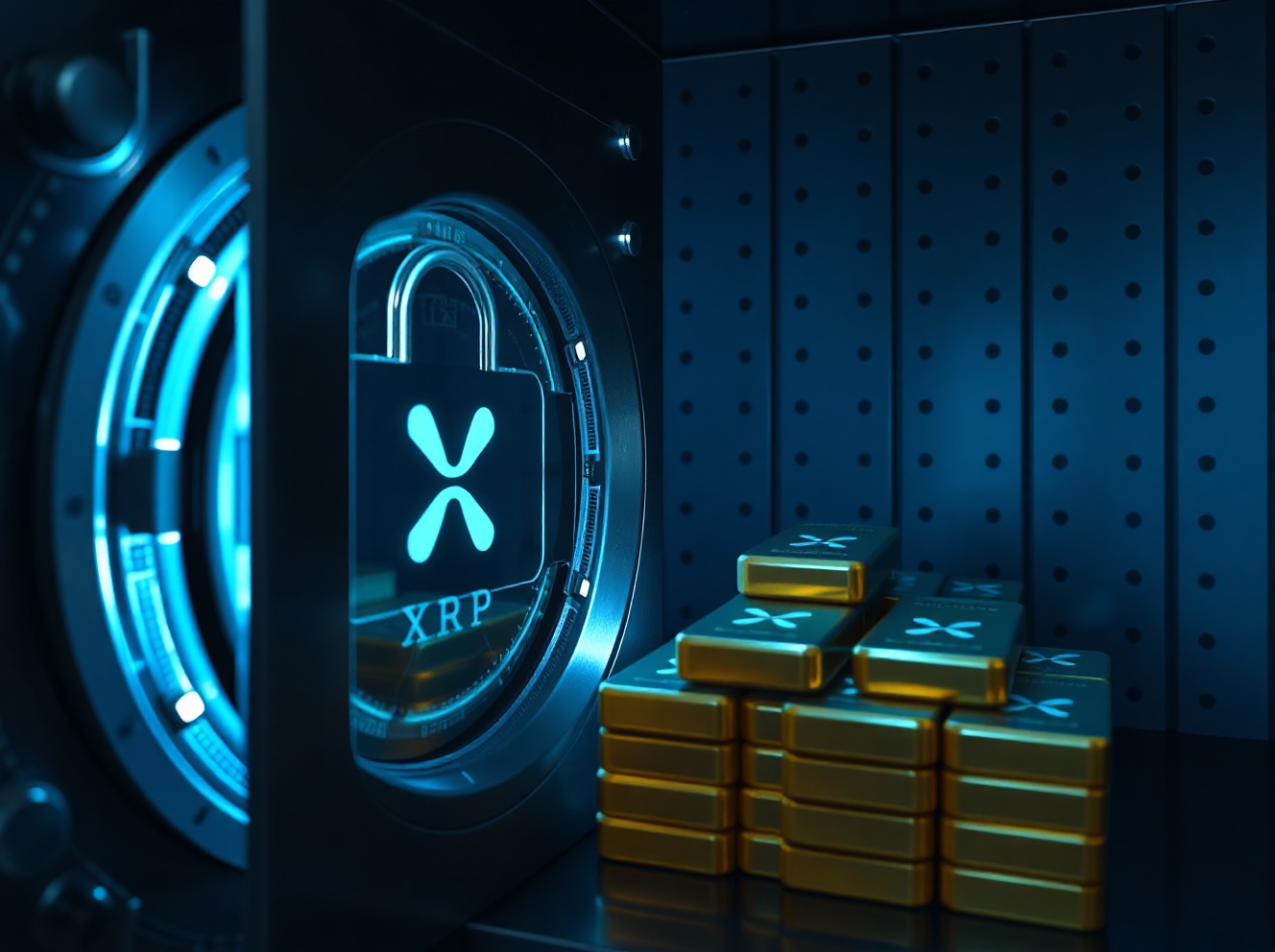
Ripple Locks 500 Million XRP in Escrow: What It Means for Supply and Markets
Blockchain tracking service Whale Alert reported on [Date of report, e.g., May 23, 2025] that 500 million XRP tokens have been locked in an escrow contract associated with Ripple. This is a routine but significant event that underscores Ripple’s ongoing strategy to manage the circulating supply of XRP.
Understanding Ripple’s Escrow Mechanism
Ripple, the company behind the XRP Ledger, has been using escrow accounts since 2017 to control the release of its large XRP holdings. The company originally placed 55 billion XRP into a series of on-chain escrows, programmed to release 1 billion XRP each month. This system was designed to provide predictability and transparency to the market, preventing a sudden, uncontrolled flood of tokens that could destabilize the price.
The 500 million XRP locked in this latest transaction is part of that ongoing mechanism. Typically, a portion of the monthly released XRP is re-locked into new escrow contracts, while the remainder is used for operational purposes, such as supporting Ripple’s payments network and strategic partnerships.
Market Implications and Context
While a 500 million XRP lockup is a large amount by absolute value—roughly $250 million at current market prices—it is a standard part of Ripple’s programmed schedule. The market generally views these predictable lockups as a neutral or slightly positive signal, as they reduce the immediate available supply and demonstrate Ripple’s commitment to a disciplined release schedule.
It is important to distinguish this from a burn or a permanent removal from circulation. Escrowed XRP is not destroyed; it is simply locked for a set period (typically 12 to 54 months) and will eventually be unlocked again. The key for investors is the net effect: the amount of XRP entering the market versus the amount being re-locked.
Why This Matters for XRP Holders
For XRP holders, these escrow events provide a clear, on-chain record of Ripple’s supply management. The transparency of the XRP Ledger allows anyone to verify the escrow transactions, reducing uncertainty about potential large dumps. This contrasts with some other cryptocurrencies where large token holdings are less visible.
The ongoing legal clarity from Ripple’s partial victory against the U.S. Securities and Exchange Commission (SEC) has also reduced regulatory overhang, allowing the market to focus more on fundamentals like supply dynamics and network adoption.
Conclusion
The locking of 500 million XRP by Ripple is a routine but noteworthy event that highlights the company’s systematic approach to token supply management. While not a market-moving event on its own, it reinforces the predictability that Ripple has built into its XRP distribution model. For those tracking XRP, monitoring these escrow movements remains a key part of understanding the asset’s circulating supply and long-term market structure.
FAQs
Q1: Does locking XRP in escrow reduce the total supply?
No. Escrowed XRP is temporarily locked and cannot be traded or moved, but it is not burned or destroyed. It will be unlocked at a future date as per the escrow contract’s terms.
Q2: How often does Ripple lock XRP in escrow?
Ripple typically locks a portion of the 1 billion XRP released each month into new escrow contracts. The exact amount varies but often ranges from 300 million to 700 million XRP per month.
Q3: Where can I verify these escrow transactions?
All XRP escrow transactions are recorded on the XRP Ledger and can be viewed using block explorers like XRP Scan or Bithomp. Whale Alert is a reliable source for real-time notifications of large transactions.
This post Ripple Locks 500 Million XRP in Escrow: What It Means for Supply and Markets first appeared on BitcoinWorld.


You May Also Like
Republicans aren't done with Trump's slush fund even as admin surrenders: DC insider

Bitcoin treasury sell-off accelerates as Riot, Bhutan, and public companies exit positions

Bitcoin Is Still Following This Descending Channel Pattern And The Endgame Shows The Bottom



