Monero (XMR) vs. Zcash (ZEC): Which Privacy Cryptocurrency Offers Better Value in 2025?
Key Takeaways
- Zcash commands approximately $9.0B in market capitalization versus Monero’s $7.6B, suggesting a potential valuation discrepancy
- While Zcash offers selective privacy through shielded transactions, Monero enforces mandatory privacy across all network activity
- November 2024 brought Zcash’s halving event alongside the NU6 protocol enhancement that allocates continued funding for development
- Monero maintains ongoing miner rewards through a perpetual tail emission releasing 0.6 XMR per block, sustaining sub-1% annual inflation
- Regulatory headwinds and exchange removals impact both assets, though Monero’s comprehensive privacy draws heightened regulatory attention
When discussing privacy-oriented cryptocurrencies, Monero and Zcash consistently dominate the conversation. These blockchain networks prioritize financial confidentiality, yet their philosophical and technical implementations diverge significantly. Recent market movements have renewed investor interest in the privacy coin category.
Zcash positions itself as encrypted digital currency. The project pioneered zero-knowledge proof technology for confidential peer-to-peer value transfers. This technological innovation represents a meaningful breakthrough that continues to command respect throughout the cryptocurrency ecosystem.
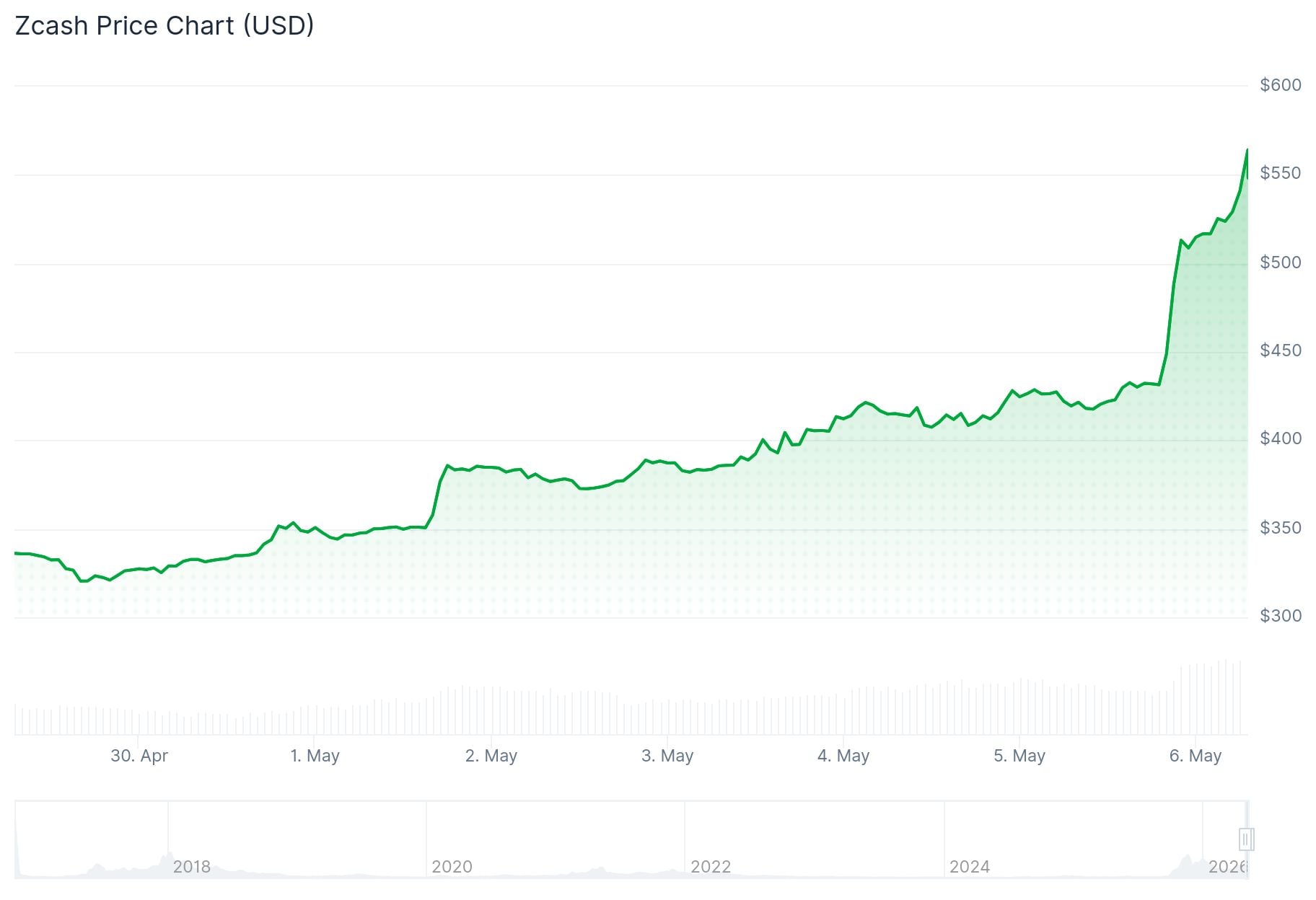 Zcash (ZEC) Price
However, Zcash implements privacy as a user selection rather than a requirement. Network participants decide whether transactions utilize shielded or transparent functionality. Historical data reveals most network activity occurs transparently, potentially undermining the privacy proposition for potential investors.
Monero follows an alternative philosophy. Every transaction enjoys mandatory privacy protection without requiring user configuration. Reuters characterizes Monero as delivering comprehensive anonymity, a reputation that fundamentally influences market perception.
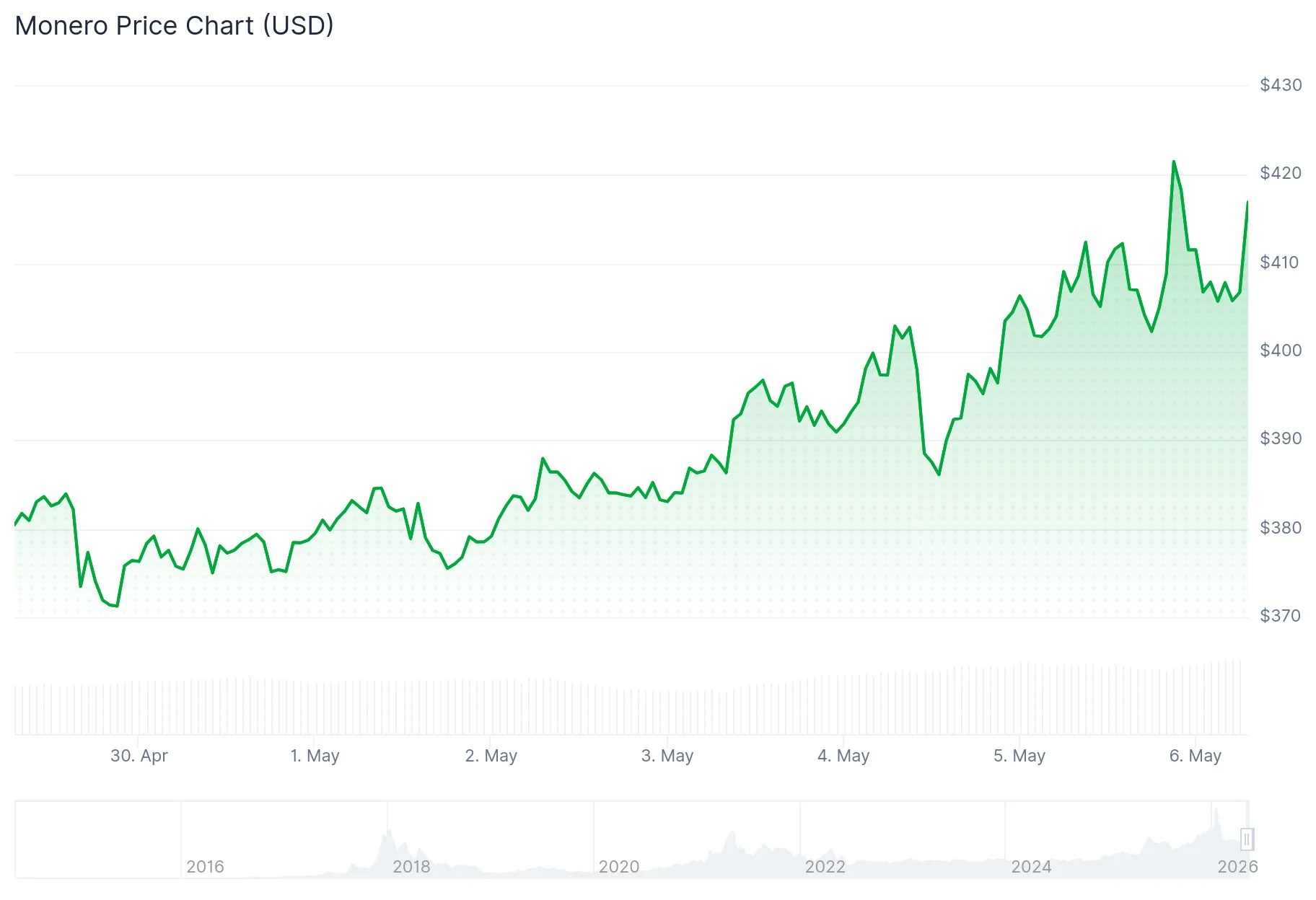 Monero (XMR) Price
Market Capitalization Analysis
Current valuations present a compelling narrative. According to CoinGecko data, Zcash holds approximately $9.0 billion in market capitalization while Monero sits at roughly $7.6 billion. Conventional wisdom might suggest Monero deserves premium valuation given its stronger privacy positioning.
This valuation differential reshapes the investment equation. Should privacy coin adoption accelerate, Monero’s smaller market cap potentially offers greater appreciation potential. Zcash’s elevated starting valuation implies market expectations already incorporate significant premium pricing.
Zcash executed its halving event during November 2024. The concurrent NU6 protocol upgrade secured an additional twelve months of development funding, maintaining support for ecosystem grants and protocol advancement. This establishes a defined operational timeline for immediate development priorities.
Economic Models and Token Distribution
Zcash mirrors Bitcoin’s emission schedule with finite supply constraints and recurring halving events. This design delivers a compelling scarcity narrative that appeals to specific investor demographics.
Monero pursued an alternative economic structure. Primary emission concluded in 2022. The network subsequently implemented a constant tail emission mechanism distributing 0.6 XMR per block. This framework maintains annual inflation beneath 1% while steadily declining over extended timeframes.
Skeptics highlight Monero’s absence of absolute supply caps. Nevertheless, the tail emission framework sustains miner compensation without excessive dilution, strengthening long-term network security infrastructure.
Both cryptocurrencies confront identical existential challenges. Privacy-focused digital assets face intensifying regulatory scrutiny and systematic exchange delistings across numerous jurisdictions. Trading liquidity deteriorates when compliant platforms eliminate these assets from available markets.
Monero’s uncompromising default privacy architecture positions it as a primary compliance concern compared to Zcash. This represents material investment risk, particularly for participants dependent on centralized trading infrastructure.
Investment Considerations
Zcash delivers sophisticated cryptographic implementation, established technical credibility, and currently maintains superior market capitalization. Monero offers unambiguous privacy positioning, universal default transaction confidentiality, and trades at reduced valuation.
For investors prioritizing the privacy cryptocurrency thesis, Monero sustains the strongest association with confidentiality itself. Zcash’s NU6 enhancement and November 2024 halving deliver recent catalysts entering current market conditions.
The post Monero (XMR) vs. Zcash (ZEC): Which Privacy Cryptocurrency Offers Better Value in 2025? appeared first on Blockonomi.


You May Also Like

ekko Launches the Nature Footprint, Enabling Payment Providers to Embed Environmental Impact Insights and Action Into Everyday Spending

Ripple CEO Says CLARITY Act Is a Done Deal as Senate Prepares Markup