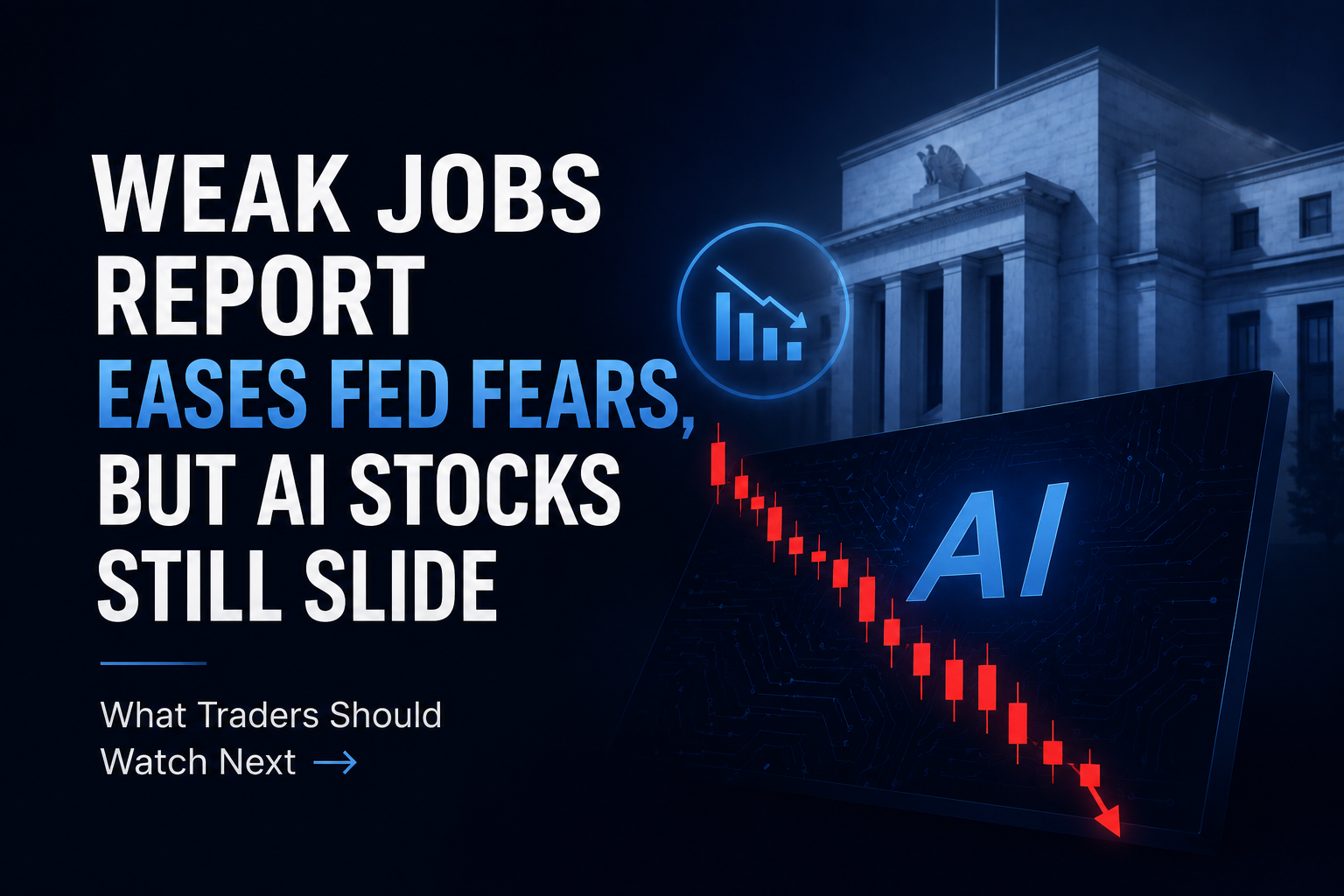
Kevin Warsh is chairing his first Federal Open Market Committee meeting today as the 17th Federal Reserve Chair, and every market from Bitcoin to the Nasdaq is watching his next move.
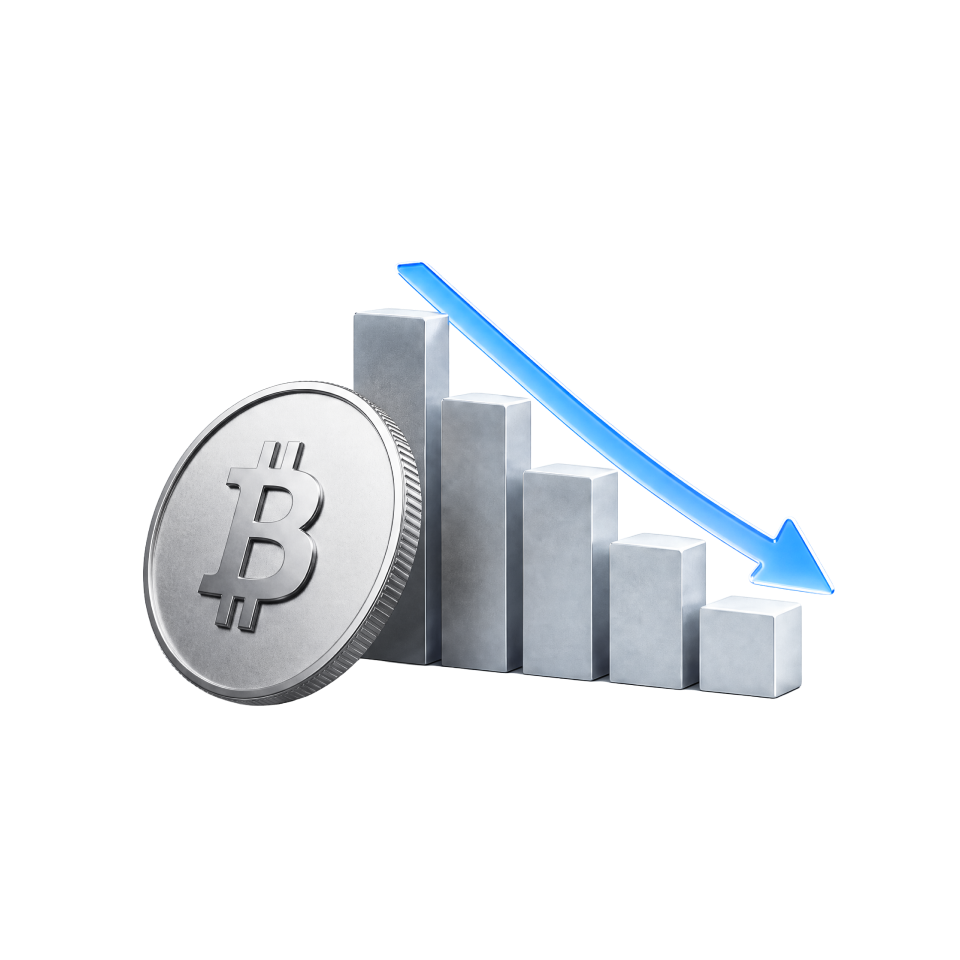
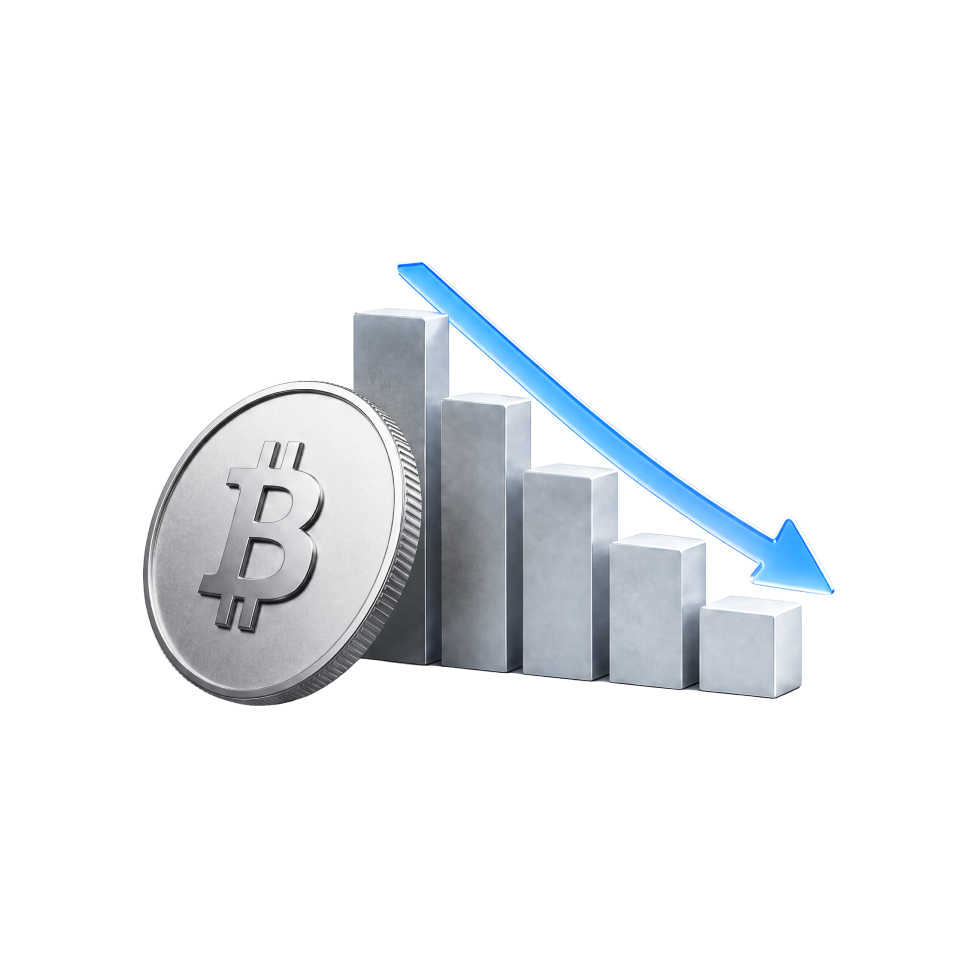
Bitcoin has dropped more than 47% from its all-time high of $126,198 to around $66,000 as of June 2026, dragged down in part by expectations of a higher-for-longer interest rate environment.
Here is what Warsh's Federal Reserve actually means for crypto traders and tech investors, with the institutional numbers that matter.
Key Takeaways
Kevin Warsh was confirmed as the 17th Federal Reserve Chair on May 13, 2026, in a 54-45 Senate vote, and sworn in at the White House on May 22.
Bitcoin fell more than 47% from its October 2025 all-time high of $126,198 to around $66,000 as of June 2026, with each Warsh milestone triggering a new leg lower in price.
Despite personal digital asset holdings exceeding $100 million, Warsh's hawkish commitment to inflation control carries more market weight than his personal Bitcoin beliefs.
Goldman Sachs Research has pushed its first expected rate cut to June 2027, with the Fed widely expected to hold rates steady at 3.50% to 3.75% for the remainder of 2026.
Major institutional analysts at CoinShares, Citigroup, and Standard Chartered project Bitcoin in the $120,000 to $150,000 range for 2026, contingent on a dovish shift in monetary policy later in the year.
The "AI productivity" thesis Warsh has publicly articulated could eventually create a path to rate cuts without reigniting inflation, a scenario that would be constructive for both Bitcoin and tech stocks.
He earned his law degree from Harvard Law School and went on to work as a mergers and acquisitions banker at Morgan Stanley before transitioning into the George W. Bush White House as a member of the National Economic Council.
In 2006, at just 35 years old, Warsh was appointed to the Federal Reserve Board of Governors, making him one of the youngest governors in the institution's history.
He served as an active FOMC member from 2006 through 2011, becoming a hands-on crisis manager during the 2008 financial collapse and developing a reputation for prioritizing monetary discipline over aggressive interventionism.
During the years between his two stints at the Fed, he served as a senior fellow at Stanford University's Hoover Institution and was a consistent public critic of what he described as a central bank that had grown too large, too market-dependent, and too reliant on forward guidance.
President Donald Trump nominated Kevin Warsh on January 30, 2026, to succeed Jerome Powell as Federal Reserve Chair, setting off an immediate reaction across financial markets.
Bitcoin fell sharply following the announcement, dropping from above $80,000 into the $81,000 to $84,000 range as traders priced in the hawkish implications of a Warsh-led monetary regime.
After a closely watched Senate confirmation hearing on April 21, 2026, the Senate confirmed Warsh by a 54-45 vote on May 13, the most politically divisive Federal Reserve confirmation vote in the institution's history, according to JPMorgan analysts at Chase.
Warsh's pre-office financial disclosures revealed personal digital asset exposure exceeding $100 million, spanning investments in blockchain infrastructure projects including Polymarket and Solana.
His first FOMC meeting as chair is the June 16-17, 2026 session, with the rate decision, updated dot plot, and his debut press conference all scheduled for June 17.
Kevin Warsh did not walk into an easy hand.
Consumer prices have remained stubbornly above the Fed's 2% target throughout 2025 and into 2026, pushed higher in part by an energy shock connected to geopolitical conflict in the Middle East that temporarily disrupted oil flows and sent gasoline above $4 per gallon.
April 2026 CPI came in at 3.8% year-over-year, the highest annual rate since May 2023, and the OECD projects headline US inflation at 4.2% for the full year.
The federal funds rate has sat at 3.50% to 3.75% since the Fed's December 2025 cut, held unchanged through every 2026 FOMC meeting: January, March, April, and now June.
The real market event is the updated dot plot and the tone of his first public press conference as chair.
The term most analysts use to describe Warsh's monetary philosophy is "hawkish easing," and unpacking that phrase is essential for anyone navigating this Fed transition.
His core priority is shrinking the Fed's $6.7 trillion balance sheet through continued quantitative tightening, removing excess liquidity from the financial system even if short-term rates eventually move lower.
At the same time, Warsh has kept the door open to selective rate cuts if economic data, particularly signals from AI-driven productivity growth, justifies them without threatening a renewed inflation cycle.
His consistent skepticism toward the dot plot and forward guidance signals a Federal Reserve that will communicate less, pre-announce less, and lean harder on incoming data than markets have grown accustomed to under Jerome Powell.
A dimension every serious trader should monitor is the political backdrop of this Fed transition.
Trump chose Warsh in large part because he wanted a more accommodative central bank than Powell provided, and the president has continued calling publicly for lower rates even after Warsh took office.
Warsh testified under oath during his Senate confirmation hearing that he would never predetermine a rate decision at the White House's request.
The tension between what Trump wants (lower rates as quickly as possible) and what the inflation data demands (a continued pause or potentially even a hike) is one of the most consequential sources of uncertainty for the 2026 rate outlook.
Markets will be watching whether Warsh's June 17 press conference language reflects genuine policy independence or defers to political pressure, and the market's read of that signal will move risk assets.
The crypto community's cautious optimism about Warsh has genuine roots in his documented record, not in speculation.
In a January 2021 appearance on CNBC's Squawk Box, he made the generational argument directly, suggesting that for investors under 40, Bitcoin had effectively become what gold was for prior generations.
His financial disclosures before taking office confirmed more than $100 million in digital asset exposure, spanning investments in blockchain infrastructure ventures.
Strategy founder and executive chairman Michael Saylor publicly called Warsh "the first pro-Bitcoin chairman of the Federal Reserve." following the January nomination, a characterization that spread widely across the crypto industry.
The gap between Warsh's stated Bitcoin beliefs and what his rate policy does to market liquidity has been the defining tension for crypto traders throughout 2026.
When Trump's nomination of Warsh was announced on January 30, 2026, Bitcoin fell sharply into the $81,000 to $84,000 range as traders immediately priced in the hawkish monetary implications.
A combination of elevated inflation readings, significant Bitcoin ETF outflows, and Middle East geopolitical pressure drove Bitcoin to a low of approximately $59,130 in early June 2026.
A peace deal announced on June 14, 2026, triggered a sharp recovery, lifting Bitcoin back above $65,000 and toward $65,992 on June 16, according to CoinGecko data.
Bitcoin has recorded price declines in the week following eight of the last nine FOMC meetings, with an average post-meeting drawdown of approximately 11%, based on market data analysis.
This pattern makes one thing clear: the market does not price the Fed chair's opinion of Bitcoin.
It prices his effect on liquidity. On liquidity, Warsh's hawkish framework makes him a near-term headwind regardless of his personal holdings.
Despite near-term turbulence, major institutional voices have maintained constructive longer-term Bitcoin targets, most contingent on how the monetary policy environment evolves through 2026 and into 2027.
On the technical side, market analysts identify the CME futures gap zone at $75,000 to $79,000 as the next credible upside target for Bitcoin, provided the asset holds above the $65,000 level through the June FOMC decision.
The $60,000 level remains the critical support floor: a break below it would push a majority of circulating Bitcoin supply into unrealized loss territory, a condition that has historically aligned with late-stage bear market bottoms rather than the beginning of new selling phases.
The relationship between Federal Reserve rate policy and technology stock valuations is not speculative. It is mathematical.
When interest rates are elevated, the future earnings and cash flows that give technology companies their premium valuations get discounted at higher rates, compressing price-to-earnings multiples and making today's growth stock prices harder to sustain.
This is why the Nasdaq has been one of the most Fed-sensitive indexes throughout 2025 and 2026, reacting sharply to every shift in rate expectations.
JPMorgan strategists, as documented in Chase's mid-year 2026 investor outlook, expect the Fed to hold rates steady through the remainder of 2026, meaning earnings growth and AI revenue momentum will need to do the heavy lifting for tech stock performance rather than any near-term monetary tailwind.
Warsh's June 16-17 FOMC meeting presents three distinct outcomes for equity markets, and Nasdaq's near-term trajectory depends significantly on which scenario materializes.
The base case is a patient conditional pause: Warsh holds rates steady, acknowledges elevated inflation, and signals that future cuts remain possible when disinflation resumes.
In this scenario, market technical analysts expect Nasdaq to stabilize in the 28,876 to 29,880 range, allowing the AI earnings narrative to re-engage as the primary price driver.
The more optimistic scenario is a dovish signal: Warsh indicates rate cuts could arrive in the second half of 2026 if energy-driven inflation moderates following the Iran peace deal and global supply chains normalize.
In this case, the 30,743 level represents the first meaningful Nasdaq upside target, with a channel projection extending toward the 31,547 to 32,369 range.
The most challenging scenario for equity markets is a hawkish hold: Warsh signals rates will stay elevated through all of 2026 with no easing in sight, forcing markets to reprice the higher-for-longer trajectory with full conviction.
Under that outcome, Nasdaq faces a test of the 28,068 EMA50 support zone, with the 27,722 Fibonacci retracement level as the next meaningful floor.
A pre-meeting investor survey published by CNBC on June 15, 2026, found that 55% of respondents expected a hawkish hold with tougher inflation language, while 33% anticipated a conditional dovish hold that would signal openness to future easing.
The most important longer-term scenario for Bitcoin bulls lives inside a thesis Warsh himself has floated publicly, and markets have not fully priced it in yet.
His argument is that artificial intelligence productivity gains are fundamentally disinflationary, because they allow the economy to grow faster without generating equivalent upward pressure on consumer prices.
If that thesis proves correct, the Fed could begin cutting rates without triggering a new inflation spiral, unlocking the liquidity expansion that has historically been the primary catalyst for Bitcoin's largest bull market cycles.
Analysts have described this potential pivot as the key variable separating Warsh's era from being a sustained headwind into being a constructive macro backdrop for risk assets.
Goldman Sachs Research currently places the first expected rate cut in 2027, but a material acceleration in AI-driven disinflation could pull that timeline forward, creating the macro environment Bitcoin needs to recover toward the institutional price targets cited above.
The scenario that unlocks the upside is not a Warsh who abandons his hawkish convictions. It is a Warsh who follows the data to a place where those convictions and rate cuts happen to coincide.
While short-term price action has been volatile, Bitcoin's on-chain structure tells a more constructive longer-term story.
On-chain blockchain analytics show that long-term Bitcoin holders have accumulated supply to near all-time high levels during the current drawdown period, a behavior pattern that has historically aligned with major bull market recovery phases rather than continued capitulation.
This cohort has added significantly to its position during the months of Fed-driven market weakness, signaling genuine conviction about long-term value rather than a trend to exit.
Strategy, the largest corporate Bitcoin holder by publicly disclosed position, has continued accumulating during the drawdown period at an average cost basis significantly above current market prices, a commitment that underscores institutional conviction in the longer-term thesis.
The combination of a potentially sympathetic Fed chair who has called Bitcoin a sustainable store of value, improving geopolitical conditions following the June 2026 Iran peace deal, and structural on-chain accumulation by long-term holders creates a longer-term setup that institutional analysts have not dismissed, even as the near-term rate environment remains the dominant constraint.
For traders positioning across the range of outcomes in the Warsh era, monitoring the dot plot's evolution at each FOMC meeting alongside Bitcoin's on-chain accumulation metrics remains the most complete framework for navigating what comes next.
Who is Kevin Warsh?
Kevin Warsh is a Harvard-trained attorney and former Federal Reserve Governor confirmed as the 17th Chair of the Federal Reserve by the US Senate on May 13, 2026, succeeding Jerome Powell.
Is Kevin Warsh hawkish or dovish?
Warsh is broadly considered hawkish on inflation, favoring tighter monetary conditions and balance sheet reduction, but he describes his approach as data-dependent and has not ruled out rate cuts if productivity trends justify them.
What are Kevin Warsh's views on Bitcoin?
In a 2018 Wall Street Journal opinion piece, Warsh wrote that Bitcoin could serve as a "sustainable store of value, like gold," and his pre-office disclosures confirmed personal digital asset exposure exceeding $100 million.
Is Kevin Warsh pro-crypto?
Yes, Warsh is widely regarded as one of the most crypto-favorable Federal Reserve chairs in the institution's history, based on his public statements, personal investment record, and openly sympathetic commentary about Bitcoin's role in the financial system.
When did Kevin Warsh become Federal Reserve Chair?
Warsh was confirmed by the US Senate on May 13, 2026, and officially sworn in as Federal Reserve Chair on May 22, 2026, at a White House ceremony presided over by President Trump.
Will Kevin Warsh cut interest rates?
Goldman Sachs Research has pushed its first expected rate cut to 2027, and JPMorgan strategists expect rates to hold steady through year-end 2026, though Warsh has stated that cuts remain possible if economic data supports them.
What are Kevin Warsh's monetary policy views?
Warsh supports balance sheet reduction and disciplined inflation control under a "QT-for-cuts" framework, while remaining open to selective rate cuts driven by real productivity data rather than political pressure.
The Warsh era has already reshaped how markets think about the connection between central bank policy, Bitcoin, and technology stock valuations.
In the near term, his commitment to bringing inflation back to the 2% target means tighter liquidity conditions, and tighter liquidity historically compresses risk-asset valuations across the board.
The longer-term picture is more nuanced: a Fed chair who publicly calls Bitcoin a sustainable store of value, holds more than $100 million in digital assets personally, and has articulated a credible path to rate cuts via AI productivity is not a straightforward permanent bear case for crypto or tech.
Watch the dot plot, watch the press conferences, and position across the Warsh cycle on MEXC.