Tesla Q1 2026 Analysis: Solid Margins, Sticky Inventory, and the $250B AI Gambit

Executive Summary:
Tesla’s Q1 2026 earnings report was a study in contradictions. While the income statement showed surprising resilience with stabilizing margins and robust cash flow, the operational reality told a different story—one of cooling demand and swelling inventories. As the "old" growth engine of mass-market EVs faces friction, Elon Musk has doubled down on a new narrative: transforming Tesla into an AI-first infrastructure company. For traders navigating these volatile waters, the Tesla USDT Margined Perpetual has become a vital tool for expressing views on this high-stakes pivot.
I. Financials: The "Quality" of the Beat
On paper, Tesla delivered a respectable quarter despite the headwinds:
Revenue: $22.39 billion.
GAAP Gross Margin: Recovered to 21.1%, signaling a bottoming out of the post-price-war slump.
Liquidity: Ended the quarter with $44.74 billion in cash and short-term investments.
The Reality Check: This wasn't a win driven by volume—deliveries were actually sluggish. Instead, it was a "surgical" victory achieved through structural optimizations. This bottom-line resilience is exactly why Tesla Perpetuals remain a favorite for those looking to hedge spot positions during earnings volatility.
II. Anatomy of a Margin Recovery
The uptick in profitability wasn't accidental. It was driven by three distinct levers:
Software Monetization: FSD (Full Self-Driving) subscriptions hit 1.28 million, up 51% YoY. This high-margin recurring revenue is finally starting to move the needle, decoupling Tesla’s profits from pure hardware sales.
The "Invisible" Tailwinds: A $900 million positive FX impact and a $200 million boost to the bottom line provided significant cushioning. Additionally, the long-awaited decline in raw material costs (lithium and battery chemicals) has finally fully integrated into the P&L.
One-Off Gains: We must note that margins were helped by one-time items related to warranty accruals and tariff adjustments. Stripping these away, the operational core is healthy, but perhaps less "aggressive" than the headlines suggest.
III. The Operational Friction: Inventory vs. Demand
Beneath the shiny financial surface, the factory floor tells a tale of caution.
The Inventory Bloat: Tesla produced 408,400 vehicles but delivered only 358,000. That’s a 50,000-unit gap flowing directly into inventory.
Days of Supply: Inventory rose to 27 days. While manageable by industry standards, it is a red flag for a company built on "just-in-time" efficiency. It suggests that at current price points, Tesla is hitting a demand ceiling.
Energy Storage Volatility: Storage deployments dipped to 8.8 GWh from the previous quarter’s 14.2 GWh. While management blames project timing, the 12% YoY revenue drop in this segment adds pressure on the automotive core to carry the weight.
IV. The Strategic Pivot: Fixing the "Unit Economics"
The most important takeaway this quarter isn't how many cars were sold, but how much each sale is worth.
Ex-Credit Margins: Automotive gross margin (excluding regulatory credits) climbed back to 19.2%.
The Service Engine: Services and Other revenue surged 42% YoY. As the global fleet grows, supercharging, maintenance, and the secondary market are becoming predictable, high-margin cash cows.
This fundamental shift in business model—from selling a box to selling a platform—is why the Tesla Futures Market is seeing such high turnover as investors re-rate the stock's long-term multiple.
V. The $250 Billion AI Moonshot
The post-earnings call was where the real "shock and awe" happened. Management revised 2026 Capex guidance upward to exceed $250 billion.
Where is the money going? Massive AI compute expansion (Dojo and H100 clusters), the Megapack 3 ramp-up, and production readiness for the Cybercab and Semi.
Cash Flow Warning: Tesla explicitly warned that Free Cash Flow (FCF) will likely turn negative for the remainder of 2026.
Tesla is effectively using its current automotive profits to buy a ticket to the AI endgame. It is a massive bet that the stock is no longer a car play, but an AI infrastructure play. This bold shift makes TSLA Futures an essential instrument for those betting on (or against) Musk’s ability to execute on Robotaxis and Optimus.
VI. Forward-Looking Indicators: What to Watch
The roadmap is clear: Protect the core, fund the future. Over the next 1–2 quarters, ignore the delivery "noise" and focus on these three pillars:
Inventory Equilibrium: Can Tesla clear the 50k-unit backlog without another round of margin-killing price cuts?
Core Margin Sustainability: Can the 19%+ ex-credit margin hold steady without the help of one-time accounting gains?
FCF Burn Rate: As Capex accelerates, how steep is the cash burn, and does it threaten the $44B safety net?
Final Thought: Q1 2026 was a masterclass in defensive accounting, but the guidance is an offensive manifesto. Tesla is sacrificing today’s cash flow for tomorrow’s dominance in autonomous compute. Whether you view this as visionary or reckless, the volatility is here to stay. Smart capital is already positioning itself via MEXC Tesla Futures to capture the swings as this $250 billion gamble unfolds.
Popular Articles
View More
U.S. Stocks Weekly Report Sep 04–Sep 11 | HOOD Surges Nearly 20% in a Single Week, Bitcoin Breaks $81,000—Did You Make Unrealized Gains in This U.S. Stock and Crypto Market Rally?
This week, the main theme for U.S. stocks is not AI, but Liquidity. ADP private-sector employment in August increased by only 38,000, below the market expectation of 48,000; the ISM Manufacturing PMI

TSMC vs ASML: Foundry Manufacturing vs EUV Equipment in the AI Chip Cycle
TSMC and ASML are both essential to advanced AI chips, but they monetize different points of the semiconductor cycle. TSMC earns when chip designers turn demand into wafer production and advanced

Dogecoin Security Basics: Common Scams Targeting DOGE Holders and How to Avoid Them
Dogecoin (DOGE) has transformed from an internet meme into a legitimate financial asset. However, its mainstream visibility is a double-edged sword: while it drives adoption, it also attracts

U.S. Stock Weekly | Aug. 28–Sep.03 | HOOD Surges Nearly 20% in a Week, Bitcoin Breaks $81,000: Did You Make a Paper Profit in This Rally of U.S. Stocks and Crypto?
The main theme of U.S. stocks this week is not AI, but Liquidity. ADP private-sector employment in August increased by only 38,000, below the market expectation of 48,000; ISM Manufacturing PMI and
Hot Crypto Updates
View More
Nike Earnings Preview: Can NKE Stock Rebound From a 12-Year Low?
Key Takeaways Nike will report fiscal Q1 2027 results on October 1, 2026 after the U.S. market closes, with current expectations centered near $11.43 billion in revenue and $0.44 in earnings per

Adobe Earnings: Why Is Adobe Stock Down Despite 150% AI ARR Growth?
Summary: Adobe stock fell after Q3 FY2026 earnings despite record revenue and more than 150% growth in AI-first ARR. Adobe now has over 1 billion monthly active users, but Q4 revenue guidance showed

Oracle Earnings: Why Is ORCL Stock Up? AI Cloud Revenue Jumps 121%
Oracle stock rose in extended trading on September 10 after the company reported stronger-than-expected fiscal first-quarter results, powered by accelerating demand for artificial intelligence cloud

Trending News
View More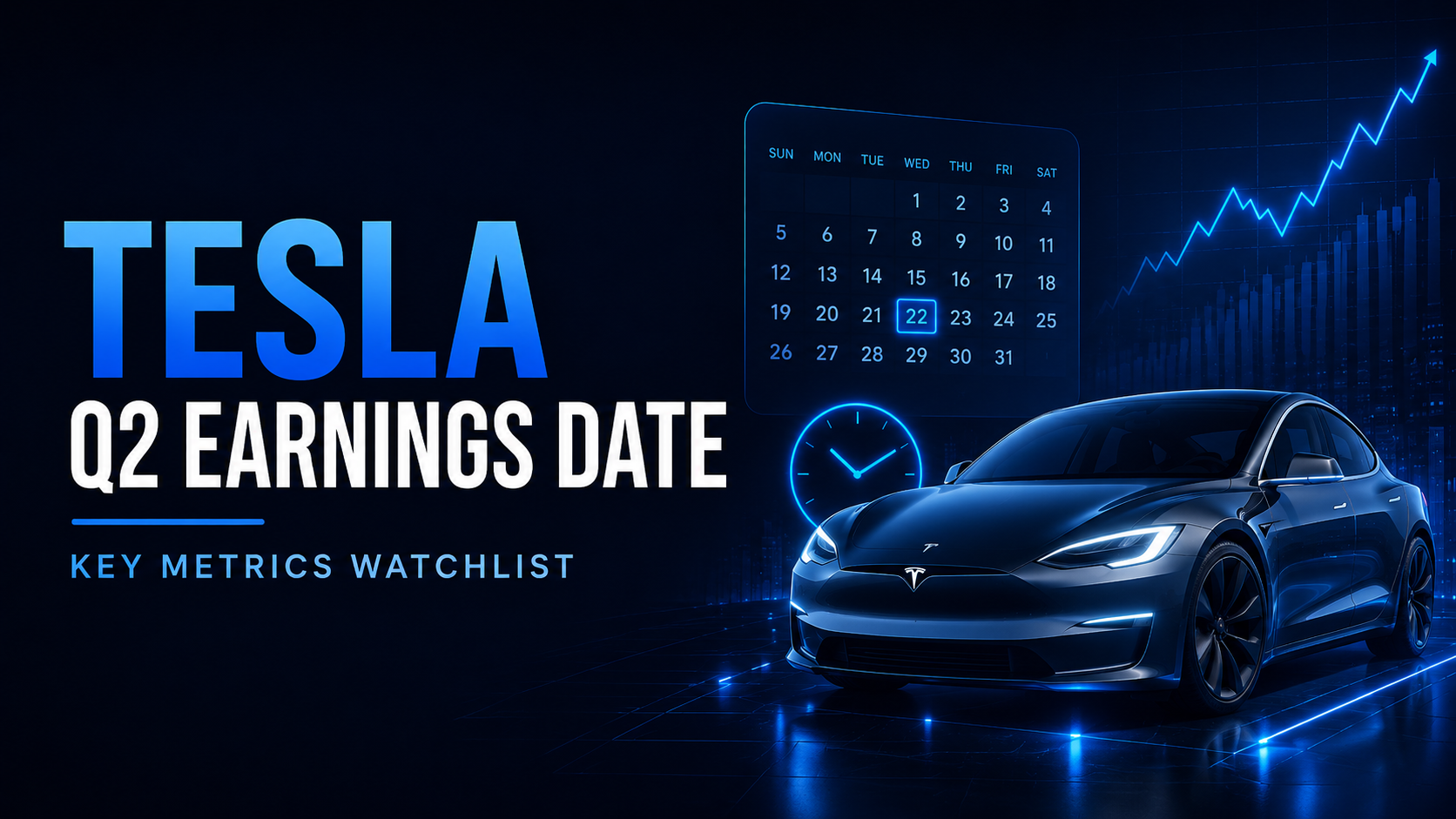
Tesla Q2 2026 Earnings Date: Release Time, Webcast and Key Metrics
Tesla’s Q2 2026 earnings report is set for Wednesday, July 22, 2026, after market close, with management scheduled to host a live Q&A webcast at 4:30 p.m. Central Time / 5:30 p.m. Eastern Time. The Q2

What Is 4STOCK Coin and Why Is the New Token Attracting Attention?
4STOCK is a new BNB Chain meme coin linked to the Four.Meme stock narrative. Learn its contract, price drivers, buyback mechanism and risks.


Related Articles
View More
From Fear to Greed: How Market Cycles, Reflexivity, and Investor Sentiment Move Prices
Market cycles are not precise clocks. They emerge from the interaction of liquidity, economic conditions, investor expectations, and human behavior.Prices rise, rising prices improve sentiment, and st

Why Markets Surge and Crash: Supply, Liquidity, and Liquidation Cascades
Markets do not need a major announcement to move sharply. A price can fall while the news cycle is quiet, or rally even when there is no obvious catalyst. That is because headlines do not move prices

MEXC On-Chain Daily Report: Senate Republicans release updated CLARITY Act text
Updated: September 11, 2026, 09:30 (UTC+8) | Author: MEXCHeadlines Senate Republicans release updated CLARITY Act text SEC proposes allowing blockchain to serve as the official securities ownershi