Q1 2026 Gold ETF Market Report: The Western Sell-Off and Eastern Hedging Game
The global precious metals market of March 2026 is destined for the history books. As spot gold prices probed lower amidst violent geopolitical turbulence, traditional financial gold ETFs experienced an unprecedented liquidity stress test. The latest data reveals a highly fractured global landscape: Western capital executed a record-breaking liquidation, while Eastern capital steadily fortified its safe-haven foundations.
During this massive reshuffling of chips, global gold ETFs witnessed a staggering $12 billion in net outflows in March, setting the highest single-month outflow record in statistical history. However, this did not completely destroy the bullish framework. For the first quarter of 2026, global gold ETFs narrowly defended a net increase of 62 tons. Behind this stark data divergence lies a profound shift in the logic of modern macro traders.
Macro Pivot: The Record-Breaking Retreat from North American Markets
North America was the absolute epicenter that triggered the global gold ETF sell-off in March. The region recorded a terrifying $13 billion in single-month net outflows, abruptly ending a nine-month streak of consecutive net inflows.
The core catalyst behind this exodus was a complete repricing of Federal Reserve expectations. With US inflation data remaining stubbornly high due to surging energy prices, market expectations for a rate cut were drastically delayed from 2026 to September 2027. In this extreme high-interest-rate environment, holding non-yielding traditional gold ETFs presented an incredibly high opportunity cost. Concurrently, Commodity Trading Advisor funds holding massive long positions in mid-March triggered programmatic stop-losses as trends broke down. This passive liquidation, combined with active selling to replenish liquidity, formed a vicious cycle that infinitely magnified the decline.
The European market was not spared. Although it only saw $154 million in outflows in March, the depreciation of the euro against the dollar exacerbated the decay of foreign exchange hedging products. Coupled with potential rate hike signals from the European Central Bank, precious metal investment demand within the region was heavily suppressed.
The Asian Shield: Geopolitical Risk Driving Structural Accumulation
In sharp contrast to the panic in Western markets, the Asian market demonstrated astonishing resilience in absorbing the sell-off. In March, Asian gold ETFs achieved net inflows for the seventh consecutive month, absorbing $2 billion in a single month and pushing the Q1 cumulative net inflow to an unprecedented $14 billion.
This powerful counter-hedging force primarily originated from China and India. Against a backdrop of escalating geopolitical risks, the Chinese market contributed approximately $80 billion in net inflows for the quarter, while Indian investors accumulated $3 billion. The sustained buying pressure from Asian capital acted like a sponge, absorbing the panic dumping from North America. This not only prevented a collapse in total global ETF assets under management but also highlighted the extreme desire of Eastern capital for national economic security and foundational asset allocation during intensifying regional conflicts.
The Tokenized Solution: Replacing Traditional ETFs with Digital Hard Currency
Analyzing these extreme market flows requires stepping outside the traditional framework. Did North American capital retreat simply because it is no longer bullish on gold? For cutting-edge modern traders, this actually exposes the cumbersome and inefficient architecture of traditional ETFs when navigating extreme macro crises.
As Web3 infrastructure reaches full maturity in 2026, tokenized assets are taking over the flow of safe-haven capital on a massive scale. Content detailing token specifics now occupies a much larger portion of modern investment research. Unlike traditional ETFs, which extract management fees and are bound by exchange trading hours, quantitative institutions are increasingly rotating into crypto assets like XAUT coin and PAXG coin. Each PAXG coin, for instance, represents one troy ounce of a London Good Delivery gold bar stored in Brink's vaults, offering zero custody fees for the end-user and mitigating the internal decay associated with ETF structures. To understand this paradigm shift, diving into what is tokenized gold is the first step in recognizing where the smart money is flowing.
When the Federal Reserve releases hawkish signals over a weekend or outside standard trading hours, traditional ETF investors are locked out and forced to absorb the impact. In contrast, a trader holding a gold crypto asset can utilize 24/7 liquidity to instantly adjust their portfolio. When directly comparing tokenized gold vs gold etf, it becomes clear that this is not just a difference in medium, but a categorical upgrade in trading capability. The underlying smart contracts of these gold coin assets enable infinite divisibility and global, permissionless transferability, characteristics that physical ETFs cannot replicate.
Furthermore, in a clearly defined unilateral downtrend like the one witnessed in March, the digital token ecosystem displays an offensive capability that traditional spot markets cannot match. Astute macro traders are no longer satisfied with merely holding spot assets to resist depreciation. Instead, they deploy their gold crypto directly as underlying margin collateral in derivative markets. By applying the best strategy for trading gold crypto, they can establish high-leverage short positions the moment prices drop, transforming the panic selling pressure from the North American market into excess profits in their own accounts.
Popular Articles
View More
U.S. Stocks Weekly Report Sep 04–Sep 11 | HOOD Surges Nearly 20% in a Single Week, Bitcoin Breaks $81,000—Did You Make Unrealized Gains in This U.S. Stock and Crypto Market Rally?
This week, the main theme for U.S. stocks is not AI, but Liquidity. ADP private-sector employment in August increased by only 38,000, below the market expectation of 48,000; the ISM Manufacturing PMI

TSMC vs ASML: Foundry Manufacturing vs EUV Equipment in the AI Chip Cycle
TSMC and ASML are both essential to advanced AI chips, but they monetize different points of the semiconductor cycle. TSMC earns when chip designers turn demand into wafer production and advanced

Dogecoin Security Basics: Common Scams Targeting DOGE Holders and How to Avoid Them
Dogecoin (DOGE) has transformed from an internet meme into a legitimate financial asset. However, its mainstream visibility is a double-edged sword: while it drives adoption, it also attracts

U.S. Stock Weekly | Aug. 28–Sep.03 | HOOD Surges Nearly 20% in a Week, Bitcoin Breaks $81,000: Did You Make a Paper Profit in This Rally of U.S. Stocks and Crypto?
The main theme of U.S. stocks this week is not AI, but Liquidity. ADP private-sector employment in August increased by only 38,000, below the market expectation of 48,000; ISM Manufacturing PMI and
Hot Crypto Updates
View More
Nike Earnings Preview: Can NKE Stock Rebound From a 12-Year Low?
Key Takeaways Nike will report fiscal Q1 2027 results on October 1, 2026 after the U.S. market closes, with current expectations centered near $11.43 billion in revenue and $0.44 in earnings per

Adobe Earnings: Why Is Adobe Stock Down Despite 150% AI ARR Growth?
Summary: Adobe stock fell after Q3 FY2026 earnings despite record revenue and more than 150% growth in AI-first ARR. Adobe now has over 1 billion monthly active users, but Q4 revenue guidance showed

Oracle Earnings: Why Is ORCL Stock Up? AI Cloud Revenue Jumps 121%
Oracle stock rose in extended trading on September 10 after the company reported stronger-than-expected fiscal first-quarter results, powered by accelerating demand for artificial intelligence cloud

Trending News
View More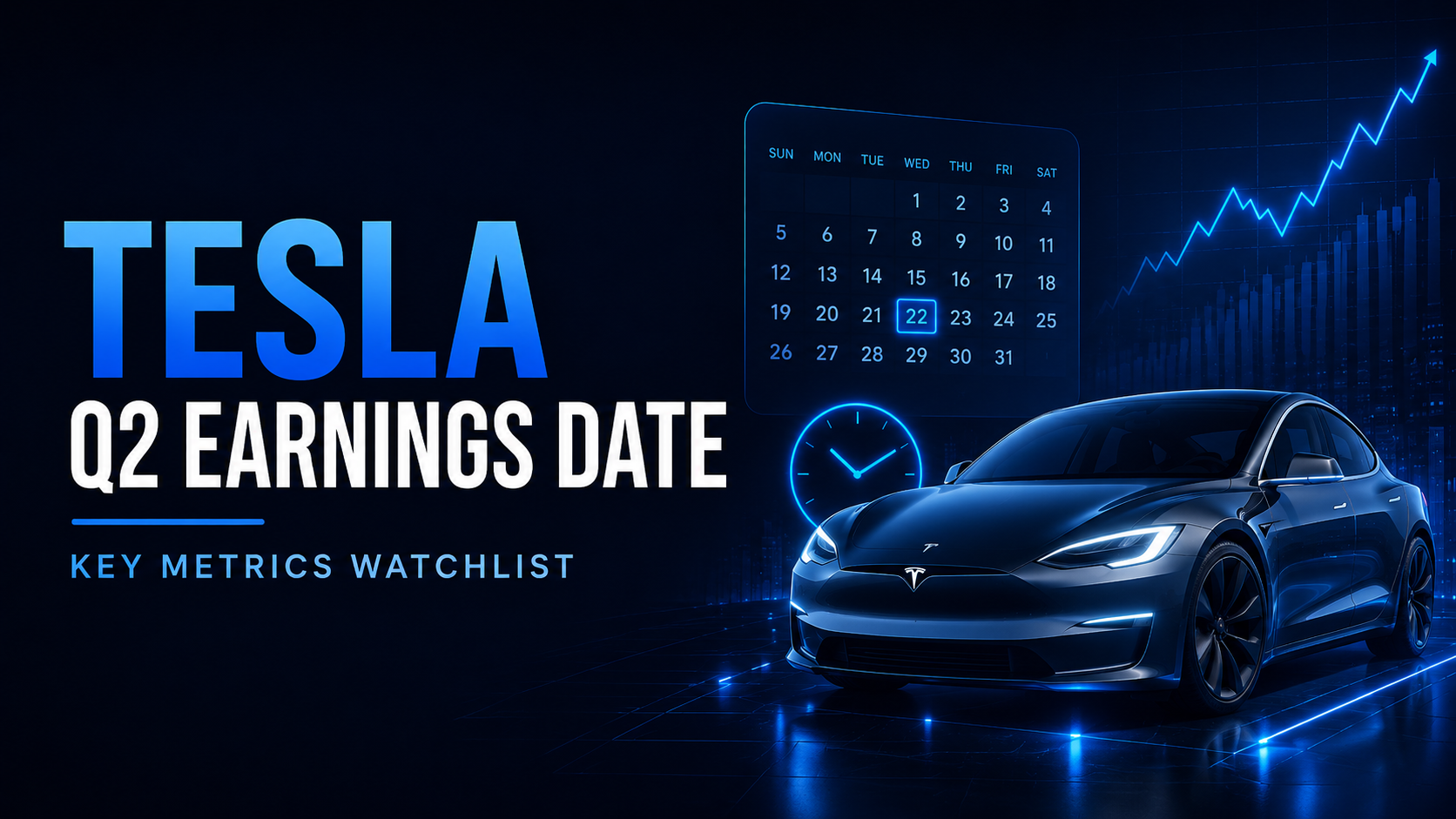
Tesla Q2 2026 Earnings Date: Release Time, Webcast and Key Metrics
Tesla’s Q2 2026 earnings report is set for Wednesday, July 22, 2026, after market close, with management scheduled to host a live Q&A webcast at 4:30 p.m. Central Time / 5:30 p.m. Eastern Time. The Q2

What Is 4STOCK Coin and Why Is the New Token Attracting Attention?
4STOCK is a new BNB Chain meme coin linked to the Four.Meme stock narrative. Learn its contract, price drivers, buyback mechanism and risks.


Related Articles
View More
Gold Price Prediction H2 2026: Institutional Target Revisions vs. The $4,100 Structural Floor
The global precious metals market completed a massive, high-leverage clearing cycle in the first half of 2026. After reaching an unprecedented record-breaking all-time high of $5,594.82 on January 29,

Gold Sits on the $4,000 Threshold: Deconstructing the World Gold Council’s H2 2026 Valuation Moat
The global gold market is currently executing one of its most aggressive technical adjustments in modern financial history. After printing an unprecedented, record-breaking all-time high of $5,594.82

How CPI Data Impacts Gold Prices and XAU Trading
Why CPI Matters for GoldCPI data is one of the most important macro indicators for gold traders. When CPI rises faster than expected, markets usually reassess inflation pressure, Federal Reserve polic