Is the SpaceX IPO Worth $135? SpaceX IPO Date, Share Price, and How to Buy SpaceX(PRE) and SPCX
- SpaceX is targeting June 12 as its first trading day on the Nasdaq under the ticker SPCX, with final IPO pricing set for the evening of June 11.
- The company set a fixed offering price of $135 per share before the roadshow began, departing from the standard practice of publishing a preliminary price range.
- At $135 per share across 555,555,555 Class A shares, SpaceX is targeting a $75 billion raise, which would surpass Saudi Aramco's $29.4 billion record as the largest IPO in financial history.
- SpaceX's implied valuation of $1.75 trillion would place it among the ten most valuable publicly traded companies in the United States from its first day of trading.
- Up to 30 percent of the offering is reserved for retail investors, with pre-listing access available through Fidelity, Charles Schwab, Robinhood, SoFi, and E*TRADE.
- MEXC lists SPACEX(PRE), a Mirror Credits token that mirrors SpaceX's valuation and is currently available for 24/7 spot trading, ahead of the Nasdaq debut.
SpaceX IPO Date: When Is SpaceX Going Public?
SpaceX IPO Timeline: S-1, Roadshow, and the June 12 Trading Debut
Elon Musk's SpaceX IPO Plans: The $75 Billion Playbook No IPO Has Tried Before
SpaceX IPO Status Update: Roadshow Live, Pricing June 11, Trading Starts June 12
SpaceX IPO Share Price: $135 Per Share, $75 Billion Raise, $1.75 Trillion Valuation
What Is the SpaceX IPO Price?
SpaceX IPO Valuation: How $1.75 Trillion Compares
SpaceX S-1 Financials: $18.67 Billion in Revenue and Billions in Losses
How to Buy the SpaceX IPO
How to Buy SpaceX IPO Stock on June 12: Fidelity, Schwab, and Robinhood Explained
- Charles Schwab sets a significantly higher threshold, requiring at least $100,000 in eligible assets at the firm; clients submit a Conditional Offer to Purchase (COTP) through the IPO section of their account dashboard.
- Robinhood offers IPO Access to all verified and funded accounts with no stated minimum balance; allocations in high-demand offerings are proportional, so full fills are unlikely at this scale.
- SoFi and E*TRADE also offer IPO access under their own eligibility requirements, with E*TRADE benefiting from its parent relationship with Morgan Stanley. Robinhood offers IPO Access to all verified and funded accounts with no stated minimum balance. Stanley is one of the co-lead underwriters on the deal.
How to Invest in SpaceX Before the IPO with SPACEX(PRE) on MEXC
If the access options above sound more complicated than they should be, that is a fair read.
Schwab requires six figures in eligible assets just to submit an interest form, and Fidelity's lottery process makes full allocations unlikely for most retail accounts at this scale.
MEXC's SPACEX(PRE) skips that queue entirely.
SPACEX(PRE) is a Mirror Credits product designed to track SpaceX's market value both before and after its Nasdaq listing, and it is already live for trading today — ahead of the June 12 debut.
A few things set it apart from the traditional IPO channels covered above:
- No fees beyond the purchase price. MEXC charges no subscription fee, management fee, or custody fee for participating in SPACEX(PRE).
- 24/7 spot trading with zero secondary market trading fees. SPACEX(PRE) trades around the clock on MEXC — no waiting for a market open, no brokerage window.
- Multiple exit paths. You can sell through spot trading at any time, or redeem into stock tokens or USDT after the lock-up period, subject to MEXC's official announcements.
- Underlying asset support. The issuer and its partner institutions hold equity or related interests in SpaceX through compliant channels, providing the Mirror Credits structure with a backing framework — though this does not make the product risk-free.
One distinction matters before you proceed.
Holding SPACEX(PRE) is not the same as owning SpaceX stock.
SPACEX(PRE) holders do not receive voting rights, dividend rights, or any other shareholder rights associated with actual SPCX shares.
To trade SPACEX(PRE), users must complete Advanced KYC verification through MEXC.
To access SPACEX(PRE), complete Advanced KYC verification through MEXC, then open the SPACEX(PRE)/USDT spot market to start trading.
Frequently Asked Questions
Conclusion
Popular Articles
View More
Is Anthropic Stock Public Yet? Anthropic IPO Date, Ticker, and How to Buy
Search for Anthropic stock and you will find price charts, ticker guesses, and platforms happy to sell you access. Almost none of it is what it looks like. Anthropic is still private, the IPO

How to Choose Between Real Stocks, Tokenized Stocks, Stock Contracts, and ETFs
Exposure to a U.S. company can be obtained through several different wrappers: a cash share, an ETF, an asset-backed Tokenized Stock, or a stock derivative such as a Stock Future. These instruments

Stock Contracts vs Spot Stocks: Exposure, Leverage, and Settlement Differences
Buying a stock and buying a contract on a stock are two different transactions, even when they reference the same company at the same price. One gives you a share. The other gives you a position

Hot Crypto Updates
View More
Why Is CooperCompanies Stock Down 15%? COO Earnings and Guidance
CooperCompanies stock dropped 15% as Q3 revenue of $1.07 billion missed expectations and Q4 EPS guidance of $1.05 to $1.09 fell short of analyst forecasts. Key Takeaways CooperCompanies equity

Apple's Foldable iPhone Could Reset the Premium Smartphone War
Ikhtisar Teknologi global Apple (NASDAQ: AAPL) sedang bersiap untuk memasuki arena smartphone yang dapat dilipat, transisi strategis yang mendorong evaluasi ulang yang komprehensif di seluruh rantai

Enflame IPO Today: 688801 Subscription Price, Valuation and Key Risks
Overview Chinese cloud artificial intelligence accelerator designer Enflame (ticker: 688801) officially commenced public subscription on the Shanghai Stock Exchange STAR Market on September 2, 2026.

Trending News
View More
MEXC On-chain Daily Report: SpaceX IPO Priced at $135 Per Share
The crypto market continues to be driven by the convergence of traditional finance, AI, and blockchain infrastructure. Digital Asset secured a major $355 million funding round led by a16z crypto, rein
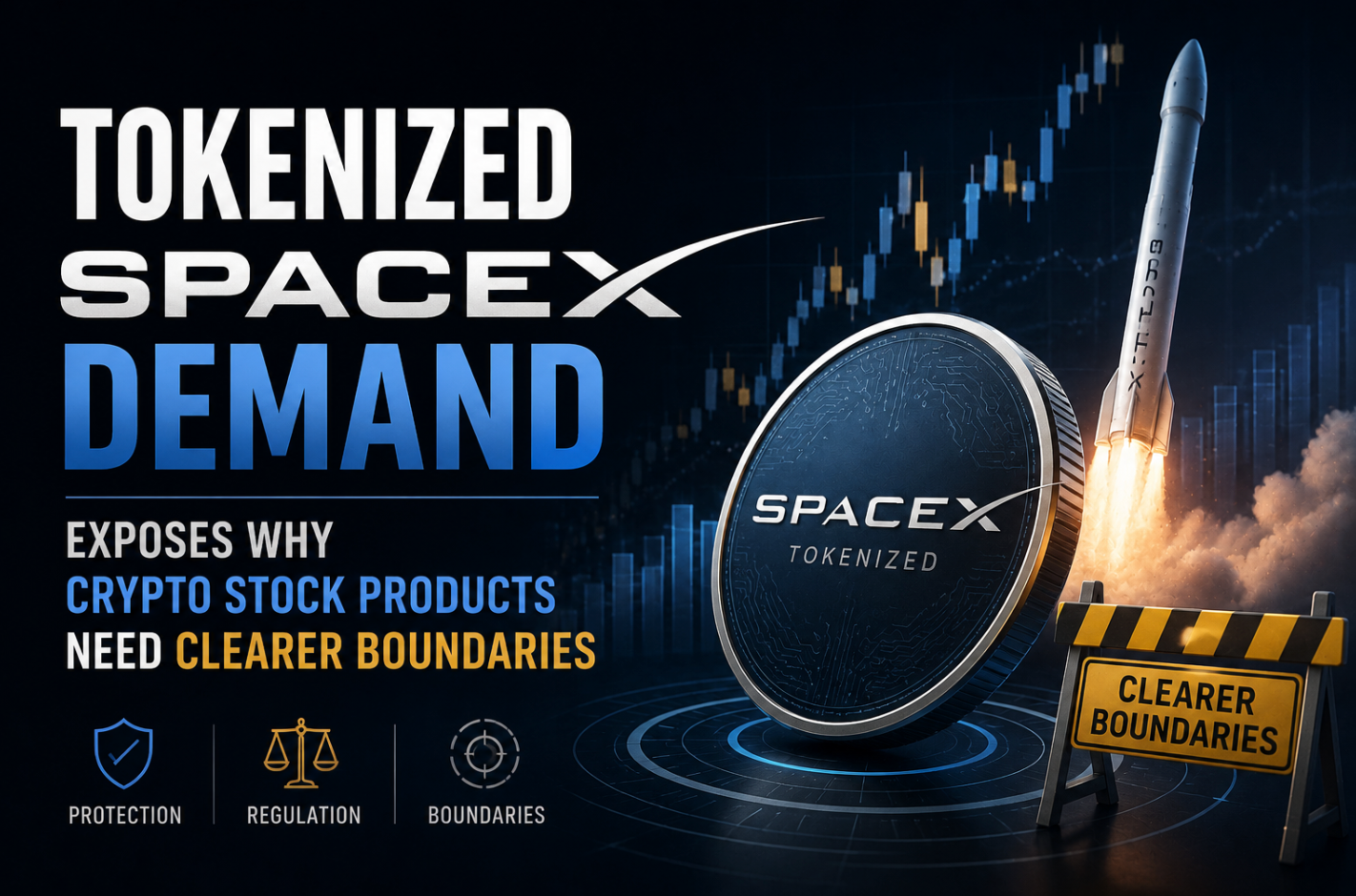
Tokenized SpaceX Demand Exposes Why Crypto Stock Products Need Clearer Boundaries
Tokenized SpaceX share products drew over $1 billion in crypto demand around its historic IPO, but platforms failed to complete allocations due to severe supply shortages from provider xStocks. While


Related Articles
View More
What Drives LITEON Price? AI Data Centers, Optical Networking and Lumentum Stock Explained
SummaryLITEON price is fundamentally linked to Lumentum Holdings stock, LITE.That means the most useful way to analyze LITEON is not through conventional crypto tokenomics but through the economic cha
Lumentum and NVIDIA Partnership Explained: AI Optics, $2 Billion Investment and What It Means for LITEON
SummaryNVIDIA and Lumentum announced a multiyear strategic agreement on March 2, 2026 focused on advanced optical technologies for next-generation AI infrastructure.The agreement includes:a $2 billion
LITEON Risks Explained: AI CapEx, Valuation, Customer Concentration and Optical Technology Risk
SummaryLITEON combines Lumentum's underlying equity risks with an additional tokenized-market layer.The biggest company-level risks include:AI CapEx slowing;extremely high growth expectations;customer