

Crypto Token Buybacks Hit Record $640M: Do Buybacks Actually Create Long-Term Value?
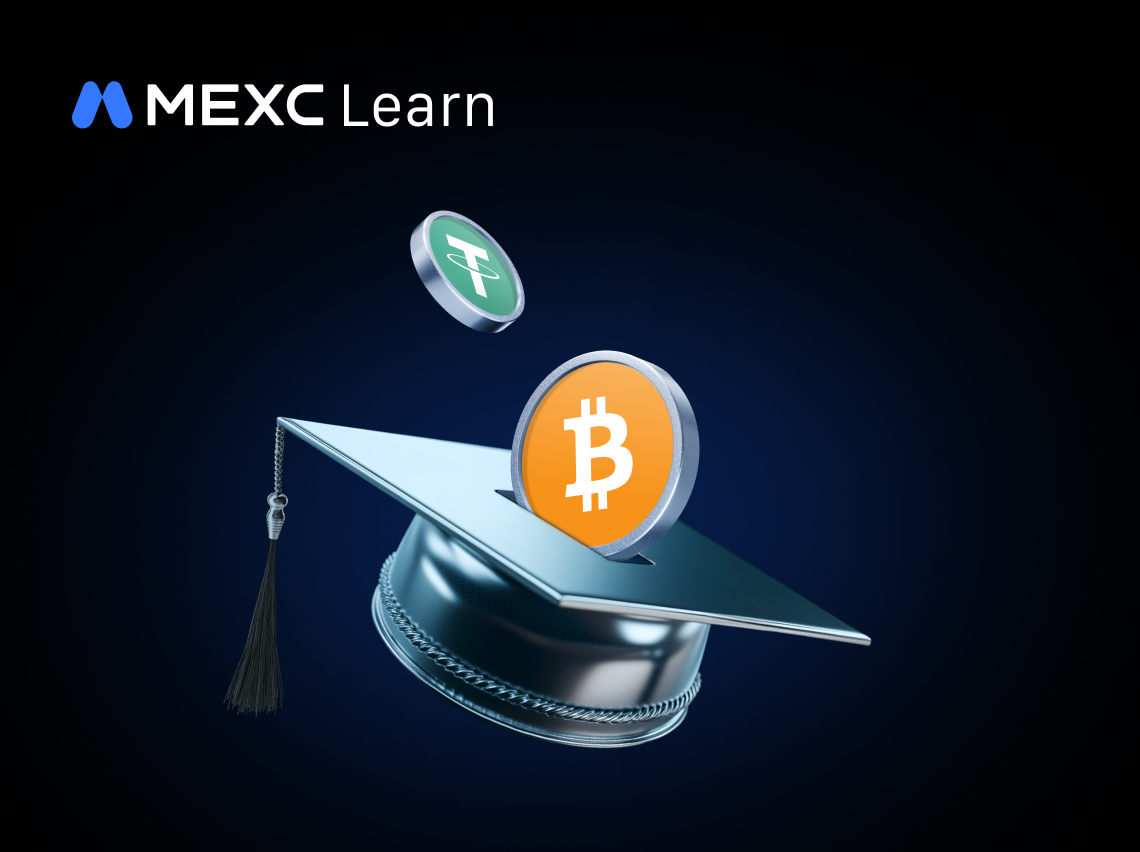
Crypto projects have spent a record amount buying their own tokens in 2026.
According to data from blockchain analytics firm Allium Labs reported by the Financial Times, crypto groups spent approximately $638 million — commonly rounded to $640 million — on token buybacks through August 25, 2026. That compares with roughly $545 million in 2025 and just $366,000 in 2024.
The headline number is striking, but the composition of that spending matters even more.
Hyperliquid and Pump.fun together account for nearly 90% of the total, meaning the apparent industry-wide boom is still heavily concentrated in a small number of protocols.
That raises a more useful question than whether buybacks are becoming popular:
When does a crypto token buyback represent sustainable value creation, and when is it simply temporary buying pressure?
Summary
Crypto token buybacks reached a record approximately $640 million in 2026 through August 25, according to Allium Labs data cited by the Financial Times. Hyperliquid and Pump.fun account for almost 90% of that activity.
A token buyback occurs when a protocol, foundation or related entity uses revenue or treasury funds to purchase its native token from the market.
Buybacks can create additional demand, while buyback-and-burn programs can also permanently reduce token supply. However, neither mechanism guarantees price appreciation.
The most important factors are the source of buyback funding, protocol revenue, token unlocks, emissions, valuation and what happens to repurchased tokens.
The 2026 boom suggests crypto tokenomics are increasingly being evaluated through cash-flow and capital-allocation frameworks rather than scarcity narratives alone.
Why Crypto Token Buybacks Are Surging in 2026
Token buybacks are not new.
Projects have used variations of buyback, burn and fee-distribution mechanisms for years. MEXC has previously explained how a traditional buyback-and-burn model works: a project buys its own tokens and permanently removes them from circulation, usually using protocol revenue or treasury assets.
What is different in 2026 is the scale.
| Period | Reported crypto token buybacks |
|---|---|
| 2024 | ~$366,000 |
| 2025 | ~$545 million |
| 2026 through Aug. 25 | ~$638 million |
Source: Allium Labs data reported by the Financial Times.
The jump reflects a broader shift in how investors judge token economics.
During earlier crypto cycles, projects could attract valuations largely around narratives such as future adoption, governance utility or fixed supply.
Increasingly, investors are asking harder questions:
Does the protocol generate revenue?
Where does that revenue go?
Does the token benefit from increased usage?
Can that economic relationship continue during a weaker market?
What Is a Crypto Token Buyback?
A token buyback happens when a protocol or organization purchases its own token from the market.
Consider a protocol generating $50 million in annual fees. It could use that money for development, liquidity incentives, treasury reserves, distributions to stakeholders or token repurchases.
If $10 million is allocated to buying the native token, the project creates an additional $10 million source of market demand.
What happens next determines the economic effect.
A project might:
| Approach | What happens after purchase | Long-term supply impact |
|---|---|---|
| Buyback and hold | Tokens remain in a protocol-controlled treasury | No permanent reduction |
| Buyback and burn | Purchased tokens are permanently destroyed | Supply declines |
| Buyback and redistribute | Tokens later fund incentives or rewards | Tokens can re-enter circulation |
For a deeper explanation of the mechanics, MEXC's existing guide on buyback and burn tokenomics explains the distinction between holding repurchased tokens and permanently destroying them.
Hyperliquid Is Driving a Large Share of the Trend
Hyperliquid has become one of the clearest examples of revenue-linked token repurchases.
Its Assistance Fund redirects a large portion of protocol fees into open-market HYPE purchases. MEXC's previous analysis of Hyperliquid explains how the structure creates a relatively direct relationship between trading activity, fee generation and demand for HYPE.
The economic loop is straightforward:
More trading activity → more fees → larger Assistance Fund resources → more HYPE purchases.
That is materially different from a project announcing a one-off buyback financed from money raised years earlier.
The first model can potentially regenerate its purchasing power.
The second consumes a finite treasury.
Why Pump.fun Matters Too
Pump.fun accounts for another large portion of this year's buyback spending.
Combined with Hyperliquid, the two platforms represent almost 90% of the approximately $640 million tracked in 2026.
This concentration changes how the record should be interpreted.
It would be inaccurate to conclude that hundreds of crypto protocols have suddenly developed powerful cash-generating token models.
Instead, a small number of platforms with substantial activity are demonstrating how aggressively protocol revenue can be redirected toward native-token demand.
That distinction matters for investors trying to apply the same thesis to other tokens.
MEXC Analyst View: Why the Source of Buyback Capital Matters More Than the Headline Number
According to Priya Sharma, MEXC senior crypto industry analyst, the $640 million record is significant because it marks a shift from purely narrative-driven tokenomics toward models investors can evaluate using measurable economic inputs. However, she argues that gross buyback spending is not the most useful metric on its own. A protocol that sustainably funds repurchases from recurring fees has a fundamentally different economic profile from one spending down a treasury accumulated during an earlier fundraising cycle.
Sharma notes that investors should increasingly compare a protocol's buyback yield with its dilution rate. A token can receive tens of millions of dollars in annual repurchase demand and still experience net supply pressure if team vesting, investor unlocks or incentive emissions release even more value into the market. The relevant question is therefore not simply “How much is the project buying?” but “How large are those purchases relative to revenue, market capitalization and incoming supply?”
She also sees the 2026 trend as evidence that crypto markets are beginning to scrutinize capital allocation in a way that resembles mature financial markets, while emphasizing an important distinction: most crypto tokens are not shares and do not automatically confer legal ownership of protocol earnings. A buyback may strengthen the economic connection between platform usage and a token, but investors still need to understand exactly what rights — if any — the token provides.
Do Crypto Token Buybacks Increase Prices?
They can create buying pressure.
They cannot guarantee a higher price.
Suppose a protocol purchases $20 million of its token during a month.
At the same time:
- investors unlock $40 million of previously restricted tokens;
- user activity declines;
- protocol revenue falls;
- large holders sell $30 million;
- the wider crypto market weakens.
The buyback still exists, but it may be overwhelmed by other sources of selling.
The Financial Times highlighted this limitation when examining the 2026 boom, noting that token performance has varied considerably even among projects using repurchase mechanisms.
This is why “project announces buyback” should not automatically be interpreted as a bullish investment signal.
Buyback vs Burn: They Are Not the Same
A common source of confusion is treating the terms as interchangeable.
A buyback creates a market purchase.
A burn permanently removes tokens from supply.
A project can buy tokens and keep them.
It can burn tokens it already owns without buying any.
Or it can combine the two.
MEXC's detailed explainer on how token burns and buyback-and-burn mechanisms work also emphasizes that a genuine burn should be verifiable on-chain because permanently removing supply is different from simply moving tokens into another controlled wallet.
Revenue-Funded Buybacks vs Treasury-Funded Buybacks
This is arguably the most important distinction in the entire discussion.
Imagine two projects each announce a $100 million token buyback.
Project A
Annual protocol revenue: $500 million
Buyback: $100 million
Funding source: recurring fees
Project B
Annual protocol revenue: $15 million
Buyback: $100 million
Funding source: existing treasury
The headlines look identical.
The economics do not.
Project A could potentially continue buying tokens if revenue remains strong.
Project B eventually exhausts its treasury unless another source of capital appears.
For this reason, investors should examine free cash flow or protocol revenue behind a buyback, rather than ranking projects solely by headline repurchase amounts.
Token Unlocks Can Cancel Out Buybacks
One of the biggest mistakes in tokenomics analysis is looking at buybacks without examining dilution.
Hyperliquid itself illustrates why both sides matter.
MEXC's previous analysis of HYPE noted that large buybacks need to be weighed against the token's unlock schedule. The economic effect depends on whether recurring purchase demand can absorb newly available supply.
A simplified example shows the issue:
| Monthly flow | Value |
|---|---|
| Protocol buybacks | +$30M demand |
| Token unlocks | $50M potential new supply |
| Net balance before other flows | -$20M |
A large buyback can therefore coexist with net dilution pressure.
How Crypto Buybacks Differ From Stock Buybacks
The traditional-finance comparison has limits.
When a company repurchases and retires shares, fewer shares remain outstanding. Each remaining share can represent a larger proportional ownership interest in the company.
Crypto tokens may not work that way.
Depending on their design, tokens may provide:
governance rights;
network utility;
staking participation;
fee discounts;
or no direct legal claim on protocol revenue at all.
Owning 1% of a token supply does not automatically mean owning 1% of the organization that developed the protocol.
Investors should therefore avoid directly applying equity-style earnings-per-share logic to every token buyback.
MEXC's MX Token Provides Another Buyback-and-Burn Example
MEXC itself has used a transparent buyback-and-burn model for MX Token.
Under the MX Token 2.0 framework, MEXC previously allocated 40% of quarterly platform profits toward market buybacks and burns. The Q3 2025 program burned 2.581 million MX, with the transaction publicly verifiable on Ethereum.
By Q4 2025, MEXC reported that MX had reached its primary 100 million circulating-supply objective and shifted its roadmap focus toward broader ecosystem value.
The example illustrates why three details matter when assessing any program: the funding formula, what happens to repurchased tokens and whether the transactions can be independently verified.
How to Evaluate a Crypto Token Buyback
Instead of asking only whether a token has a buyback mechanism, investors can examine a more useful set of variables:
| Question | Why it matters |
|---|---|
| Where does the money come from? | Recurring revenue is generally more repeatable than treasury spending |
| What percentage of revenue funds the buyback? | Shows economic significance |
| Are repurchased tokens burned or held? | Determines permanent supply impact |
| How large is the buyback relative to market cap? | $10M has very different effects on a $100M and $10B token |
| What are upcoming unlocks? | New supply may outweigh purchases |
| Is protocol revenue growing? | Determines future purchasing capacity |
| Is the mechanism automatic or discretionary? | Affects predictability |
| Can transactions be verified on-chain? | Helps assess transparency |
Why the $640 Million Record Matters Beyond Price
The most meaningful development may not be the immediate effect on HYPE, PUMP or any other individual token.
It is the changing standard by which tokenomics are judged.
Projects increasingly have to explain how value moves through the system:
Users → activity → fees → protocol revenue → token economics.
A buyback creates one possible connection.
Staking funded by genuine revenue is another.
Direct fee distribution can be another.
The broader shift is toward token models whose economics can be tested rather than simply described.
What Comes Next for Crypto Buybacks?
Buyback activity could continue rising if successful protocols generate more revenue and competitors adopt similar mechanisms.
But a larger number of programs will also make comparisons more important.
The market will need to distinguish between:
sustainable revenue-funded repurchases;
temporary treasury-funded programs;
buybacks offset by heavy token emissions;
and programs that genuinely reduce long-term circulating supply.
The next stage of the token-buyback trend is therefore likely to be less about whether a project announces a repurchase and more about whether the underlying economics survive a full market cycle.
FAQ
What is a crypto token buyback?
A token buyback occurs when a crypto protocol, foundation or related organization purchases its native token from the market.
How much have crypto projects spent on token buybacks in 2026?
Allium Labs data reported by the Financial Times puts the figure at approximately $638 million through August 25, 2026, often rounded to $640 million.
Which projects account for most crypto token buybacks in 2026?
Hyperliquid and Pump.fun together account for nearly 90% of the tracked total.
Do token buybacks increase crypto prices?
Not necessarily. They create additional buying demand, but price performance also depends on token unlocks, emissions, user demand, protocol revenue, valuation and wider market conditions.
What is the difference between a token buyback and token burn?
A buyback purchases tokens from the market. A burn permanently destroys tokens. Projects can combine both mechanisms, but they are not inherently the same.
Are crypto token buybacks the same as stock buybacks?
No. Stocks generally represent legal ownership interests in companies, while the legal and economic rights attached to crypto tokens vary significantly.
What makes a token buyback sustainable?
Recurring protocol revenue, transparent rules, manageable dilution and a buyback size that does not compromise the protocol's operating needs are among the most important factors.
Disclaimer
This article is for informational and educational purposes only and does not constitute financial or investment advice. Token buybacks, burns and other tokenomics mechanisms do not guarantee price appreciation or investment returns.
Popular Articles
View More
Oura Competitors: Samsung, Apple and the Smart Ring Market
Oura's competitors fall into three groups, according to its IPO prospectus: smartwatch makers such as Apple, Google and Samsung; fitness wearables such as Garmin, Coros and Whoop; and software-only
Microsoft Stock Guide: Azure, Copilot, Cloud Growth and AI CapEx Explained
Microsoft stock trades as MSFT on the Nasdaq. Azure and Microsoft 365 generate most of its value, and Copilot is turning AI into paid revenue. In fiscal Q4 2026 revenue reached $90.0 billion, up 18%
Mag 7 Stocks Explained: Why Nvidia, Apple, Microsoft, Amazon, Meta, Tesla and Google Matter
The Mag 7 stocks are Nvidia (NVDA), Apple (AAPL), Microsoft (MSFT), Amazon (AMZN), Meta (META), Tesla (TSLA) and Alphabet (GOOGL/GOOG). As of mid-2026 the seven together carried roughly 34–35% of the
Hot Crypto Updates
View More
Crypto Exchange Fees in 2026: Who Actually Lets You Keep More?
A no-fluff breakdown of the lowest-fee crypto exchanges in 2026 — spot rates, futures charges, withdrawal costs, and the hidden fees most comparisons miss. Overview Every crypto exchange claims to

KPI (KPI) MEXC Spot Trading Fee: Complete Guide for Beginners
Understanding MEXC spot trading fees is crucial when trading KPI (KPI). MEXC operates on a maker-taker fee structure with 0% fees for makers and 0.05% fees for takers. This competitive fee structure

Molten (MOLTEN) MEXC Spot Trading Fee: Complete Guide for Beginners
Understanding MEXC spot trading fees is crucial when trading Molten (MOLTEN) tokens. MEXC operates on a maker-taker fee structure with 0% fees for makers and 0.05% fees for takers. This competitive

Trending News
View More
What Is Restaking? How Shared Security Multiplies Yield and Risk
What is restaking, and where does the extra yield come from? Learn how shared security works and why slashing, liquidity and smart-contract risks stack up.
The Best Crypto Lending Platform Is the One You Can Exit
The best crypto lending platform is not simply the one with the highest APY. See why liquidity and exit conditions make Aave a practical benchmark.

Related Articles
View More
"Uptober" Hits a Wall: ETF Flows Reverse as 17,733 BTC Flood the Market — Buy the Dip or Run for the Exits? | MEXC Alpha Trader Weekly Research Report
Week 2 of October 2026Statistics period: October 7 – October 13, 2026Data cutoff: October 13, 2026Core NarrativeOver the past week, the crypto market went through a full cycle of an early-October mome
October Rate Hike Odds Collapse From 70% to 14% — Is BTC Headed to $93,700 or $82,500? | MEXC Alpha Trader Research Weekly
First Week of October 2026Settlement Period: September 30, 2026 – October 6, 2026Data Cutoff: October 6, 2026Core NarrativesOver the past week, the crypto market experienced a dip followed by a reboun
PMI Beats Expectations, Sparking Bond Market Rally; BTC Breaks Key Support—Can Counter-Trend ETF Inflows Provide a Floor? | MEXC Alpha Trader Research Weekly
Week 4 of September 2026Reporting Period: September 23 – September 29, 2026Data Cutoff: September 29, 2026Core NarrativeBurdened by weak macroeconomic indicators and a surge in bond yields, the crypto
Rate Hike Lands, BTC Hits 8-Month High — Bad News Priced In or a Short-Squeeze Rally? | MEXC Alpha Trader Weekly Research
Week 3 of September 2026Statistics Period: September 16 – September 22, 2026Data Cutoff: September 22, 2026Core NarrativeOver the past week, crypto markets moved through a full cycle of pre-decision p






