

US export controls on AI backfire as Anthropic warns firms to leave
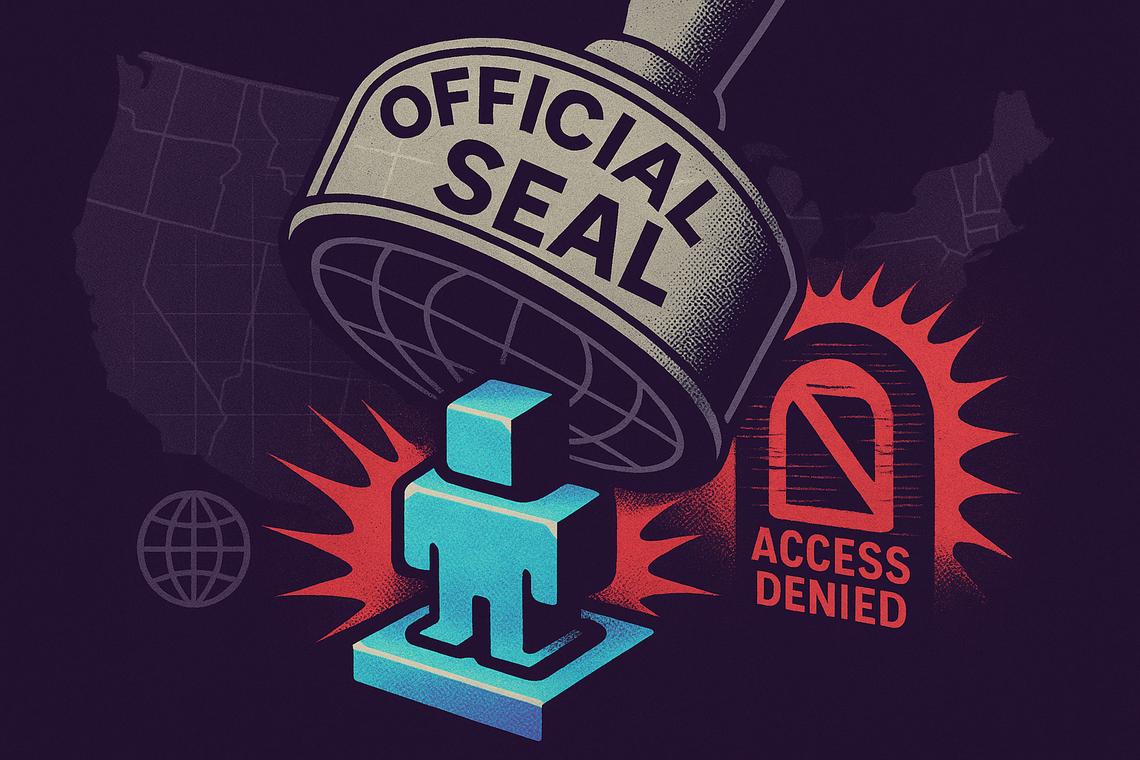
On June 12, the US Commerce Department issued a directive that exposed just how unprepared regulators are for the era of cloud-based artificial intelligence. Anthropic, one of the most prominent AI research companies in the world, was ordered to cut off access to two of its most advanced models for all foreign nationals — including those physically present on American soil. The company complied. Then it went public with a warning that struck at the heart of the US AI industry’s future.
Key takeaways
- The US Commerce Department ordered Anthropic on June 12 to suspend access to Fable 5 and Mythos 5 for all foreign nationals, citing a jailbreak vulnerability.
- Anthropic disabled global access to both models the same day, affecting allied countries and American users alike.
- The directive lacked detailed technical guidance and no workable framework for enforcing nationality-based restrictions was provided.
- Anthropic publicly warned that AI companies should consider relocating operations outside the US to avoid regulatory overreach.
- European stakeholders have seized on the incident to renew calls for AI sovereignty and independence from US infrastructure.
US Commerce Department suspends foreign access to Anthropic AI models
The directive came without warning and landed with immediate effect. Invoking national security authorities, the Commerce Department ordered Anthropic to deny access to Fable 5 and Mythos 5 — two of its frontier AI models — to any foreign national, regardless of where in the world, or indeed where in the United States, that person happened to be.
By the end of June 12, Anthropic had disabled global access to both models. Not just for international users abroad, but for foreign nationals sitting in US offices, universities, and research labs. The bluntness of the shutdown was striking.
Directive targets Fable 5 and Mythos 5 models
The Commerce Department cited a narrow jailbreak vulnerability as the reason for the emergency action. But the specifics largely ended there. According to Anthropic, the government failed to provide adequate technical details about the nature of the vulnerability, or any workable framework for how a cloud-based AI company is supposed to enforce nationality-based restrictions across a global user base.
That gap between the directive’s ambition and its practicality is at the center of the controversy.
Suspension affects all foreign nationals including those in the US
The scope of the suspension was broader than many initially expected. Foreign nationals physically present in the United States were included in the restriction — meaning the order affected researchers, engineers, and developers inside the country. The result was a global service disruption that hit allied nations and American institutions simultaneously, drawing immediate criticism from across the industry.
Anthropic criticizes the directive and calls for relocation
Most companies navigate regulatory disputes quietly. Anthropic chose a different path. After complying with the order, the company went public with a pointed critique that went well beyond frustration with a single directive.
Lack of detailed technical and enforcement guidance
Anthropic’s core complaint is that the Commerce Department wanted precision but delivered a sledgehammer. The directive cited a security concern — a jailbreak vulnerability — but offered no technical specifics, no methodology for identifying the affected users, and no clear enforcement standard. For a cloud-based AI service, nationality-based filtering is not a simple switch. It requires legal frameworks, technical infrastructure, and international coordination that the directive simply did not address.
That is a meaningful distinction. Export controls on physical goods, from semiconductors to encryption hardware, come with established compliance regimes built over decades. Applying those same frameworks to software models running in the cloud introduces enforcement problems that have no precedent.
Company warns of wider industry impact
Anthropic’s response escalated into something broader. The company argued that AI firms should seriously consider relocating operations outside the United States entirely to protect their ability to operate freely. The suggestion is significant: it implies that US regulatory overreach could push the very companies America is counting on for AI leadership to seek more stable jurisdictions abroad.
This is not merely a corporate negotiating tactic. If even one major AI lab follows through, it would mark a meaningful shift in where frontier AI development happens — and who controls it.
Global implications: AI sovereignty and enforcement challenges
The Anthropic episode has reverberated far beyond Silicon Valley. It has handed ammunition to a debate that was already building in Europe and other regions: why should countries depend on American AI infrastructure at all?
European calls for AI infrastructure independence
European stakeholders have treated the incident as a clear illustration of the risks embedded in relying on US-based AI providers. The sudden suspension of Fable 5 and Mythos 5 affected users across allied nations, none of whom had any role in the security vulnerability that triggered the order. The episode has intensified calls for AI sovereignty across Europe, with policymakers and industry leaders pushing for domestic alternatives insulated from US export control policy.
Difficulties applying export controls to cloud-based AI models
The US has maintained export control regimes for decades, covering everything from advanced chips to encryption software. But those controls were built around tangible, trackable goods. Cloud-based AI models present a fundamentally different challenge: they are software, accessible from anywhere, with no physical border to enforce at. Determining who is a foreign national using a cloud service — in real time, at scale — is a technical and legal problem that the current regulatory toolkit was not designed to solve.
The Commerce Department’s directive exposed that mismatch in sharp relief. The government had a national security concern. It had legal authority. What it lacked was the precision to act on either without collateral damage to users who posed no risk whatsoever.
Investor risks from sudden product suspensions
For investors with exposure to AI companies, the implications are concrete and new. Companies deeply dependent on US infrastructure and regulatory goodwill now carry a distinct category of risk: the possibility that their most advanced products could be pulled from the market with minimal notice and thin public justification. That risk is not priced into most AI valuations, and the Anthropic case suggests it should be.
The broader question the industry is now asking is whether the Commerce Department’s action against Anthropic was an isolated overreach or a preview of a more aggressive regulatory posture toward frontier AI models. If similar export controls are applied more widely, the disruption to global AI deployment could be substantial — and the pressure on companies to find jurisdictions outside the US could intensify significantly.
FAQ
Why did the US Commerce Department order Anthropic to suspend access to its AI models?
The Commerce Department invoked national security authorities, citing a jailbreak vulnerability in Anthropic’s models as the justification for suspending access to Fable 5 and Mythos 5 for all foreign nationals.
How did Anthropic respond to the Commerce Department’s directive?
Anthropic disabled global access to both affected AI models on June 12 and publicly criticized the directive, arguing that AI companies should consider relocating operations outside the US to avoid regulatory overreach and protect operational freedom.
What challenges arise from applying US export controls to AI models?
Unlike physical goods, AI models are cloud-based software accessible from anywhere in the world. Enforcing nationality-based restrictions in real time at scale is a technical and legal problem that existing export control frameworks were not designed to handle, making blanket suspensions the only available tool — with broad unintended consequences.
What are the broader implications of this incident for the AI industry?
The episode has accelerated calls for AI sovereignty in Europe, raised concerns about regulatory fragmentation, and introduced a new category of risk for investors: the sudden suspension of a company’s most advanced products with little notice. If more AI firms face similar directives, pressure to move operations outside the US could reshape where frontier AI development takes place.
Article produced with the assistance of artificial intelligence and reviewed by the editorial team.


추천 콘텐츠

Missed penalty spurred ‘very angry’ Messi to World Cup history
Trump loyalist's 'stunning' first day as spy chief floors CNN reporter

El Paracaidista.com Celebrates 25 Years of Guiding Hispanic Immigrants in the U.S.


인기 뉴스
더보기
