

Nvidia has once again delivered results that underscore the extraordinary scale of the artificial-intelligence infrastructure boom. The chipmaker reported fiscal second-quarter revenue of $96.2 billioNvidia has once again delivered results that underscore the extraordinary scale of the artificial-intelligence infrastructure boom. The chipmaker reported fiscal second-quarter revenue of $96.2 billio
Nvidia Earnings Beat Estimates as Revenue Hits $96.2B, Company Forecasts $108B Next Quarter

Nvidia has once again delivered results that underscore the extraordinary scale of the artificial-intelligence infrastructure boom. The chipmaker reported fiscal second-quarter revenue of $96.2 billion, comfortably ahead of Wall Street expectations, while adjusted earnings also surpassed forecasts.
More importantly, Nvidia’s outlook points to another major jump in sales, with the company projecting $108 billion in revenue for its fiscal third quarter. The figures provide fresh evidence that demand for AI computing remains exceptionally strong, even as investors begin paying closer attention to rising costs and profitability.
1.Revenue Growth Continues to Accelerate
Nvidia’s latest numbers show how dramatically the company’s business has expanded. Revenue for the quarter ended July 26 reached $96.22 billion, representing an increase of 106% from the same period a year earlier and 18% from the previous quarter. Analysts had expected revenue of roughly $92.27 billion. Adjusted earnings came in at $2.22 per share, exceeding the approximately $2.09 forecast. The company’s ability to deliver another large earnings beat is particularly notable because expectations for Nvidia had already risen significantly ahead of the report.
2.Data Center Business Remains the Main Growth Engine
The strongest part of Nvidia’s results came from its Data Center operation, which generated $89 billion during the quarter. That figure increased 117% from a year earlier and accounted for the overwhelming majority of Nvidia’s total revenue.
The performance reflects continued spending by cloud providers and other large technology companies seeking additional computing capacity for AI workloads. Nvidia’s accelerated-computing products have become a central component of this infrastructure buildout, allowing the company to benefit directly from the rapid expansion of generative AI and other computationally intensive applications.
3.$108 Billion Forecast Raises the Bar Again
Nvidia’s forward guidance may be even more significant than its latest earnings beat. For the fiscal third quarter, the company expects revenue of approximately $108 billion, with a possible variation of 2% in either direction. That compares with Wall Street expectations of roughly $103.9 billion. If Nvidia reaches the midpoint of its forecast, quarterly revenue would increase by more than $11 billion from the latest reported period. The company also said its outlook does not assume Data Center compute revenue from China, making the guidance particularly notable given the scale of the forecast.
4.AI Demand Is Expanding Beyond GPUs
The latest results also demonstrate that Nvidia’s opportunity is becoming broader than simply selling individual graphics processors. The company is increasingly positioning its technology as a complete computing platform that includes chips, networking, systems and software. Its next-generation Vera Rubin architecture is entering production, giving customers another path to increase AI computing capacity. Nvidia has also highlighted demand from AI laboratories and major cloud providers, suggesting that the company expects infrastructure investment to remain elevated as businesses move from experimentation toward larger-scale AI deployment.
5. Rising Costs Create a New Challenge
Despite the impressive growth, Nvidia’s report contained a potential warning sign for investors: margins are expected to narrow down over the coming months. The company reported a 75% gross margin for the second quarter but expects approximately 74% in the third quarter (plus or minus 50 basis points), with guidance pointing toward a temporary floor of 71%–72% in Q4. This compression is primarily driven by transition costs tied to ramp-up of the next-generation Vera Rubin platform and rapid spikes in high-bandwidth memory (HBM) and component costs. Even small changes in margins can have a major financial impact at Nvidia’s scale, making cost management a central focus for analysts.
6.Nvidia Faces Supply and Geopolitical Risks
Meeting demand could prove just as important as generating it. Nvidia has indicated that supply constraints remain a factor and that it is working with suppliers to secure memory, power and other infrastructure required for expansion. At the same time, restrictions affecting advanced semiconductor exports to China continue to create uncertainty around one of the world’s largest technology markets. Nvidia’s current guidance excludes Data Center compute revenue from China, which reduces the immediate impact on its forecast but also highlights the geopolitical challenges surrounding the global AI-chip industry.
7. Why Nvidia’s Results Matter for Markets
Nvidia’s earnings have become an important barometer for the tech sector, given its position at the center of the AI buildout. Strong demand indicates that major tech giants are continuing to pour capital into data centers and hardware infrastructure.
Beyond equity markets, the company’s performance influences broader investor risk appetite across alternative asset classes:
Digital Assets: Cryptocurrencies often move in tandem with high-beta tech sentiment. At the time of reporting, Bitcoin traded near $78,713, Ethereum stood around $2,489, and Solana was near $100.71.
Semiconductor & Cloud Ecosystem: Results directly shape market valuations across memory suppliers, foundry partners, and cloud service providers tied to AI infrastructure spending.
8. Investors Shift Focus to Sustainability of Growth
The central debate around Nvidia is no longer whether AI demand exists, but whether the company can maintain high growth while preserving profitability and generating long-term cash flow. Management projected approximately 70% revenue growth for the fiscal year ending in January 2028, reinforcing confidence that the infrastructure cycle remains strong.
However, several key variables could influence how much of that growth translates into bottom-line profits:
Supply Constraints: Securing sufficient advanced memory, chip packaging, and power infrastructure remains a gating factor for fulfillment.
Competitive Pressures & Custom Silicon: Major hyperscalers and rivals continue to develop in-house AI chips to reduce hardware dependencies.
Spending Durability: Long-term capital expenditures depend on whether end-users can monetize AI deployments effectively.
Conclusion
Nvidia’s fiscal second-quarter results delivered another powerful signal for the AI industry. Revenue reached $96.2 billion, beating expectations by several billion dollars, while Data Center sales climbed to $89 billion as demand for AI computing continued to accelerate.
The company then raised the stakes with a $108 billion revenue forecast for the next quarter. While the expected decline in gross margin and ongoing supply and geopolitical risks introduce uncertainty, the overall picture remains one of extraordinary expansion. Nvidia’s latest report suggests that the AI investment cycle is still generating enormous demand, but the next phase of the story will increasingly depend on how efficiently the company can turn that demand into sustainable profitability.
Disclaimer: This article is for informational and educational purposes only and does not constitute financial, investment, or trading advice. Financial metrics and market data reflect conditions at the time of reporting and are subject to change.
市場の機会
Audiera価格(BEAT)
--
----
USD
Audiera (BEAT) ライブ価格チャート
このページで共有されている記事は公開プラットフォームから収集したものであり、参考情報としてのみ提供されています。MEXCの立場や見解を代表するものではありません。すべての権利は Mubashir に帰属します。第三者の権利を侵害するコンテンツがあると思われる場合は、service@support.mexc.com までご連絡いただければ速やかに削除いたします。MEXCはいかなるコンテンツの正確性、完全性、適時性も保証せず、提供された情報に基づいて取られたいかなる行動についても責任を負いません。本コンテンツは、金融、法律、またはその他の専門的なアドバイスを構成するものではなく、MEXCによる推奨または支持として解釈されるべきものでもありません。専門家の洞察と詳細な分析については、MEXC 学ぶ をご覧ください。
Audiera の最新情報
もっと見る
Broadcomの決算後下落が示すAIインフラ銘柄への高まる期待値
BroadcomはAIに牽引された力強い四半期決算を再び報告しましたが、株価の反応は、堅実な数字だけではもはや市場を驚かせるには不十分であることを示しました。第2四半期の売上高は前年同期比48パーセント増の222億ドルに達し、AI半導体の売上高は143パーセント増の108億ドルに急増しました。同社はまた、次回のAI半導体売上高を160億ドルと予測しています。問題は需要の弱さではなく、期待値の高さにありました。AIインフラ銘柄が最近急騰していたため、トレーダーはより大きな上振れサプライズを求めており、Broadcomの業績は期待のハードルを十分に超えることができませんでした。
2026/06/04
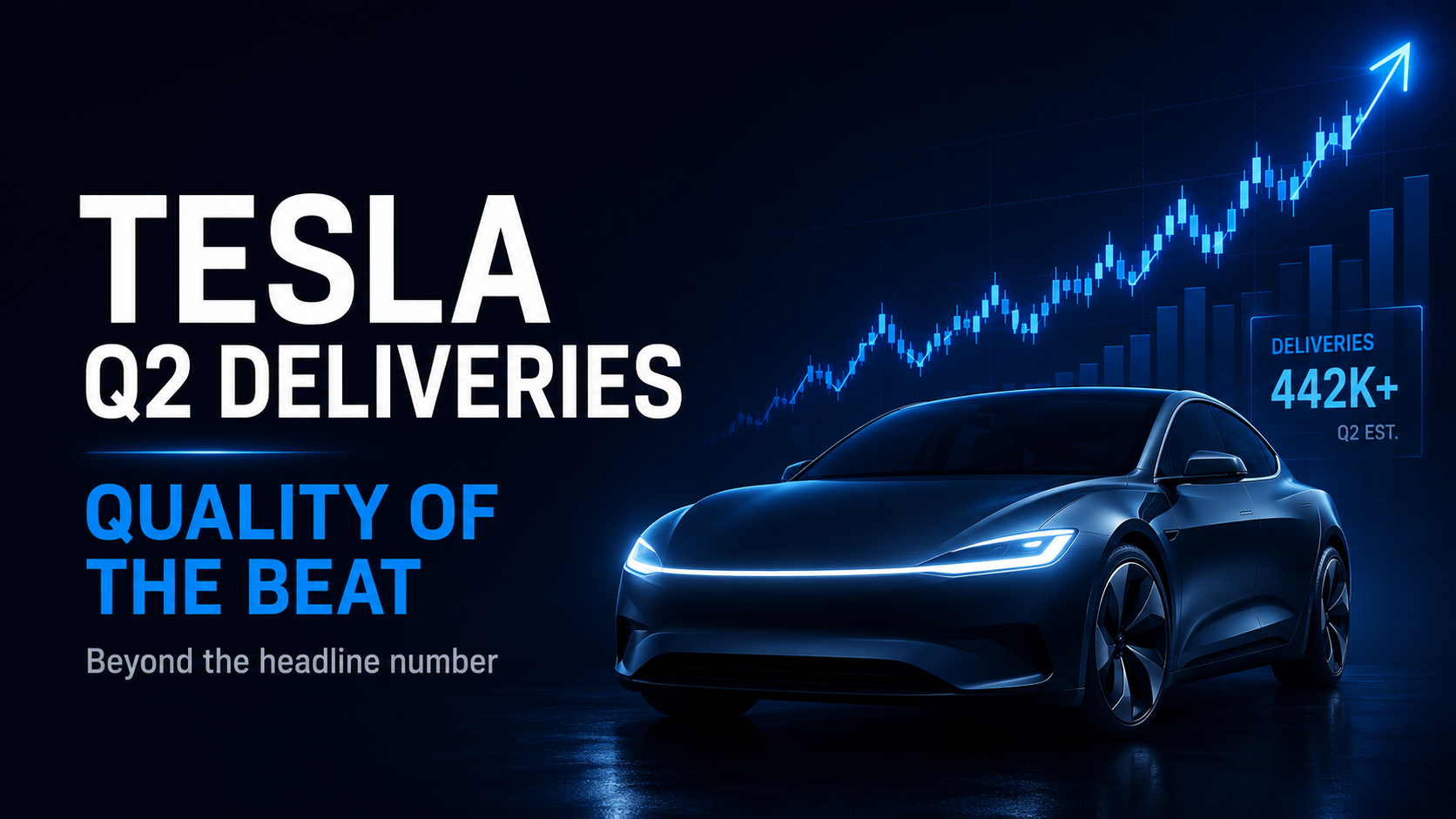
テスラ、Q2発表前に株価急騰:真の試練は「量」ではなく「質」にある理由
テスラ(TSLA)株は、第2四半期(Q2)の納車台数発表を前に8.46%急騰して411.84ドルとなり、主要株価指数を大幅にアウトパフォームしました。アナリストはこれを「期待値の書き換えトレード」と見ています。ウォール街はハードルを急激に引き上げており、大手金融機関はウィスパー数値を413,000〜420,000台の範囲に上方修正しました。これはテスラ公式がまとめたコンセンサスである406,024台を大きく上回ります。NHTSAの調査終了や、AIデータセンターをターゲットにしたSunrunとの16GW規模の巨大仮想発電所(VPP)提携がテスラのエネルギー・AIインフラの物語を支えているものの、最終的な市場の反応は、この納車台数の上振れが「持続可能な世界需要」を反映しているのか、それとも「利益率を削った在庫処分」に過ぎないのかという「質」にかかっています。
テスラ株はQ2納車台数レポートの発表を前に急騰しましたが、この動きを同社がすでに市場予想を上回ったことの確認と捉えるべきではありません。むしろ、公式データが到着する前に、市場が期待値をリセットするためのトレード(期待値書き換えトレード)と理解するのが適切です。
TSLAは先日、前日比8.46%高の411.84ドルで引け、市場全体を大幅にアウトパフォームしました。比較として、ナスダック総合指数は2.07%上昇、S&P 500は1.18%上昇、QQQは2.49%上昇しました。この上昇の大きさは、これが単なるハイテク株全体のラリーではないことを示唆しています。むしろ、テスラの株価の上昇は、市場のリスク許容度の高まり、納車予想の引き上げ、規制圧力の緩和、そしてテスラのエネルギーおよびAIインフラの物語への関心の再燃が組み合わさった結果を反映しています。
重要な問いは、テスラがコンセンサスを上回れるかどうかではなく、その上振れがこの最近のラリーを正当化するほど「質の高いもの」であるかどうかです。
2026/06/30

Mastercardが最大18億ドルでBVNKを買収完了—ステーブルコインがグローバル決済の中核に参入
2026/8/3、Mastercardは3月に取引を発表した後、ステーブルコインインフラプロバイダーのBVNKの買収を完了しました。
2026/08/04


ホット
現在、市場で大きな注目を集めているトレンドの暗号資産
暗号資産価格
取引高が最も多い暗号資産