

On Wednesday, June 17, the Federal Reserve will hand down its latest interest-rate decision — and it lands at a pivotal moment for crypto. It is one of the first meetings chaired by Kevin Warsh, who tOn Wednesday, June 17, the Federal Reserve will hand down its latest interest-rate decision — and it lands at a pivotal moment for crypto. It is one of the first meetings chaired by Kevin Warsh, who t
Fed Rate Decision June 17: Will a Hawkish Hold Under New Chair Kevin Warsh Pressure Bitcoin?

著者:OoJae
共有
On Wednesday, June 17, the Federal Reserve will hand down its latest interest-rate decision — and it lands at a pivotal moment for crypto. It is one of the first meetings chaired by Kevin Warsh, who took over from Jerome Powell in May, and it comes just as Bitcoin tries to recover from a 53% drawdown to around $59,000. Markets are pricing at roughly an 86% chance . The Fed holds rates at 3.50%–3.75%, where they've sat since December. But with April inflation still running at 3.8% and oil elevated, the bigger question isn't whether the Fed holds — it's how hawkish the message sounds.
For crypto, the words and the projections may matter more than the rate itself. Bitcoin and other risk assets are highly sensitive to the path of rates and liquidity: a hawkish hold can cap a rebound, while any dovish hint can ignite one. Here's what to expect from the June meeting, why the new Chair changes the calculus, and how traders can prepare.
Key Takeaways
The FOMC meets June 16–17, with the decision and updated projections due Wednesday, June 17; market price ~86% odds of a hold at 3.50%–3.75%.
It's among the first meetings under new Fed Chair Kevin Warsh, who is seen as unlikely to quickly cut — a hawkish tilt versus markets hoping for easing.
Inflation remains sticky: April CPI (released May 12) came in at 3.8% year-over-year, well above the Fed's 2% target.
The April meeting was the most divided FOMC vote since 1992 (8–4 to hold), showing how split policymakers are.
For crypto, the dot plot and the Chair's tone may move markets more than the rate itself: a hawkish hold pressures Bitcoin, dovish hints could spark a rally.
Wildcards: a possible US–Iran peace deal could lower oil and inflation, while a Bank of Japan rate hike could unwind the yen carry trade and pressure liquidity.
What the Fed Is Expected to Do on June 17
The base case is another hold at 3.50%–3.75%, the range in place since December 2025 after a round of late-2025 cuts. The CME FedWatch tool prices roughly an 86% probability of no change, and prediction markets lean even more heavily toward a hold. This meeting also brings an updated Summary of Economic Projections, including the closely watched "dot plot", against a backdrop of April CPI at 3.8% and GDP growth projected near 2.4%. The April 28–29 meeting underlined how divided the committee is: policymakers held in an 8–4 vote, the most dissents since October 1992, with one official pushing for a cut and three opposing an easing bias.
The New Chair Factor: Kevin Warsh
Powell's chairmanship ended in mid-May, and he remains on the board as a governor. Kevin Warsh, confirmed by the Senate, now leads the Fed, and June 16–17 is one of his first meetings at the helm. Analysts broadly expect a Warsh Fed to be in no rush to cut, given a resilient economy and still-elevated inflation. That makes his first press conference a key event in its own right: markets will parse his tone for how the new leadership weighs inflation risk against growth. A hawkish hold is the consensus expectation.
Why the Fed Matters So Much for Bitcoin
Crypto trades as a high-beta risk asset tied to liquidity and real yields. Higher-for-longer rates and rising Treasury yields tend to pressure Bitcoin; rate-cut expectations and falling yields support it. The early-June crypto rout coincided with rising yields and elevated oil, and Standard Chartered's recent “crypto spring” thesis partly hinges on rate cuts arriving later in 2026. That makes the June dot plot — how many cuts the Fed still projects this year — a critical input for crypto, arguably more important than the June rate decision itself.
Scenarios for Crypto
Hawkish hold (base case) — rates unchanged, the dot plot shows fewer 2026 cuts, and Warsh stresses inflation vigilance. Likely risk-off: Bitcoin could retest support and liquidations rise.
Dovish hold (bullish surprise) — the Fed holds but signals cuts are coming or acknowledges inflation progress. Likely a relief rally in BTC and ETH.
Surprise cut (low odds) — would probably spark a sharp crypto rally, but markets currently see this as unlikely.
The Macro Wildcards
Two outside forces could overshadow the Fed. A US–Iran peace deal would likely push oil lower, cooling inflation and giving the Fed more room to ease, a crypto positive. Conversely, a Bank of Japan rate hike could trigger an unwind of the yen carry trade, draining risk-asset liquidity worldwide — a crypto negative. Both are worth watching alongside the FOMC decision.
How to Prepare on MEXC
Event-driven volatility spikes around FOMC announcements. The sensible playbook is to avoid over-positioning into the release, use take-profit and stop-loss orders, and keep leverage controlled. Check the CME FedWatch tool the day before, then focus on the dot plot and Warsh's tone rather than the headline rate. You can trade BTC/USDT and ETH/USDT on MEXC, with futures risk tools to manage the swings.
Conclusion
The Fed is widely expected to stand pat on June 17, so the real signal will be in the projections and the new Chair's tone. A hawkish hold that pushes rate cuts further out would be a headwind for a crypto market still trying to find its footing; a dovish surprise could supercharge the "crypto spring" narrative. Either way, expect sharp moves — size positions accordingly and let the data, not the noise, guide your decisions.
Disclaimer: This content is for educational and reference purposes only and does not constitute any investment advice. Digital asset investments carry high risk. Please evaluate carefully and assume full responsibility for your own decisions.
市場の機会
Audiera価格(BEAT)
--
----
USD
Audiera (BEAT) ライブ価格チャート
このページで共有されている記事は公開プラットフォームから収集したものであり、参考情報としてのみ提供されています。MEXCの立場や見解を代表するものではありません。すべての権利は OoJae に帰属します。第三者の権利を侵害するコンテンツがあると思われる場合は、service@support.mexc.com までご連絡いただければ速やかに削除いたします。MEXCはいかなるコンテンツの正確性、完全性、適時性も保証せず、提供された情報に基づいて取られたいかなる行動についても責任を負いません。本コンテンツは、金融、法律、またはその他の専門的なアドバイスを構成するものではなく、MEXCによる推奨または支持として解釈されるべきものでもありません。専門家の洞察と詳細な分析については、MEXC 学ぶ をご覧ください。
Audiera の最新情報
もっと見る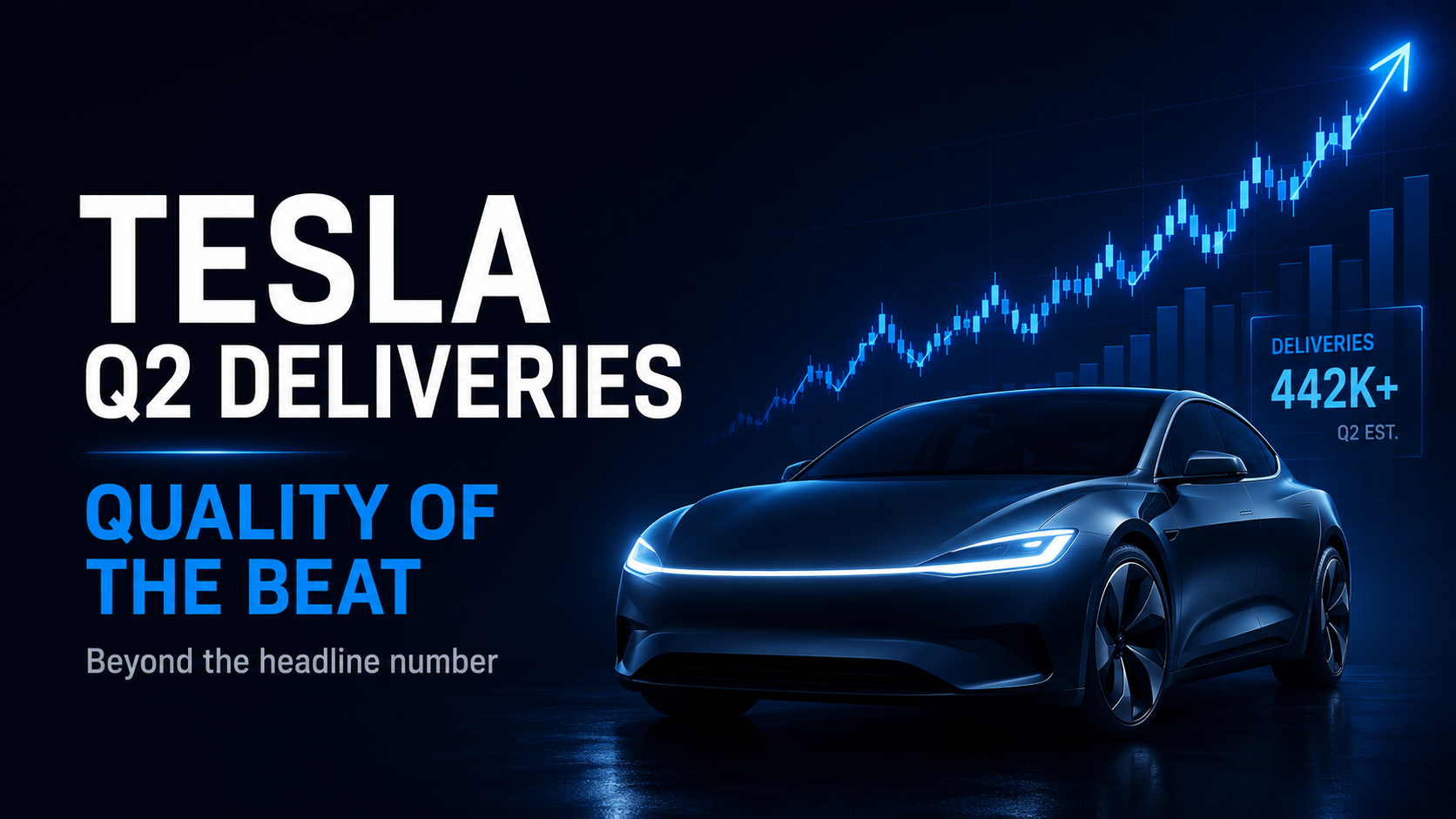
テスラ、Q2発表前に株価急騰:真の試練は「量」ではなく「質」にある理由
テスラ(TSLA)株は、第2四半期(Q2)の納車台数発表を前に8.46%急騰して411.84ドルとなり、主要株価指数を大幅にアウトパフォームしました。アナリストはこれを「期待値の書き換えトレード」と見ています。ウォール街はハードルを急激に引き上げており、大手金融機関はウィスパー数値を413,000〜420,000台の範囲に上方修正しました。これはテスラ公式がまとめたコンセンサスである406,024台を大きく上回ります。NHTSAの調査終了や、AIデータセンターをターゲットにしたSunrunとの16GW規模の巨大仮想発電所(VPP)提携がテスラのエネルギー・AIインフラの物語を支えているものの、最終的な市場の反応は、この納車台数の上振れが「持続可能な世界需要」を反映しているのか、それとも「利益率を削った在庫処分」に過ぎないのかという「質」にかかっています。
テスラ株はQ2納車台数レポートの発表を前に急騰しましたが、この動きを同社がすでに市場予想を上回ったことの確認と捉えるべきではありません。むしろ、公式データが到着する前に、市場が期待値をリセットするためのトレード(期待値書き換えトレード)と理解するのが適切です。
TSLAは先日、前日比8.46%高の411.84ドルで引け、市場全体を大幅にアウトパフォームしました。比較として、ナスダック総合指数は2.07%上昇、S&P 500は1.18%上昇、QQQは2.49%上昇しました。この上昇の大きさは、これが単なるハイテク株全体のラリーではないことを示唆しています。むしろ、テスラの株価の上昇は、市場のリスク許容度の高まり、納車予想の引き上げ、規制圧力の緩和、そしてテスラのエネルギーおよびAIインフラの物語への関心の再燃が組み合わさった結果を反映しています。
重要な問いは、テスラがコンセンサスを上回れるかどうかではなく、その上振れがこの最近のラリーを正当化するほど「質の高いもの」であるかどうかです。
2026/06/30

Bitget、日本市場撤退へ 12月末に未決済ポジション強制決済
Bitgetが2026年8月3日に日本居住者向けサービス終了を発表。12月31日までに未決済ポジションを決済しないと強制決済されるため、資産保有者は期限までの対応が必要です。
2026/08/04

Mastercardが最大18億ドルでBVNKを買収完了—ステーブルコインがグローバル決済の中核に参入
2026/8/3、Mastercardは3月に取引を発表した後、ステーブルコインインフラプロバイダーのBVNKの買収を完了しました。
2026/08/04


ホット
現在、市場で大きな注目を集めているトレンドの暗号資産
暗号資産価格
取引高が最も多い暗号資産