

How to start crypto trading as a beginner? — A practical, safety-first guide
What is crypto trading and how it differs from investing?
Quick definitions
Crypto trading is the active buying and selling of cryptocurrencies with the goal of profiting from price moves over short to medium time frames. Traders may open and close positions within minutes, hours, days, or weeks, while investors typically buy and hold assets for months or years to capture long-term gains or exposure.
Trading requires more frequent monitoring, a written plan, and explicit rules for position sizing and exits. It also exposes you to custody and fraud risks that affect retail traders differently than buy-and-hold investors; regulators advise attention to how platforms hold assets and what protections they offer SEC investor bulletin.
Crypto trading can be suitable for people who want an active, skill-based approach and who are willing to start small, practice in demo accounts, and follow clear risk controls; it is different from buy-and-hold investing and carries custody and tax considerations.
Who this guide is for – crypto trading for beginners
This article is for everyday readers who want a cautious, step-by-step introduction. If you are comfortable with basic personal finance concepts, want to learn how to trade without hype, and plan to start small while you learn, this guide is written for you.
Trading is an active skill. Treat early practice as education: use demo accounts, limit position sizes, and keep records so you can learn without exposing yourself to large losses.

Key regulation, KYC and tax basics for crypto trading for beginners
KYC and AML requirements for retail traders
Many retail crypto platforms require identity checks as part of KYC and AML rules. Completing identity verification is commonly necessary to use fiat on and off ramps, withdraw funds, and meet platform compliance obligations; regulators have published consumer guidance about these obligations and the custody risks traders face FCA guidance for consumers.
Before you move from demo to a funded account, verify whether the exchange is covered by a recognized regulator in your jurisdiction. Doing so often affects what consumer protections, dispute channels, and custody arrangements apply to your funds.
Advertise with FinancePolice to reach finance-aware readers
Download a simple safety checklist or sign up for updates on regulator guidance to keep track of identity and custody requirements before you fund a live account.
See advertising options
Tax reporting essentials and recordkeeping
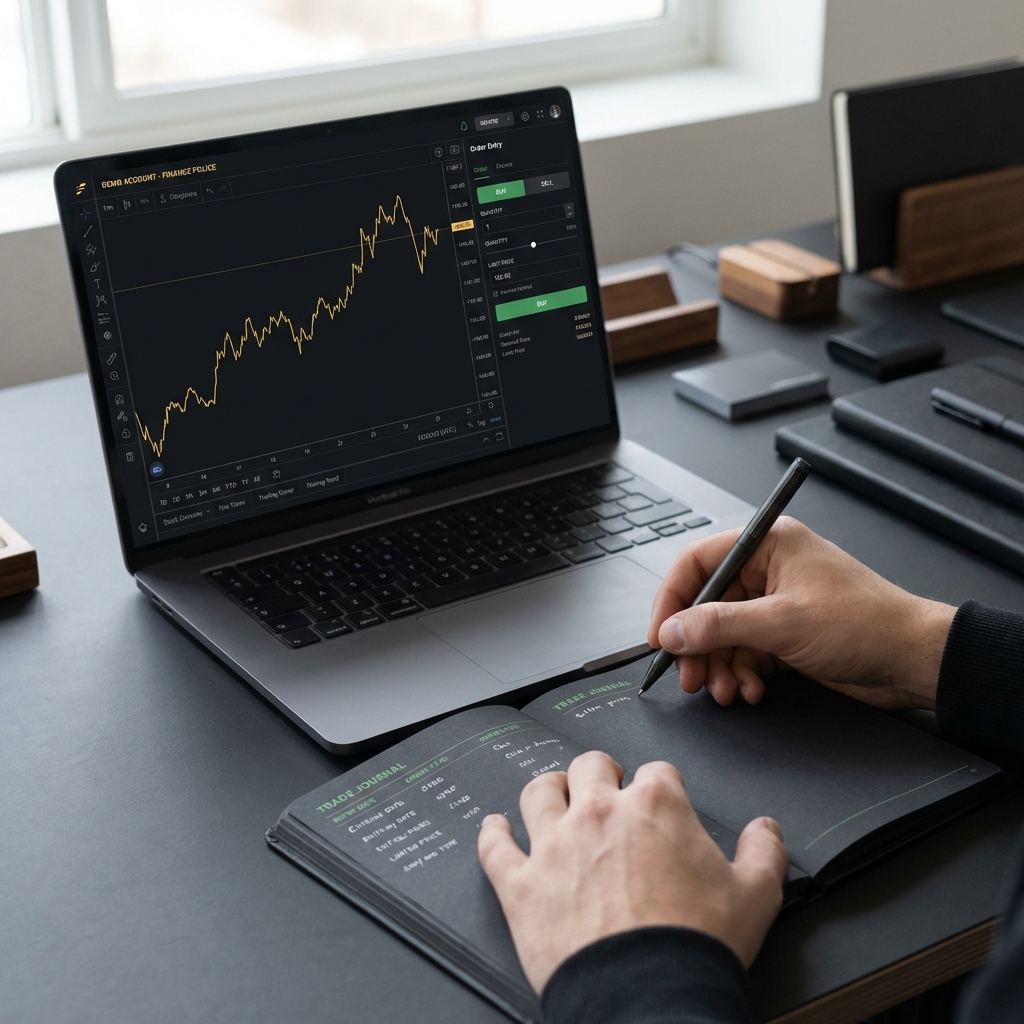
Simple next steps: keep a running trade log with dates, amounts, cost basis, and realized proceeds. If your activity grows, consider consulting a tax professional or using a verified reporting resource to ensure accurate filings.
Choosing a crypto exchange and custody options for beginners
Regulated fiat on and off ramps
When choosing where to trade, prioritize exchanges that support regulated fiat on and off ramps and that disclose who regulates them. Using a platform that connects to your local banking rails can reduce complexity when you want to deposit or withdraw fiat currency.
Custody choices matter. Many beginners use exchange custody for convenience, while others prefer custodial services with explicit custody terms or self-custody with private keys. Regulators recommend understanding withdrawal policies, insurance coverage, and how the platform stores assets before depositing funds SEC investor bulletin.
Comparing liquidity, fees, and execution quality
Exchanges differ widely in liquidity, fees, and order execution quality. These differences affect slippage and the actual cost of a trade, especially for market or larger orders; industry analysis shows material variation across platforms that traders should consider Chainalysis market structure report 2024.
Before placing live orders, check typical spreads for the pairs you want to trade, review fee schedules, and, if possible, observe order book depth to estimate how much slippage you might face at different order sizes.
Practical first steps: demo accounts, funding, and identity verification
Setting up a demo or paper trading account
Start with a demo or paper trading account to practice order types, position sizing, and your plan without risking real funds. Look for demos that let you simulate market and limit orders, and that account for fees in simulated PnL so results are more realistic Investopedia beginner guide.
Use demo sessions to test a single approach, such as a simple entry rule and stop-loss. Keep a short journal of each simulated trade listing your reason for entry, size, stop, and what you learned.
Trading journal template to record demo and live trades
Use this to compare demo and live results
Funding safely and completing identity verification
When you fund a live account, begin with small amounts and use regulated fiat rails where available. Small initial deposits limit exposure while you confirm withdrawal processes and how quickly you can convert back to fiat.
Complete identity checks on the exchange before depositing. Keeping simple trade records from day one helps with later tax reporting and gives you a history to review as you refine your approach.
A simple trading framework: position sizing, order types, and risk limits
Position sizing rules for beginners
A practical rule is to risk only a small percentage of your trading capital on any single trade so one loss does not meaningfully damage your account. Many beginner guides recommend small position sizes and clear stop-loss rules as a way to learn without exposing large capital to volatility Investopedia beginner guide.
Example: if you decide to risk 1 percent per trade on a $1,000 account, your maximum dollar loss per trade would be $10. Translate that into position size using the distance from entry to your stop-loss.
Order types and when to use them
Understand the difference between market orders and limit orders. Market orders execute immediately but can suffer slippage when liquidity is thin. Limit orders let you control the price you will accept but may not fill if the market moves away; platform execution quality and liquidity affect which is preferable Chainalysis market structure report 2024.
For beginners: prefer limit orders when testing a price-based entry, and use small market orders only when necessary. Monitor fills and adjust order size to minimize slippage.
Setting stop-loss and risk-limits
Set stop-losses that reflect both technical levels and a sensible dollar risk per trade. A stop that is too tight can trigger on normal volatility; one that is too wide can create outsized losses. Pair the stop-loss with your position sizing rule to keep absolute risk controlled.
Write your stop, position size, and exit plan down before placing a trade. Treat the plan as binding during the trade unless you have a documented reason to adjust it.
Picking strategies and understanding their limits
Demo-testing and backtesting basics
Before risking capital, demo-test and backtest any approach. Include realistic assumptions for fees, spreads, and slippage so simulated returns are closer to what you might experience live Systematic review of cryptocurrency trading strategies.
Document parameter choices and the exact entry and exit rules. When backtesting, use out-of-sample checks and avoid tuning parameters to past noise.
Why many retail technical strategies show mixed results
Systematic reviews of retail strategies find mixed evidence on consistent profitability. High transaction costs, data-snooping, and changing market regimes are common reasons why a strategy that looked good historically may underperform in live trading Systematic review of cryptocurrency trading strategies.
Keep rules simple, track performance honestly, and be ready to stop using a strategy if demo and live results diverge materially after accounting for costs.
Common mistakes beginners make and how to avoid them
Security and custody mistakes
Custody and platform security are among the most frequent practical risks for new traders. Basic checks before depositing include confirming withdrawal controls, multi factor authentication, and clear custody policies from the platform FCA guidance for consumers.
Avoid storing large holdings on an exchange if you do not need to trade them frequently. Consider segregating trading capital from longer term holdings so a custody failure affects only a portion of your assets.
Trading behavior and tax oversights
Placing large market orders without checking liquidity can cause big slippage; check order book depth or use smaller sized orders to reduce cost. Industry reports note that liquidity and execution vary between exchanges and that this matters for retail traders Chainalysis market structure report 2024.
Keep trade records for tax reporting from the start. In many countries trades, disposals, and exchanges are taxable events, and maintaining a clear log simplifies later reporting IRS guidance on virtual currencies.
Next steps: recordkeeping, continuing education, and useful primary sources
Keeping trade logs for tax and audit purposes
Review your logs monthly during active trading to spot errors and to see how demo results compare with live performance. Consistent records also help if you need to resolve disputes with a platform.
Where to check regulator guidance and exchange disclosures
Treat regulator guidance and exchange disclosures as primary sources when you need authoritative answers about custody, KYC, and investor protections. Regulators publish consumer and firm guidance you can consult to verify platform claims FCA guidance for consumers.
Ongoing habits: periodically review fee schedules, custody protections, and changes to platform terms. Continue demo testing when you try material changes to your methods or scale.
Many exchanges require KYC identity checks to use fiat rails and withdrawals. Check a platform's verification process before funding an account and follow local regulator guidance.
Use demo or paper trading accounts to practice order types, test simple strategies, and keep a journal. Include realistic fees and slippage in simulations to make results more reliable.
Tax obligations depend on local laws and often apply regardless of trade size. Keep clear records and consult guidance or a tax professional to confirm reporting requirements.
References
- https://www.sec.gov/oiea/investor-alerts-and-bulletins/ib_cryptocurrencies
- https://sumsub.com/blog/crypto-aml-guide/
- https://www.fca.org.uk/consumers/cryptoassets
- https://financepolice.com/advertise/
- https://www.irs.gov/businesses/small-businesses-self-employed/virtual-currencies
- https://financepolice.com/crypto-exchange-affiliate-programs-to-consider-heres-what-you-need-to-know/
- https://www.elliptic.co/blog/regulatory-and-policy-crypto-trends-to-except-in-2026
- https://blog.chainalysis.com/reports/crypto-adoption-2024
- https://www.investopedia.com/how-to-trade-cryptocurrency-4689743
- https://www.sciencedirect.com/science/article/pii/S2405428324001234
- https://financepolice.com/category/crypto/
- https://financepolice.com/bitcoin-price-analysis-btc-slips-below-90000-as-leveraged-liquidations-rock-market/
You May Also Like

XRP Insider Shuts Down Whale Drama: Big Holders Won’t Control Crypto’s Long-Term Price

Nearly 150 Million Pi Migrated in Just Two Days, What This Unprecedented Move Means for Pi Network’s Future
