Keeping value at home: How Nigeria’s cNGN stablecoin can strengthen the economy
Nigeria’s crypto market tells a curious story. Two stablecoins sit at the centre of it, one dominant, one emerging. Foreign, dollar-pegged tokens handle most of the activity, moving billions in cross-border trade, shielding savers from local currency swings, and delivering the speed that traditional banking still struggles to match.
Yet every time a Nigerian buys either USDT or USDC, a small piece of the country’s financial base slips quietly offshore.
That’s where the disintermediation risk emerges: capital exits the Nigerian system and reappears in the U.S. Treasury markets. It’s efficient for users but costly for the country. Enter cNGN, Nigeria’s first compliant, naira-pegged stablecoin.
Unlike foreign stablecoins, cNGN is backed exclusively by onshore Nigerian assets, with each token collateralised 1:1 with Naira reserves held in regulated commercial banks as well as government securities.
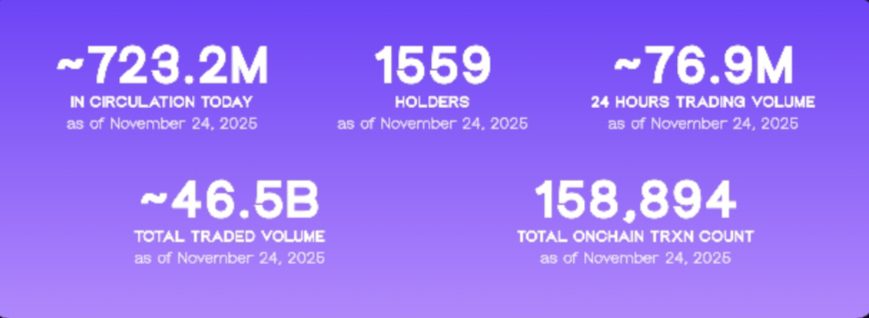 cNGN’s transactions as of Nov. 24th 2025.
As of November 24th, it has approximately 723.2 million in circulation, with over 158,894 on-chain transactions and a total trading volume of over 46.5 billion cNGN.
The hidden cost of dollar-denominated stablecoins
Nigeria posted over $92 billion in on-chain volume from mid-2024 to mid-2025. Most of that liquidity flowed through foreign stablecoins. Their utility is undeniable. For traders, manufacturers, or freelancers, USDT and USDC feel like the rails of global commerce.
But each transaction carries an overlooked consequence. When someone buys $100 of a foreign stablecoin, the issuer invests those reserves abroad, not in Nigerian banks, not in local money markets, and not in government securities. Multiply that by millions of users. The result is persistent capital flight, a slow bleed that weakens the domestic financial system over time.
To be candid, no regulator can ban or bluster its way out of that structural reality. The asset is too useful. The incentives are too strong. The smarter approach is to build a domestic alternative that addresses local needs without trying to replace what the dollar already does well.
 cNGN Stablecoin
A Naira-pegged stablecoin like the cNGN does not necessarily compete with dollar stablecoins on global liquidity. It shouldn’t try to. Its advantage lies at home. The Naira is the currency of daily life. Embedding it directly onto the blockchain makes it programmable, traceable, and interoperable with modern financial tools.
Users can access on-chain investments, payments, credit markets, or smart contracts without first buying dollars. That alone cuts friction and gives the local currency a digital life it currently lacks.
For a country that wants deeper financial inclusion, this matters. cNGN offers the speed of crypto but the regulatory certainty of the banking system. For everyday users, that combination reduces risk and expands access.
Reversing the flow of capital
The most overlooked opportunity is what happens when money moves into Nigeria, not out, diaspora remittances.
Nigerians abroad send home more than $20 billion every year. The process is slow, fragmented, and expensive. Routing those flows into a compliant digital Naira collapses the settlement time to minutes and bypasses the traditional “last mile” bottlenecks.
When the remittances may come in as cNGN, they are ready for spending, saving, or investing immediately.

Investors face friction when accessing Nigerian markets. A regulated digital naira can compress settlement cycles and make it easier to buy local assets. Faster access reduces uncertainty, a key factor in emerging-market investment decisions.
The cNGN reserve model outlook
The cNGN reserve structure is the critical difference. Each token is backed 1:1 by Naira-denominated assets held within Nigeria. That structure does three important things:
1. Strengthens the banks: Reserves are held in local commercial banks, adding liquidity rather than draining it. Foreign stablecoins do the opposite.
2. Supports government financing: A portion of the reserves sits in Nigerian Treasury Bills and regulated money-market funds. That demand helps stabilise state borrowing costs—a tangible fiscal benefit.
3. Reduces capital flight: The money stays in the domestic economy. It funds local credit creation. It reinforces the financial system instead of hollowing it out.
This model anchors digital assets in real-world national value. It ties the growth of on-chain activity to domestic financial strength, not offshore securities.
With it, cNGN isn’t just for sending money; it’s being plugged into financial products. For instance, users can invest in a cNGN-denominated money market fund via Xend Finance, with yield rates as high as 20.25% annually.
But to make this count, cNGN needs scale, not just in tokens, but in trust. Its backers will have to prove they can manage reserves responsibly, and regulators must walk a fine line, encouraging innovation without turning a blind eye to risk.
You May Also Like

Avalanche and Hyperliquid Lead Crypto Rally Post-Fed Rate Cut

Pi Network Accelerates Real World Adoption as Picoin Transitions from Digital Asset to Everyday Payment
The Pi Network ecosystem is once again demonstrating significant progress. While the community initially focused on mining ac