

Stakeholders questions 26 years wait for telecoms policy review
Twenty-six years after the National Telecommunications Policy 2000 came into effect, the Nigerian Communications Commission (NCC) is finally reviewing the framework to address changes and current realities.
At the NTP 2000 review workshop on Wednesday in Lagos, stakeholders questioned the long delay in reviewing the policy, noting that within 26 years, several technologies and innovations have emerged and become obsolete.
While delivering her keynote speech, Mrs Hadiza Bala Usman, Special Adviser to the President on Policy and Coordination, highlighted the importance of policy reviews, noting that a framework provides an industry with clear direction and the resources needed to achieve its goals.
Mrs Usman added that policy reviews help align industry restructuring with national goals. Recall that the President Bola Tinubu Renewed Hope administration is pursuing a vision to build a $1 trillion digital economy by 2030. She, therefore, warned that the NCC shouldn’t wait for the next 26 years before reviewing the expected NTP 2026.
“To create opportunities, policy is not just industry-based but national-based and policy matters when it creates a clear roadmap and yields results,” she added.
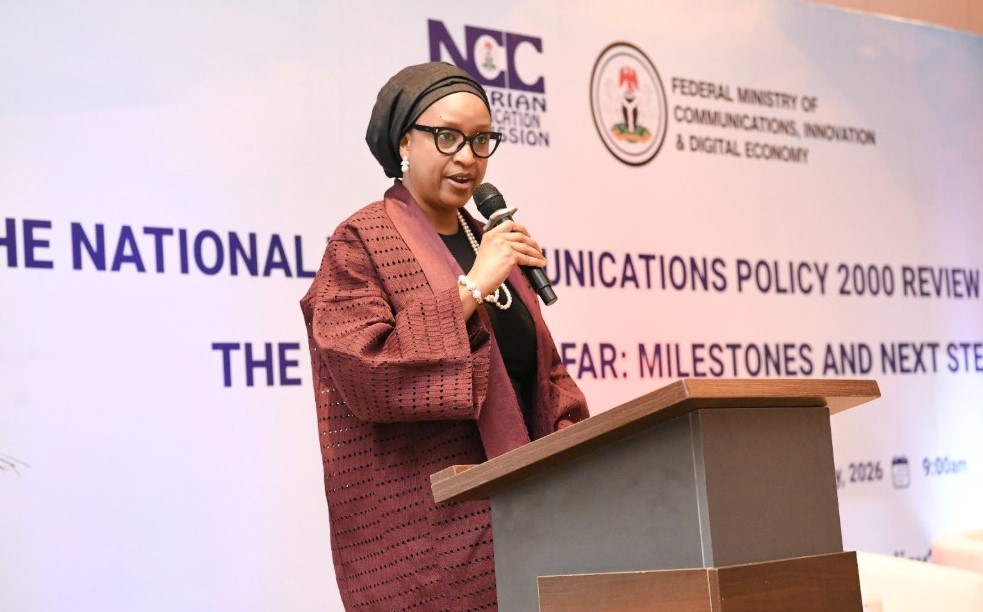 Mrs Hadiza Bala Usman, Special Adviser to the President on Policy and Coordination
Birthed by the democratic era of 1999, NTP 2000 is a significant milestone that saw the revitalisation of the telecoms sector. From 20,000 subscribers in 2000 to over 180 million in 2026, the industry has witnessed rapid expansion, increased competition, and multiple market shifts.
Also, the industry has also recorded multiple licence approvals, which resulted in increased competition, expansion of network coverage, infrastructural upgrade and market growth. Although challenges have emerged, such as vandalism and theft of telecom infrastructure, fibre cuts, connectivity gaps in rural areas and poor network quality.
What the NTP 2000 review seeks to achieve
Acknowledging the improvement and need for revenue, NCC Executive Vice President Aminu Maida, during his opening remarks at Wednesday’s policy review, noted that the sector’s priorities have now shifted toward AI, satellite broadband, Internet of Things, and cloud infrastructure.
Others include the critical national infrastructure, digital sovereignty, digital trust, network resilience, and sustainable integration.
“This is no longer a narrow telecommunications conversation. The sector is no longer just a sector within the economy. It is the productivity infrastructure for the entire economy. This is why the review of the NTP2000 is timely,” he added.
 Mrs Hadiza Bala Usman, Special Adviser to the President on Policy and Coordination, Mr Aminu Maida, EVC of NCC…. during NCC’s NTP 2000 Review Workshop on Wednesday, May 20, 2026.
Maida explained that the policy will address the kind of policy framework Nigeria needs for the next phase of digital transformation. The review seeks to provide an enabling investment environment for operators, manage non-violent competition, enhance consumer protection, support global competitiveness, and improve the quality of experience for subscribers.
Also, NTP 2026 will aim to encompass cybersecurity, digital trust, regulation coordination, compliance, internet governance, data protection, investment sustainability, and meaningful connectivity for all Nigerians.
“We must move beyond celebrating connected lines alone. We must now focus on cross-sectoral productivity, digital adoption, and GDP growth enabled by meaningful connectivity,” the NCC EVC said.
Also Read: Telecoms contributed 8.3% to Nigeria’s real GDP in 2025.
Helping hands for telcos
Nigeria currently holds the highest number of telecom users among African countries, but sits sixth in terms of internet speed across the region. The data shared during the event showed that Nigeria is behind South Africa (1), Eswatini (2), Rwanda (3), Mauritius (4) and Botswana (5).
In the process of placing Nigeria in its right place, a common language agreed upon by experts is an incentive for operators. And this must be addressed in the proposed NTP 2026.
Funke Opeke, Former CEO of Equinox, who spoke virtually during one of the panel sessions on ‘Achieving Meaningful Connectivity and Bridging the Digital Divide through NTP,’ emphasised the need for shared infrastructure. She noted that the initiative will address the drop in network quality and coverage.
“If we’re going to have meaningful connectivity down to the rural areas in Nigeria. We need to consider the affordability and capacity of our networks to drive usage to the very least of our villages,” she added.
 Funke Opeke
Other key strategies she mentioned are formulating policies to tackle the gaps, alleviating right-of-way (RoW) bottlenecks, leveraging technology and innovation in protecting infrastructure and strengthening appropriate security measures for infrastructure protection.
“As we move forward, everyone recognises telecoms as an enabler, and there must be standards that are set for right-of-way needs with government participation. States and various agencies need to move from seeing telecom as just a moneymaker to an enabler,” Opeke added.
To Lars Johanisson, CEO of Rack Centre, he argued that Nigerian telcos need investors to live up to expectations and grow their subscriber base. He noted that the NCC needs to address issues of power generation where epileptic energy supply drives operators’ high cost of operation.
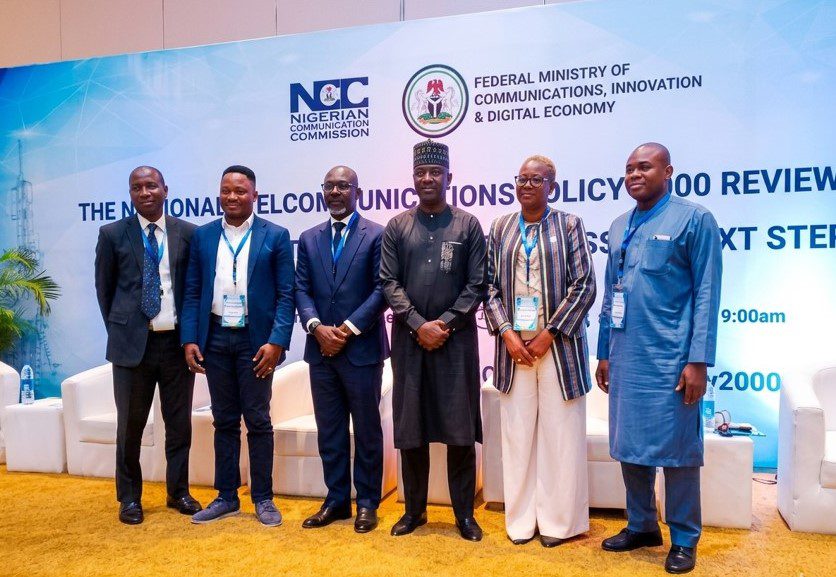 In no particular order: Lars Johanisson, CEO of Rack Centre, Ikechukwu Nnamani, Managing Director, Digital Reality Nigeria, Babatunde Olaniyan, General Counsel, Pan African Towers, Aminu Maida, EVC of NCC and Yetunde Akinloye, Retired Director, Nigerian Communications Commission during NCC’s NTP 2000 Review Workshop on Wednesday, May 20, 2026.
Johanisson admonished the Commission to tackle the clearance issues telcos face when importing equipment. Such difficulties are believed to cause delays in deploying infrastructures. He also advocated for taxation reliefs and harmonised regulations across boards.
The next phase of Nigerian telecoms policy will look to restructure the framework to reflect industry realities and address the stated issues.


You May Also Like

E.l.f. Beauty (ELF) Stock Surges Despite Disappointing Forward Guidance After Q4 Earnings Beat

Deere (DE) Stock Falls After Q2 Beat as Flat Farm Income Spooks Investors

Oman slashes budget deficit on higher hydrocarbon revenues



