

RLUSD Does Not Replace XRP — It Makes the XRPL More Useful
A new debate is building in the latest XRP news. Many users fear that Ripple’s stablecoin push could weaken XRP’s role. But new research suggests the opposite. RLUSD is not here to replace XRP. Instead, it may make the XRP Ledger more practical for real-world use. At the center of this discussion is Ripple’s evolving strategy. The firm is now building a multi-asset system. In this system, each component plays a different role. RLUSD handles stable value. XRP supports liquidity and network functions. Meanwhile, the XRPL acts as the settlement layer.
RLUSD and XRP Serve Different Roles
The simplest way to understand this is role separation. RLUSD is designed to provide a stable dollar value. This makes it useful for payments, trading, and treasury management. Businesses often need price stability. They cannot risk holding volatile assets for daily operations.
On the other hand, XRP plays a completely different role. It is the native asset of the XRP Ledger. This powers transaction fees and account reserves. It also acts as a bridge asset for liquidity across the network. As one analysis explains, “Stable value, native liquidity, and settlement are different jobs.” This means RLUSD and XRP are not competing. They are working together. RLUSD reduces volatility exposure. XRP enables movement, routing, and efficiency.
Why Stablecoins Alone Are Not Enough
Stablecoins solve one key problem: price volatility. However, they do not solve liquidity on their own. A stablecoin still needs markets, exchanges, and routing systems to move between assets. This is where XRP becomes important. The XRPL includes built-in features like a decentralized exchange, automated market makers, and cross-currency payment paths. These tools allow assets to interact smoothly.
In many cases, XRP can act as a bridge between two assets. It helps find the most efficient route for a transaction. This process is known as auto bridging. It allows payments to settle faster and often at lower cost. So, while RLUSD offers stability, XRP ensures movement. Together, they create a more complete system.
XRP’s Core Functions Remain Strong
Despite the rise of RLUSD, XRP still performs key roles that stablecoins cannot replace. First, it supports network security. Every transaction on the XRPL burns a small amount of XRP as a fee. This prevents spam and protects the system. Second, XRP allows direct settlement. If both parties accept XRP, funds can move instantly without relying on any issuer. This creates a different risk profile compared to stablecoins.
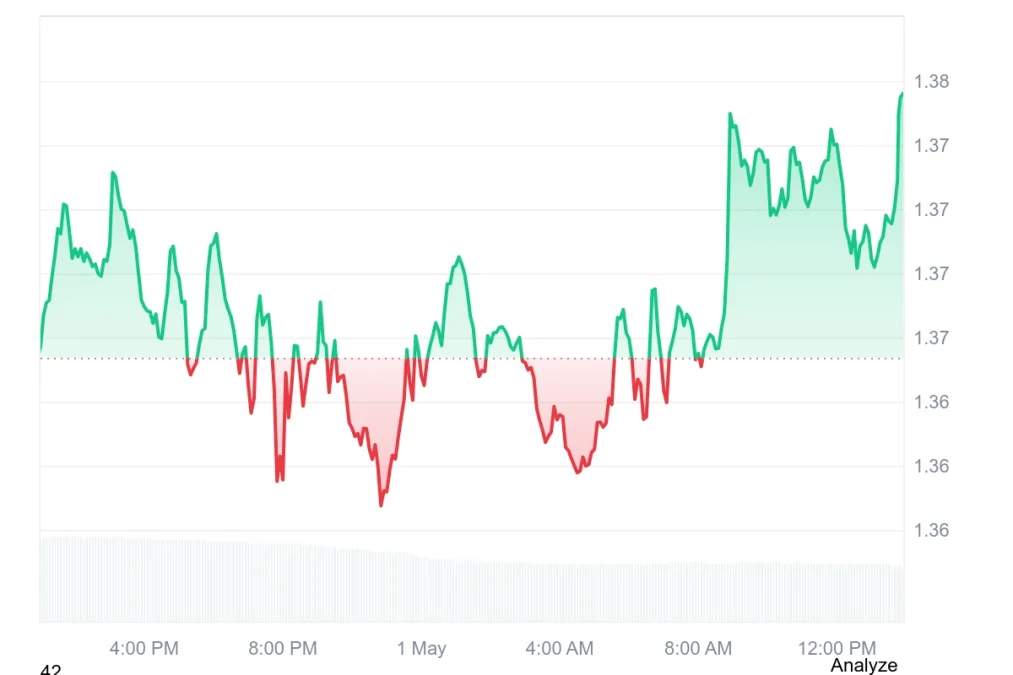
Chart- XRP price on 1 May, 2026, by CoinMarketCap
Third, XRP plays a major role in liquidity routing. It can connect different assets within the XRPL ecosystem. This makes it valuable even if it is not the final asset in a transaction. At the time of writing, the XRP current price USD stands near $1.37. While price movements continue, its utility inside the network remains unchanged.
A Stronger Stack, Not a Replacement
The bigger picture is clear. Ripple is not choosing between RLUSD and XRP. It is building a layered financial system. Each layer solves a different problem. RLUSD brings stable value for institutions. XRP provides liquidity and network efficiency. The XRPL connects everything through fast and low-cost settlement. This approach reflects a broader shift in crypto.
Projects are moving beyond single-asset models. Instead, they are creating full ecosystems that can support real-world finance. In this context, XRP news is no longer about survival. It is about evolution. RLUSD does not weaken XRP. It gives the XRP Ledger more ways to be used. Furthermore, in a market driven by utility, that could matter more than anything else.
The post RLUSD Does Not Replace XRP — It Makes the XRPL More Useful appeared first on Coinfomania.


You May Also Like

Top Gaming Crypto Coins Surge Amid Market Rally

Bitcoin etfs snap four-month slump as March inflows reach $1.32B
