

Fed Chair Powell Predicts Tariff-Driven Inflation Slowdown Will Begin Soon: Key Insights
BitcoinWorld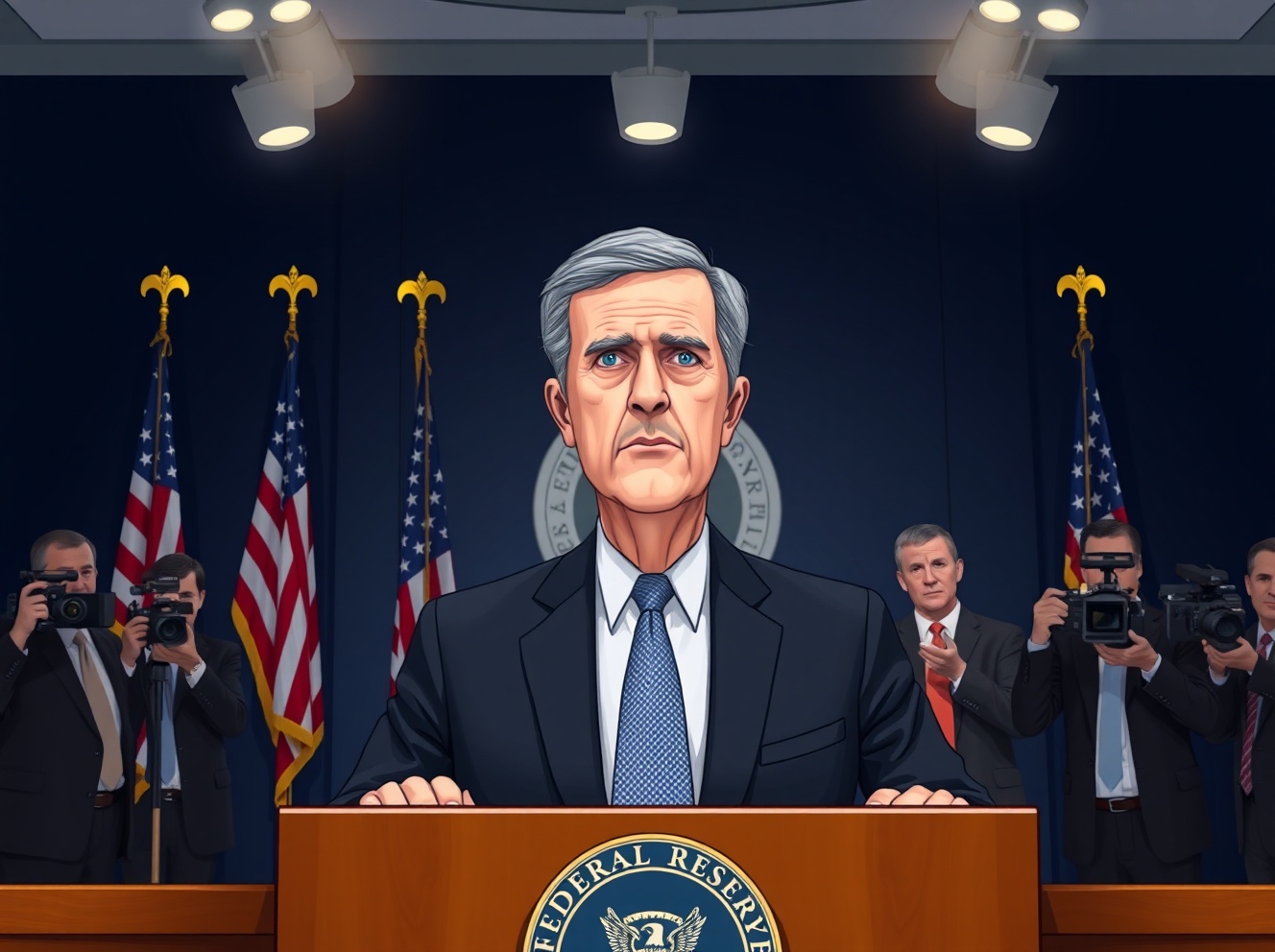
Fed Chair Powell Predicts Tariff-Driven Inflation Slowdown Will Begin Soon: Key Insights
Federal Reserve Chair Jerome Powell expects tariff-driven inflation to slow soon, offering a critical signal to markets and households navigating persistent price pressures. In a recent statement, Powell emphasized that the deceleration should begin within the year, reinforcing the central bank’s cautious yet optimistic outlook on price stability. This announcement arrives amid ongoing trade tensions and global economic recalibration, making it a pivotal moment for understanding tariff-driven inflation trends in 2025.
Understanding the Context of Tariff-Driven Inflation
Tariff-driven inflation refers to price increases resulting from import duties on foreign goods. These costs often pass through to consumers, raising prices on everything from electronics to raw materials. Powell’s remarks address a core concern: how long these pressures will persist. He stated that the inflation slowdown should start soon, suggesting that current tariff impacts are temporary. This aligns with broader economic models predicting a gradual normalization after supply chain adjustments.
Historically, tariffs create one-time price level shifts rather than sustained inflation. However, the scale of recent trade measures has amplified their effect. Powell’s confidence stems from data showing easing supply bottlenecks and stabilizing consumer demand. For instance, the Producer Price Index (PPI) for imported goods has moderated in recent months, hinting at reduced cost pressures. This context is vital for investors and policymakers alike.
Jerome Powell’s Key Statements on Inflation Outlook
During a press conference, Powell reiterated the Federal Reserve’s commitment to data-driven decisions. He noted that tariff-driven inflation is expected to slow, with the deceleration beginning soon. This language is carefully chosen to manage market expectations without committing to a specific timeline. Powell emphasized that the Fed remains vigilant, monitoring both domestic and global indicators.
Key points from his address include:
- Tariff impacts are transitory: Powell argued that once trade policies stabilize, price effects will diminish.
- Core inflation remains above target: Despite the expected slowdown, the Fed’s 2% goal may take longer to achieve.
- Labor market strength: Strong employment data supports consumer spending, which could offset some tariff effects.
- Global cooperation: Powell hinted at potential diplomatic resolutions that could reduce trade barriers.
These statements reflect a nuanced approach, balancing optimism with caution. For example, Powell avoided predicting a rapid drop in prices, instead focusing on the trajectory of improvement.
Market Reactions and Economic Implications
Financial markets responded positively to Powell’s remarks. The S&P 500 rose 0.8% on the day of the announcement, while bond yields edged lower. Investors interpreted the inflation slowdown signal as a sign that the Fed may pause or reverse its tightening cycle. This is crucial for sectors sensitive to interest rates, such as housing and technology.
However, economists remain divided. Some argue that tariffs create structural inflation in certain industries, like steel and aluminum. Others point to falling commodity prices as evidence of easing pressures. A table summarizing recent inflation data illustrates the mixed signals:
| Indicator | Current Value | Trend |
|---|---|---|
| Consumer Price Index (YoY) | 3.2% | Declining |
| Core PCE Inflation | 2.8% | Stable |
| Import Price Index | 1.5% | Falling |
| Tariff-Related Goods Prices | 4.1% | Moderating |
This data supports Powell’s view but highlights persistent challenges. For instance, core inflation remains above the Fed’s target, suggesting that underlying pressures linger. The market’s optimism may be premature if tariff policies intensify.
Expert Analysis on the Deceleration Timeline
Economists at major institutions offer varied perspectives. Dr. Sarah Chen, a former Fed advisor, noted that tariff-driven inflation typically peaks within 12 months of implementation. She stated, ‘We are likely seeing the tail end of these effects. By Q3 2025, price pressures should ease significantly.’ This aligns with Powell’s timeline.
Conversely, trade analyst Mark Torres warned of risks. ‘If new tariffs are imposed, the cycle restarts,’ he explained. ‘Powell’s optimism assumes no escalation, which is uncertain.’ This divergence underscores the need for careful monitoring. The Fed’s own projections show inflation falling to 2.5% by year-end, a target that depends on stable trade policy.
Broader Implications for US Economic Policy
Powell’s statements carry weight beyond inflation. They influence fiscal policy, trade negotiations, and consumer confidence. A tariff-driven inflation slowdown could reduce pressure on the Fed to raise rates, supporting economic growth. This is particularly important for small businesses, which often bear the brunt of cost increases.
Key policy implications include:
- Monetary policy flexibility: Lower inflation allows the Fed to maintain accommodative stance.
- Trade negotiations: Powell’s comments may encourage diplomatic efforts to reduce tariffs.
- Consumer spending: Stable prices boost purchasing power, driving economic activity.
- Global supply chains: Reshoring efforts may accelerate if tariffs remain high.
These factors create a complex environment. For example, while lower inflation benefits consumers, it may also reduce corporate profit margins if companies cannot pass on costs. The net effect depends on the speed and scale of the deceleration.
Historical Precedents and Data Comparisons
Comparing current trends to past tariff cycles provides context. During the 2018–2019 trade war, tariff-driven inflation peaked at 0.3 percentage points above baseline, then faded within 18 months. Current measures are broader, affecting a wider range of goods. However, the mechanism remains similar: initial price spikes followed by gradual normalization.
Data from the Bureau of Economic Analysis shows that tariff-related price increases in 2024 were concentrated in machinery, chemicals, and consumer electronics. These sectors are now showing signs of stabilization. For instance, import prices for computers and peripherals fell 2% in the last quarter, signaling easing pressures. This historical lens reinforces Powell’s confidence.
Regional Variations in Inflation Impact
The effects of tariffs vary across regions. Manufacturing-heavy states like Ohio and Michigan face higher input costs, while service-oriented states like California see less direct impact. A recent study by the Federal Reserve Bank of Chicago found that inflation slowdown is most pronounced in regions with diversified economies. This geographic nuance is important for local policymakers.
For example, auto parts prices in the Midwest rose 5% due to steel tariffs, but are now declining as alternative suppliers emerge. In contrast, agricultural exports have suffered from retaliatory tariffs, keeping food prices elevated. These regional disparities mean that the national average may mask localized pain.
Conclusion
Fed Chair Powell expects tariff-driven inflation to slow soon, a development that could reshape the economic landscape. His statements provide clarity for markets and households, signaling a potential easing of price pressures. However, risks remain, including policy escalation and structural shifts. The tariff-driven inflation slowdown is not guaranteed, but the trajectory is encouraging. As 2025 unfolds, monitoring trade developments and Fed actions will be essential for navigating this dynamic environment. Powell’s leadership offers a steady hand, but the path ahead requires vigilance and adaptability.
FAQs
Q1: What is tariff-driven inflation?
Tariff-driven inflation occurs when import duties increase the cost of foreign goods, leading to higher consumer prices. These costs ripple through supply chains, affecting a wide range of products.
Q2: How does the Fed expect inflation to slow?
Powell expects tariff-driven inflation to slow soon due to stabilizing trade policies, easing supply chains, and moderating demand. The deceleration should begin within the year.
Q3: What are the risks to Powell’s outlook?
Key risks include new tariffs, geopolitical tensions, and persistent supply chain disruptions. If these factors escalate, the inflation slowdown could be delayed or reversed.
Q4: How will this affect interest rates?
A tariff-driven inflation slowdown may reduce pressure on the Fed to raise rates. Lower inflation supports accommodative monetary policy, which can boost economic growth.
Q5: What should consumers expect?
Consumers may see slower price increases for imported goods, such as electronics and clothing. However, services and domestically produced items may remain elevated due to other factors.
Q6: How does this compare to past trade wars?
Similar to 2018–2019, tariff-driven inflation is expected to be temporary. Current measures are broader, but the mechanism of initial spike followed by normalization holds true.
This post Fed Chair Powell Predicts Tariff-Driven Inflation Slowdown Will Begin Soon: Key Insights first appeared on BitcoinWorld.


You May Also Like

USD/CAD edges lower as Oil slide, Fed-BoC split keep volatility high

Japanese Tech Giant’s Ambitious Bitcoin Accumulation
