

Bitwise CEO: crypto industry transition means fewer winners, bigger ones
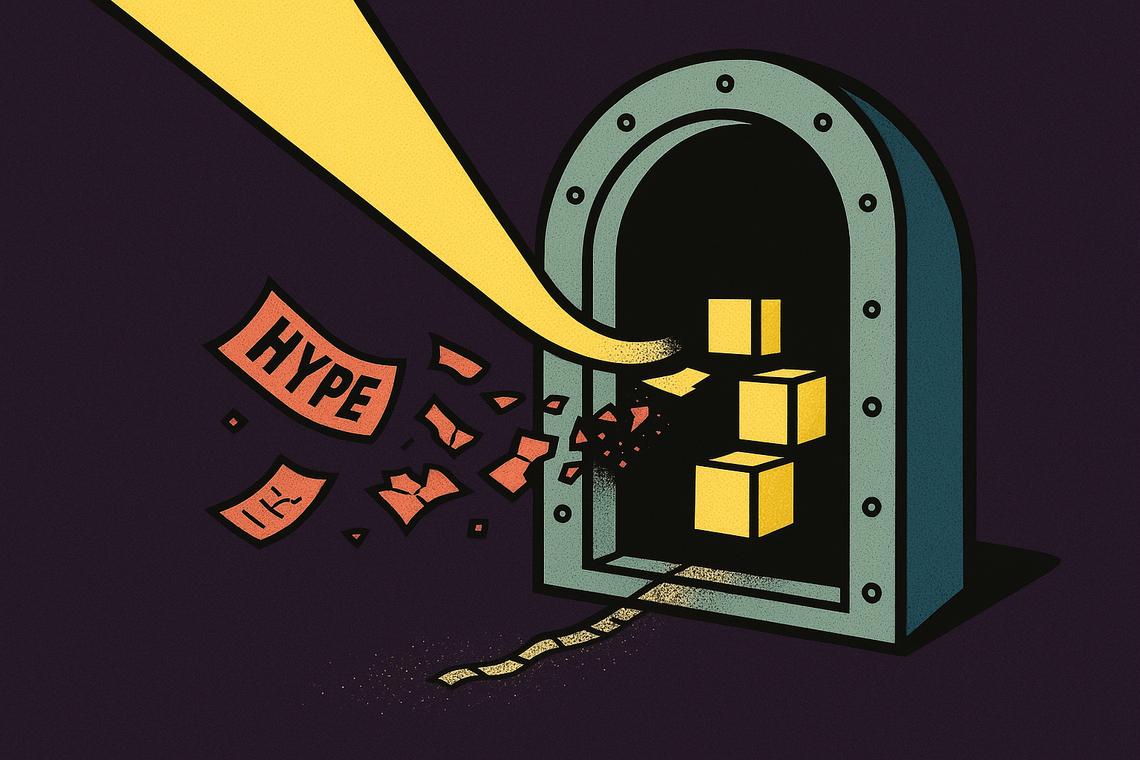
Something is quietly changing in the cryptocurrency world — and Hunter Horsley, CEO of asset manager Bitwise, thinks it looks a lot like what happened to the internet twenty-five years ago. In a post on X, Horsley argued that the crypto market shift now underway mirrors the exact same transition that separated dot-com survivors from the wreckage of the early 2000s.
Key takeaways
- Bitwise CEO Hunter Horsley says crypto is moving from narrative-driven speculation toward a market that rewards demonstrated value and execution.
- Horsley draws a direct parallel with the 1990s internet boom, when hundreds of companies were valued at $500 million to $1 billion based on perceived potential alone.
- The early 2000s market correction weeded out firms without verifiable results, and Horsley sees crypto following the same pattern.
- Future crypto winners, Horsley predicts, will be fewer in number but larger in scale and longer-lasting than most investors currently expect.
Bitwise CEO Signals a Turning Point for the Crypto Industry
The core of Horsley’s argument is straightforward: the era of crypto projects winning on story alone is closing. Fewer projects are expected to emerge as long-term winners, and the ones that do will need to show real-world results, not just compelling roadmaps.
This is more than one executive’s opinion. It reflects a broader sentiment building across institutional crypto circles — that the market is maturing, and the standards for what counts as a serious project are rising fast.
For investors who have watched cycle after cycle of new tokens flood the market, the idea that the field will narrow feels both obvious in hindsight and significant in its implications. Success in crypto increasingly depends on demonstrated value, Horsley says — which means the old playbook of riding hype and exiting before the collapse is getting harder to execute.
The Internet Bubble Analogy That Makes Horsley’s Case
Horsley’s comparison to the 1990s internet market is the sharpest part of his argument. During the boom years, hundreds of companies received valuations of $500 million to $1 billion based largely on perceived future potential — not revenue, not users, not sustainable business models. The logic was simple: the internet was clearly going to be huge, so almost anything internet-adjacent could be worth betting on.
That logic broke down in the early 2000s. Markets became far less willing to support large numbers of companies on narrative alone, and a painful correction followed. But something important happened on the other side of that correction: a smaller group of companies with proven value and working business models began to stand out. Because their success was built on verifiable results, their growth cycles lasted longer — and their eventual scale exceeded that of most firms from the prior bubble era.
The parallel to crypto is intentional and precise. Hunter Horsley’s Bitwise analogy is not just rhetorical — it maps the speculative phase of a transformative technology onto the current state of digital assets, and asks what comes next once the market gets more discriminating.
Fewer Winners, But Bigger and Longer-Lasting
Horsley’s prediction for crypto’s next phase is worth sitting with. He does not suggest the industry is heading toward collapse — quite the opposite. What he foresees is a concentration of value around a smaller number of projects that have genuinely earned their position.
These future winners, he argues, may become larger and grow for longer than most people currently expect. That framing matters. It suggests that the instinct to diversify across dozens of crypto projects — betting that at least one will pop — may be a less effective strategy going forward than identifying the few with real traction early.
The analogy holds here too. Amazon, Google, and a handful of others did not just survive the dot-com bust — they went on to become some of the most valuable companies in history, far outpacing what anyone had projected during the 1990s frenzy. If Horsley is right, crypto’s equivalent consolidation could produce similar outliers.
What This Means for the Market Right Now
The analytical weight behind Horsley’s view is what makes it worth taking seriously. Bitwise is not a speculative operation — it is one of the most recognized institutional asset managers in the crypto space, and Horsley’s perspective is shaped by watching capital flows, product demand, and long-term allocation strategies.
When someone in that position says that proven real-world value and execution are becoming the primary determinants of crypto success, it signals something about where institutional money is heading. Projects that cannot demonstrate adoption, revenue, or meaningful utility face an increasingly skeptical audience — not just from retail investors who have been burned before, but from the funds and allocators that have the scale to move markets.
The broader implication is a recalibration of risk in crypto portfolios. If the field is genuinely narrowing around quality, then the speculative tail of the market — the thousands of tokens that exist primarily on the promise of future value — becomes a much riskier place to park capital than it was during the last bull cycle. That is a structural shift, not just a sentiment one, and it tends to accelerate once institutional behavior starts reinforcing it.
FAQ
What does Hunter Horsley say about the current state of the cryptocurrency industry?
Hunter Horsley states that the cryptocurrency industry is undergoing a transition in which fewer projects will emerge as long-term winners, with success increasingly tied to demonstrated value and execution rather than narrative or speculative potential.
How does the current crypto market compare to the internet era of the 1990s and early 2000s?
Horsley draws a direct parallel: during the 1990s internet boom, hundreds of companies were valued at $500 million to $1 billion based on future potential alone. The early 2000s correction then favored only those with verifiable results — and those companies went on to grow larger and longer than expected. He sees crypto following the same arc.
What does Hunter Horsley predict about future winners in crypto?
Horsley predicts that future crypto winners will be fewer in number but larger in scale, succeeding through proven real-world value and capabilities, and growing for longer than most market participants currently anticipate.
Why is success in crypto increasingly tied to demonstrated value?
As the market matures, it is becoming less willing to sustain large numbers of projects based on narrative alone — mirroring what happened in the post-dot-com period. Without verifiable results and working business models, projects face a much harder road to sustained growth and institutional backing.
Article produced with the assistance of artificial intelligence and reviewed by the editorial team.


You May Also Like

Harvard scholar: the data-center backlash is just getting started

Goatseus Maximus (GOAT) Price Prediction 2026, 2027-2030
Trump spirals in 'bonkers' phone call with reporter: 'I can do whatever I want'



