

NIBSS CEO Premier Oiwoh pushes for zero transfer fees in Payments Vision 2028
Nigeria’s inter-bank settlement infrastructure body wants Nigerians to stop choosing between keeping cash in their pockets and paying charges to move money digitally, and its chief executive made that argument publicly at one of the most consequential payments gatherings of the year.
Premier Oiwoh, Managing Director and Chief Executive of the Nigeria Inter-Bank Settlement System (NIBSS), used his remarks at the official launch of Nigeria’s Payments System Vision 2028 to advocate for the complete elimination of transfer fees, arguing that charges on digital transactions are actively undermining the country’s financial inclusion goals and driving people back to cash.
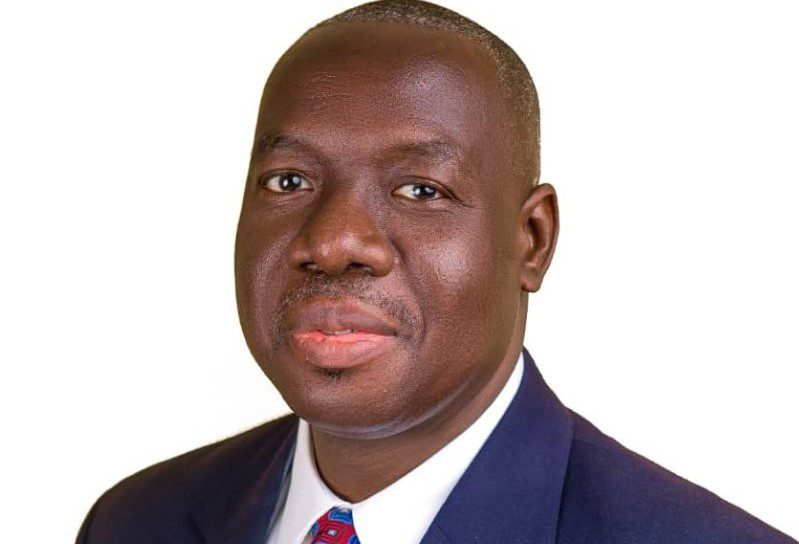 Premier Oiwoh
The event, attended by Central Bank of Nigeria (CBN) Governor Yemi Cardoso, marked a formal articulation of where Nigeria’s payments architecture is headed over the next four years, making it a significant platform for Oiwoh to state a position that goes beyond NIBSS’s internal advocacy.
“I always tell people, if you have ten thousand in your pocket and I’m going to make a transfer and pay fifty or one hundred, that’s another ten thousand,” Oiwoh said during his address. “As a Nigerian, I now keep my ten thousand in my pocket. How do you deal with them?“
NIBSS advocates for zero-rated transfer fees
The framing was pointed. Oiwoh was not speaking abstractly about economic theory. He was describing a behavioural response that millions of Nigerians already exhibit, where the cost of digital transfer is weighed against the value being moved, and cash wins that calculation often enough to slow adoption. He argued that zero-rated fees would change that arithmetic entirely, making digital payments the default rather than the deliberate choice.
This signals that the position is not new inside NIBSS but is now being pushed into public and regulatory conversation with greater urgency.
The remarks connect to a longer institutional trajectory. NIBSS has spent several years reducing the fees applied to NIP, the instant payment infrastructure that underpins virtually all Nigerian bank transfers.
The body previously outlined plans for a subscription-based model that would effectively allow users to make unlimited transfers within a fixed monthly charge, positioning zero-cost-per-transaction as an achievable destination rather than an aspiration.
Read also: NIBSS completes first live transaction on National Payment Stack system
Oiwoh’s language at the Vision 2028 launch suggests that ambition has not softened, and the policy window created by the new vision document may offer an opportunity to push it further.
Beyond fees, Oiwoh extended his argument to data access for financial transactions, making the case that Nigerians should not face a situation where a lack of mobile data prevents them from completing a payment.
“I don’t want to make a payment anywhere and then I have no data to make that payment when it has to do with finance and payments,” he said, pointing to countries that have already made financial data zero-rated and arguing that Nigeria should be among them, not following at a distance.
The comment lands in a country where mobile data costs remain a friction point for low-income users, and where the overlap between financial exclusion and digital exclusion is well-documented. Making payment data free to use, independent of a data bundle, would extend the reach of digital financial services to segments of the population that currently face a compounded access barrier.
Oiwoh closed his remarks with a broader confidence in what Nigeria’s payments infrastructure can now deliver. “With what we have built on the NPS, I think a lot more impact will be made from usage, accessibility, trust, and transparency across delivery processes,” he said, framing the Vision 2028 document as a foundation rather than an ambition, built on infrastructure that already exists and needs policy and pricing alignment to reach its potential.
The CBN has not yet issued a formal response to the zero-fee advocacy.


You May Also Like

Top Trump DOJ revenge case hits major snag after crucial ruling in unrelated case

Bitcoin Investment Products Suffer $1.44B in Outflows — Worst Week of 2026

Critical USDT0 Response to Drift Hack Exposes Stark Contrast in Stablecoin Security Protocols



