

USD/VND Exchange Rate: Alarming Oil Shock Risks Weaker Vietnamese Dong – MUFG Analysis

BitcoinWorld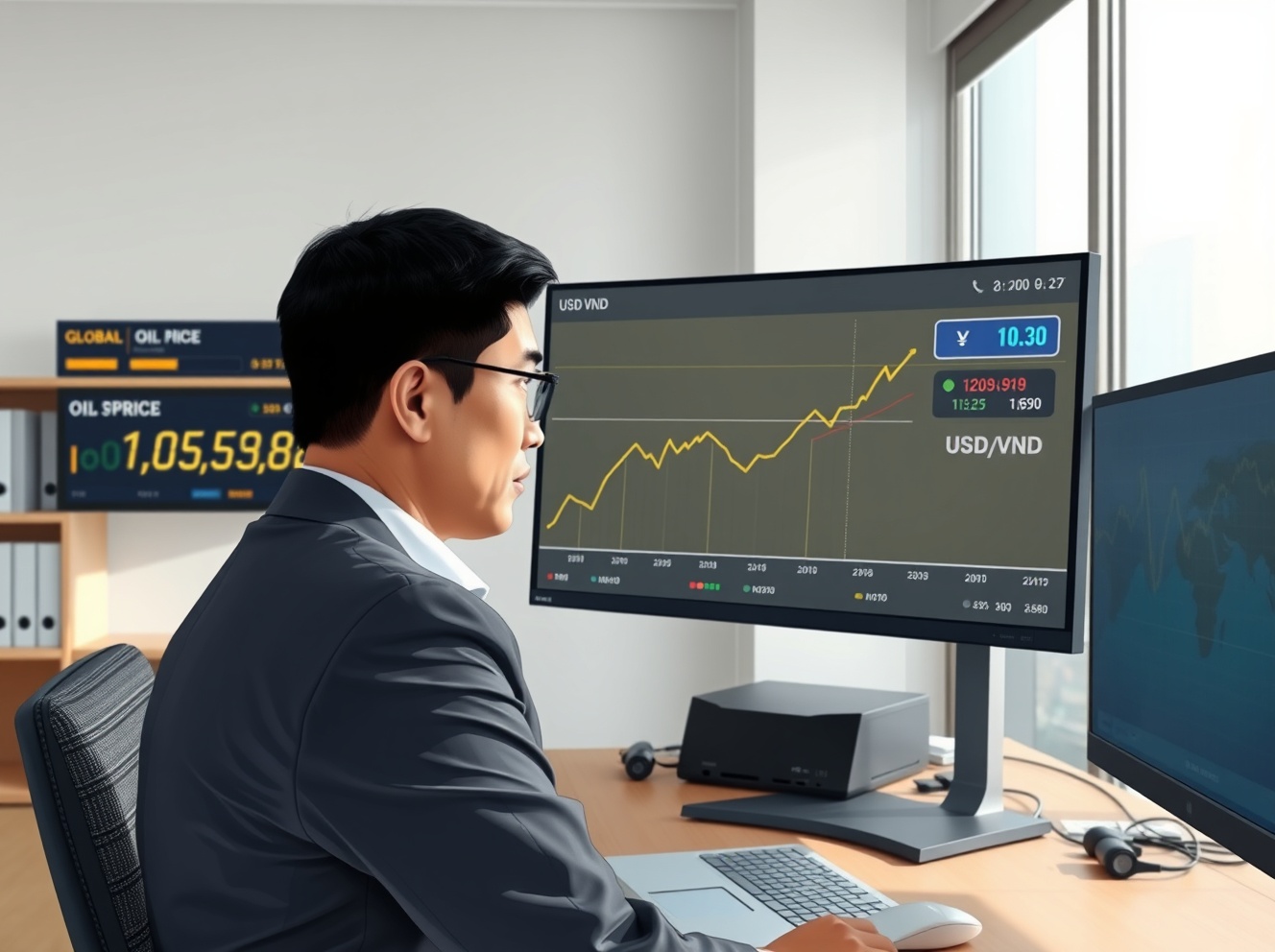
USD/VND Exchange Rate: Alarming Oil Shock Risks Weaker Vietnamese Dong – MUFG Analysis
HO CHI MINH CITY, VIETNAM – March 2025. The USD/VND exchange rate faces mounting pressure as analysts from Mitsubishi UFJ Financial Group (MUFG) warn that a potential oil price shock represents a significant risk to the stability of the Vietnamese Dong. This analysis comes amid global market volatility and shifting commodity dynamics, placing Vietnam’s import-dependent economy under a financial microscope. The central relationship between energy costs and currency valuation forms the core of this critical forex assessment.
USD/VND Exchange Rate Under Scrutiny Amid Oil Volatility
MUFG’s latest research highlights a direct transmission channel from global oil markets to Vietnam’s local currency. As a net importer of crude oil and refined petroleum products, Vietnam’s trade balance deteriorates rapidly when oil prices surge. Consequently, the nation’s demand for US dollars increases to pay for these essential energy imports. This heightened demand for USD exerts upward pressure on the USD/VND pair, potentially weakening the Dong. Historical data consistently shows this correlation during periods of energy market stress.
Furthermore, the State Bank of Vietnam (SBV) manages the Dong within a controlled trading band. A sustained oil shock could test the central bank’s capacity to defend this band without depleting foreign exchange reserves. Market participants closely monitor these reserve levels as a key indicator of currency stability. The SBV has previously intervened in the forex market to smooth volatility, but prolonged pressure presents a more complex challenge.
Economic Mechanics Linking Oil Prices and the Vietnamese Dong
The vulnerability stems from Vietnam’s economic structure. The country’s rapid industrialization and growing middle class have skyrocketed energy consumption. While domestic production exists, it fails to meet total demand. Therefore, every increase in the global Brent or WTI crude benchmark directly widens Vietnam’s trade deficit. A wider deficit typically translates to selling pressure on the national currency.
MUFG’s analysis incorporates several key metrics:
- Current Account Balance: A shift from surplus to deficit weakens fundamental support for the Dong.
- Inflationary Pressures: Higher fuel costs feed into transportation and production, potentially forcing the SBV to tighten monetary policy.
- Foreign Investor Sentiment: Currency instability may concern foreign direct investment (FDI), a cornerstone of Vietnam’s growth.
For context, the following table compares Vietnam’s key oil trade metrics with regional peers:
| Country | Net Oil Importer/Exporter | Estimated Forex Impact from 20% Oil Price Rise |
|---|---|---|
| Vietnam | Net Importer | High (Trade deficit widens, Dong selling pressure) |
| Malaysia | Net Exporter | Low/Positive (Trade surplus may improve, Ringgit support) |
| Thailand | Net Importer | Medium-High (Similar vulnerability, but larger reserve buffer) |
| Indonesia | Net Importer | High (Subsidies complicate fiscal and currency outlook) |
MUFG’s Expert Risk Assessment and Historical Precedents
MUFG economists draw parallels to previous episodes of currency stress. For instance, the 2022 surge in oil prices following geopolitical tensions contributed to sustained pressure on the Dong. The SBV responded with a combination of rate adjustments and market interventions. Currently, the bank holds a robust level of foreign reserves, estimated above $100 billion, which provides a substantial buffer. However, analysts caution that reserves are a finite tool.
The primary risk scenario involves a protracted period of high oil prices coupled with slowing global demand for Vietnam’s electronics and textile exports. This dual shock would simultaneously increase the import bill and reduce export revenue, creating a perfect storm for the current account. In such a scenario, the fundamental argument for a stronger Dong evaporates. Market forces would then align to test the SBV’s resolve and its trading band limits.
Broader Implications for Vietnam’s Financial Stability and Growth
A significantly weaker Dong carries consequences beyond the forex market. Firstly, it increases the local currency cost of servicing Vietnam’s considerable external debt, which is predominantly denominated in US dollars. Secondly, it imports inflation, complicating the central bank’s dual mandate of ensuring price stability and supporting economic growth. Thirdly, it can trigger capital outflows if investor confidence wanes.
Conversely, some export-oriented sectors may benefit from a more competitive exchange rate. However, MUFG notes that the net effect for Vietnam’s import-heavy economy is typically negative. The government’s fiscal position could also strain if it chooses to subsidize domestic fuel prices to cushion the blow for consumers and businesses, a policy used in the past.
Potential mitigating factors include:
- Accelerated development of domestic renewable energy sources.
- Diversification of import sources for energy.
- Strengthening regional currency swap agreements for added liquidity.
Conclusion
The USD/VND exchange rate remains highly sensitive to fluctuations in the global oil market, as underscored by MUFG’s analysis. While the State Bank of Vietnam possesses tools to manage volatility, a sustained oil price shock presents a clear and present risk to the Vietnamese Dong’s stability. Monitoring the interplay between energy costs, trade data, and central bank policy will be crucial for forecasting the Dong’s trajectory. The currency’s resilience will ultimately depend on the duration and magnitude of any oil market disruption and the effectiveness of the SBV’s strategic response.
FAQs
Q1: Why does an oil price shock specifically risk weakening the Vietnamese Dong?
Vietnam is a net importer of oil. Higher global oil prices increase the nation’s import bill, widening its trade deficit. This creates greater demand for US dollars to pay for oil imports, which puts selling pressure on the Dong (VND) in the USD/VND currency pair.
Q2: What is the State Bank of Vietnam (SBV) likely to do if the Dong weakens sharply?
The SBV typically intervenes in the foreign exchange market by selling US dollars from its reserves to buy Vietnamese Dong, thereby supporting its value. It might also adjust policy interest rates or tighten the trading band within which the Dong is allowed to fluctuate.
Q3: Are there any benefits for Vietnam if the Dong weakens?
A weaker Dong can make Vietnam’s exports, like textiles, electronics, and footwear, cheaper and more competitive on the global market. However, for an economy that imports more than it exports in value terms (including critical raw materials and machinery), the negative impacts of a weaker currency often outweigh these benefits.
Q4: How does MUFG’s analysis compare to other banks’ views on the USD/VND outlook?
MUFG’s warning aligns with a cautious consensus among many financial institutions. The specific focus on oil as a primary risk factor is widely acknowledged, though different analysts may assign varying weights to other factors like Federal Reserve policy, Vietnam’s GDP growth, or FDI flows.
Q5: What can businesses operating in Vietnam do to hedge against this currency risk?
Businesses can use financial instruments like forward contracts or options to lock in a specific USD/VND exchange rate for future transactions. They can also consider diversifying supply chains, sourcing more inputs locally where possible, and actively managing their foreign currency cash flows to reduce exposure.
This post USD/VND Exchange Rate: Alarming Oil Shock Risks Weaker Vietnamese Dong – MUFG Analysis first appeared on BitcoinWorld.
You May Also Like
Leonardo AI Unveils Comprehensive Image Editing Suite with Six Model Options

RBA warns high and rising risk of severe shock to world economy amid Iran war

