Cardano (ADA) and Ripple (XRP) are two of the most well-known cryptocurrencies, yet they serve vastly different purposes within the blockchain ecosystem. While Cardano focuses on decentralization,Cardano (ADA) and Ripple (XRP) are two of the most well-known cryptocurrencies, yet they serve vastly different purposes within the blockchain ecosystem. While Cardano focuses on decentralization,
Learn/Cryptocurrency Knowledge/Hot Concepts/Cardano (AD...ing Utility

Cardano (ADA) vs. Ripple (XRP): Decentralization vs. Banking Utility

Beginner
Mar 10, 2026MEXC
0m
XRP
XRP$1.3898-0.12%
Cardano
ADA$0.2496+1.13%
4
4$0.010558+2.93%
Cardano (ADA) and Ripple (XRP) are two of the most well-known cryptocurrencies, yet they serve vastly different purposes within the blockchain ecosystem. While Cardano focuses on decentralization, scalability, and sustainability, Ripple aims to revolutionize the traditional banking system with its banking utility and fast cross-border payment solutions. This article will dive deep into the differences between Cardano (ADA) and Ripple (XRP), exploring their fundamental differences, use cases, and how each project impacts the future of blockchain technology.


TL;DR


  • Cardano (ADA): Focuses on decentralization, scalability, and sustainability using its Ouroboros PoS protocol, with an emphasis on scientific rigor and peer-reviewed research.
  • Ripple (XRP): Aims to improve cross-border payments and serve the banking sector, with a centralization model and faster transaction speeds.
  • Decentralization vs. Banking Utility: Cardano is decentralized, while Ripple prioritizes working with banks and financial institutions.

Introduction


The world of cryptocurrencies is filled with a variety of projects, each with its own vision for the future. Among these, Cardano (ADA) and Ripple (XRP) stand out due to their distinct approaches to solving problems in the digital asset space.
Cardano is widely recognized for its focus on decentralization, creating a blockchain that supports smart contracts, dApps, and decentralized finance (DeFi). In contrast, Ripple (specifically XRP) focuses on providing a banking utility by enabling faster cross-border payments and remittances using its proprietary RippleNet network.
This article will explore the differences between Cardano and Ripple in terms of their vision, use cases, and the fundamental architectural decisions that shape both projects. We'll also address how Cardano’s approach to decentralization contrasts with Ripple’s focus on banking utility.
For more insights into Cardano's technological foundation and its Ouroboros protocol, see our article: What is Cardano (ADA)? The "Science" Blockchain.


1.What is Cardano (ADA)?


Cardano’s Vision: Decentralization and Scientific Rigor

Cardano (ADA) is a third-generation blockchain that aims to solve the scalability, security, and decentralization issues of earlier blockchain platforms like Bitcoin and Ethereum. Cardano achieves this through its Ouroboros Proof-of-Stake (PoS) consensus mechanism, which offers energy efficiency, security, and scalability while maintaining decentralization.
Cardano’s primary goal is to create a blockchain platform that is not only scalable but also sustainable and secure. Its development is based on peer-reviewed research, ensuring that scientific rigor guides the platform’s design and implementation. This commitment to academic research differentiates Cardano from other cryptocurrencies that do not prioritize methodological rigor.
For further insights into Cardano’s ecosystem, see our article: Ecosystem: Top Cardano DeFi & NFT Projects


Cardano's Key Features:


  • Ouroboros Protocol: Cardano’s PoS consensus that ensures decentralization, energy efficiency, and scalability.
  • Decentralization: Cardano allows users to stake ADA and participate in governance through its Voltaire era.
  • Interoperability: Cardano aims to create an ecosystem where blockchains can interoperate, fostering cross-chain communication and DeFi development.

2.What is Ripple (XRP)?


Ripple’s Vision: Banking Utility and Cross-Border Payments


Ripple (XRP) was created as a payment protocol to address inefficiencies in the traditional banking system. Ripple is focused on creating a fast, secure, and low-cost method for cross-border payments and remittances, enabling financial institutions to send money across borders more efficiently than traditional systems like SWIFT.

Ripple’s native cryptocurrency, XRP, plays an essential role in enabling liquidity for cross-border transactions. The platform has partnered with major financial institutions worldwide, enabling them to settle payments faster and at a fraction of the cost compared to traditional banking systems.


Ripple’s Key Features:


  • RippleNet: A global payment network used by financial institutions to settle transactions quickly and securely.
  • XRP Ledger: The XRP Ledger provides a decentralized, permissionless platform for sending and receiving XRP and other digital assets.
  • Banking Partnerships: Ripple has secured partnerships with over 300 financial institutions, focusing on enhancing cross-border payments.

3.Cardano vs. Ripple: Decentralization vs. Banking Utility


Decentralization: Cardano’s Focus on Distributed Control

One of the core principles behind Cardano is decentralization. Unlike Ripple, which has a more centralized structure, Cardano aims to build a network that is truly decentralized, where control is distributed among its global community of stake pool operators and users.

  • Cardano’s Decentralization: The Ouroboros PoS protocol and Voltaire governance system empower users to participate in decision-making processes through staking and voting, creating a more inclusive and decentralized network.
  • Ripple’s Centralization: Ripple has been criticized for being more centralized due to its corporate backing and the fact that the majority of XRP tokens are held by Ripple Labs. This has raised concerns about its potential to be controlled by a single entity.

For an in-depth understanding of Cardano’s decentralization through staking, refer to our article: What is Cardano (ADA)? The "Science" Blockchain.

Utility: Ripple’s Focus on Banking and Payments


Ripple focuses on providing banking utility through cross-border payments. By allowing banks and financial institutions to settle payments faster, Ripple solves one of the most significant pain points in the global financial system: slow and expensive cross-border transactions. XRP is the fuel behind the RippleNet network, providing liquidity for banks to settle payments in real time.

  • XRP's Role in Ripple: XRP serves as a bridge currency, allowing financial institutions to easily convert one currency into another without having to rely on traditional liquidity providers.

In contrast, Cardano is more focused on creating a decentralized ecosystem where smart contracts and DeFi can flourish, offering privacy solutions and governance mechanisms that Ripple’s centralized system cannot provide.

4.The Pros and Cons of ADA vs. XRP


Advantages of Cardano (ADA):


  • Decentralization: With Ouroboros PoS, Cardano is one of the most decentralized and secure platforms.
  • Sustainability: Cardano is built with an emphasis on long-term scalability and energy efficiency.
  • Ecosystem Growth: Cardano supports a wide array of dApps, DeFi, and NFT projects.

Disadvantages of Cardano (ADA):


  • Adoption: Cardano’s ecosystem is still growing, and its adoption among enterprise and institutional partners is not as widespread as Ripple’s.

Advantages of Ripple (XRP):


  • Banking Utility: Ripple is already partnered with major financial institutions and remittance services, enabling quicker and more cost-effective cross-border payments.
  • Speed and Scalability: XRP transactions are faster and more scalable than many other blockchain solutions.

Disadvantages of Ripple (XRP):


  • Centralization: Ripple’s governance structure has been criticized for being more centralized due to its corporate backing.
  • Regulatory Concerns: Ripple has faced legal challenges, particularly with the U.S. SEC, regarding whether XRP should be classified as a security.
For more insights into Cardano’s scalability and how it compares with other platforms, refer to our article: Cardano vs. Ethereum: The Gen 3 Blockchain.

5.FAQ Section


Q: Is Cardano more decentralized than Ripple? A: Yes, Cardano emphasizes decentralization and is designed to be a distributed ledger, while Ripple is more centralized due to its corporate backing and control over XRP tokens.

Q: What is the main difference between Cardano and Ripple? A: Cardano is focused on building a decentralized platform for dApps, smart contracts, and DeFi, while Ripple focuses on providing banking utility and enhancing cross-border payment solutions.

Q: Can Cardano (ADA) and Ripple (XRP) interact with each other? A: Currently, Cardano (ADA) and Ripple (XRP) operate on separate blockchain networks with different consensus mechanisms (PoS for Cardano and RPCA for Ripple). However, through interoperability solutions, future cross-chain communication could be possible.

Q: Which is better for long-term investment: Cardano (ADA) or Ripple (XRP)? A: Both projects have different goals, making them attractive for different types of investors. Cardano is focused on decentralization and building a long-term ecosystem for smart contracts and DeFi. Ripple is geared toward banks and cross-border payments. As with any investment, it's essential to conduct your own research and assess your risk tolerance before deciding.

6.Conclusion


In summary, Cardano (ADA) and Ripple (XRP) are two prominent blockchain projects that serve vastly different purposes. Cardano focuses on decentralization, scalability, and sustainability, providing an open platform for dApps and DeFi. In contrast, Ripple focuses on providing banking utility by enabling faster cross-border payments and remittances.

Cardano’s decentralization and focus on the long-term viability of its ecosystem make it an attractive choice for users looking for a blockchain with robust security and scalability. On the other hand, Ripple’s focus on banking utility and its established partnerships with major financial institutions position it as a leader in cross-border payments and financial services.

For more insights on Cardano’s scalability and features, check out our article: What is Cardano (ADA)? The "Science" Blockchain.


Disclaimer: This article is for educational purposes only and does not constitute financial advice. Cryptocurrency markets are volatile. Availability of products and services may vary by region.
Market Opportunity
XRP Logo
XRP Price(XRP)
$1.39
$1.39$1.39
+1.09%
USD
XRP (XRP) Live Price Chart

Popular Articles

View More
What is RLUSD? Complete Guide to Ripple’s Stablecoin – Price, XRP Relationship & Use Cases

What is RLUSD? Complete Guide to Ripple’s Stablecoin – Price, XRP Relationship & Use Cases

Interested in Ripple’s latest stablecoin that’s attracting attention across the crypto industry? This in-depth guide covers everything you need to know about RLUSD, from its definition and mechanics
Ethereum vs Bitcoin, Solana, Cardano, Polkadot, XRP, Litecoin, WETH : Complete Cryptocurrency Comparison Guide

Ethereum vs Bitcoin, Solana, Cardano, Polkadot, XRP, Litecoin, WETH : Complete Cryptocurrency Comparison Guide

Choosing between Ethereum and other cryptocurrencies can feel overwhelming. With Bitcoin hitting $119,469 and Ethereum trading at $4,273, investors are asking which digital asset offers the best
XLM vs XRP Explained: Two Coins, Two Very Different Missions

XLM vs XRP Explained: Two Coins, Two Very Different Missions

If you've been researching cross-border payment coins, you've probably run into XLM and XRP sitting side by side on every list. They share a founder, solve similar problems, and often move in price
What Is the XRP Mastercard? The Gemini Credit Card and Ripple Explained

What Is the XRP Mastercard? The Gemini Credit Card and Ripple Explained

Ripple and Mastercard are no longer just parallel players in the payments world — they're actively building together. This article breaks down the XRP and Mastercard partnership, explains the Gemini

Hot Crypto Updates

View More
XRP Price Prediction 2026: Is $5 Still on the Table — or Is the Rally Already Over?

XRP Price Prediction 2026: Is $5 Still on the Table — or Is the Rally Already Over?

XRP trades near $1.43 while Standard Chartered targets $2.80 and Bitwise models $4.94–$6.53. Here's what the data, institutions, and on-chain signals actually say about XRP's 2026 outlook. Key
XRP ETFs Just Broke Their Longest Win Streak of 2026 — Here's What the Numbers Really Mean

XRP ETFs Just Broke Their Longest Win Streak of 2026 — Here's What the Numbers Really Mean

Overview April 2026 is shaping up to be a defining month for XRP exchange-traded funds. After a shaky first quarter that culminated in March's historic first-ever monthly net outflow, XRP spot ETFs
BlackRock & Mastercard Are Betting on XRP Ledger — Here's What's Actually Happening

BlackRock & Mastercard Are Betting on XRP Ledger — Here's What's Actually Happening

Overview Something significant is unfolding in global finance. BlackRock, Mastercard, and Franklin Templeton — three of the most recognizable names in traditional finance — are actively exploring the

XRP (Ripple) Bullish Price Prediction

XRP (Ripple) Bullish Price Prediction

Introduction to Bullish XRP Outlook Optimistic investors often look to bullish price predictions for XRP (Ripple) to identify the coin's growth potential during favorable market cycles. A bullish

Trending News

View More
Expert Explains How XRP Will Go to $10,000

Expert Explains How XRP Will Go to $10,000

Most people measure crypto adoption by logos and headlines. Crypto Dyl News (@cryptodylnews) thinks that approach misses the point entirely. The X-based crypto
Ripple Takes Over Las Vegas With $XRP Ads Ahead of XRPLV26 Conference

Ripple Takes Over Las Vegas With $XRP Ads Ahead of XRPLV26 Conference

The post Ripple Takes Over Las Vegas With $XRP Ads Ahead of XRPLV26 Conference appeared first on Coinpedia Fintech News Ripple has launched a major $XRP advertising
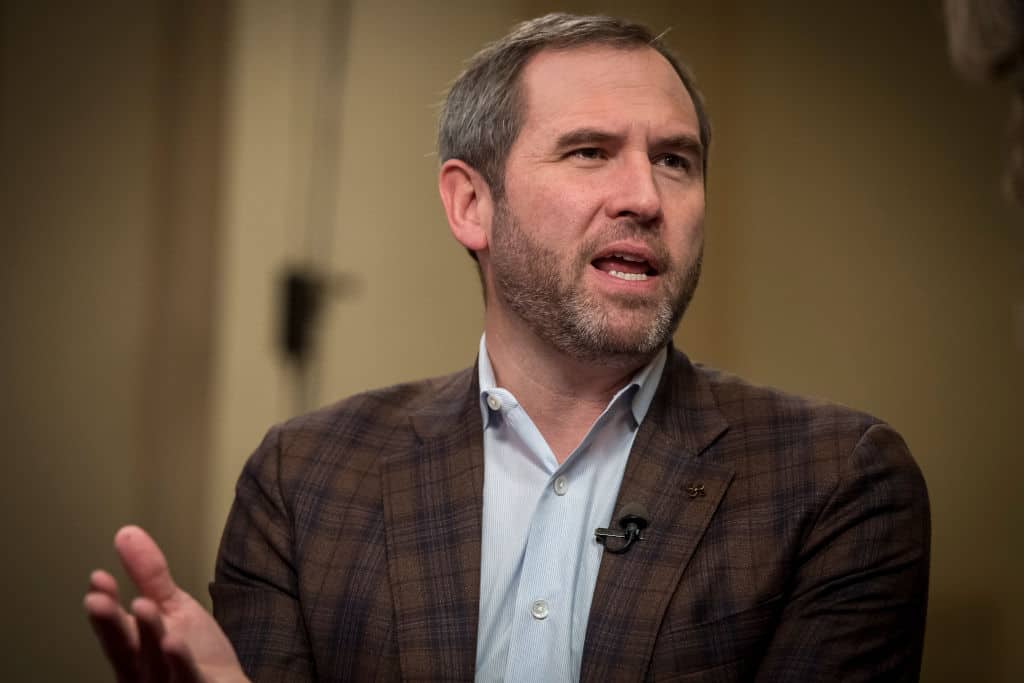
XRP Is Ripple’s North Star: CEO Garlinghouse Reiterates Company Vision

XRP Is Ripple’s North Star: CEO Garlinghouse Reiterates Company Vision

Ripple's CEO made this comment a month ago as well.

XRP Struggles Below Key Threshold: A Turning Point for Cryptocurrency?

XRP Struggles Below Key Threshold: A Turning Point for Cryptocurrency?

The post XRP Struggles Below Key Threshold: A Turning Point for Cryptocurrency? appeared on BitcoinEthereumNews.com. XRP has dipped below its prior critical support

Related Articles

View More
Is the Solana Network Reliable? Outage History and Upgrade Roadmap Explained

Is the Solana Network Reliable? Outage History and Upgrade Roadmap Explained

Solana has built a reputation for being one of the fastest and cheapest blockchain networks available today.But alongside that speed comes a controversial track record — one that includes repeated out
Solana TPS: Theoretical Maximum, Real-World Performance, and the Firedancer Upgrade

Solana TPS: Theoretical Maximum, Real-World Performance, and the Firedancer Upgrade

Solana is one of the fastest blockchains ever built — but the numbers you see in headlines don't always match what's happening on-chain right now.This article breaks down what Solana TPS actually mean
Solana Exchange Guide: CEX vs DEX, Trading Fees, and How to Buy SOL

Solana Exchange Guide: CEX vs DEX, Trading Fees, and How to Buy SOL

If you've been thinking about buying Solana (SOL), the first real decision you'll face isn't whether to invest — it's where to trade it.This guide walks you through what a Solana exchange actually is,

Why Did Solana Crash? Reasons, History, and What Comes Next

Why Did Solana Crash? Reasons, History, and What Comes Next

Solana has lived through some of the most dramatic price swings in crypto history — soaring from under $1 to nearly $295, then crashing hard, more than once.If you've ever wondered why SOL keeps falli

Sign Up on MEXC
Sign Up & Receive Up to 10,000 USDT Bonus