Markets faced a new wave of uncertainty this week as geopolitical risks returned, AI emerged as a growing macro force, and liquidity expectations continued to drive risk appetite. Crypto followed the broader market mood, highlighting its increasing connection to global financial conditions.
New Listings
• Cash Cat (CASHCAT): A meme token on Robinhood Chain riding the momentum of community-driven crypto narratives.
• Grove (GROVE): A DeFi protocol tapping into stablecoin yields and the growing RWA lending trend.
• AntFun (ANTFUN): This SocialFi wallet merges Web3 utilities with community-driven engagement.
[Get Early Access]{https://www.mexc.com/announcements/new-listings}
Market Snapshot
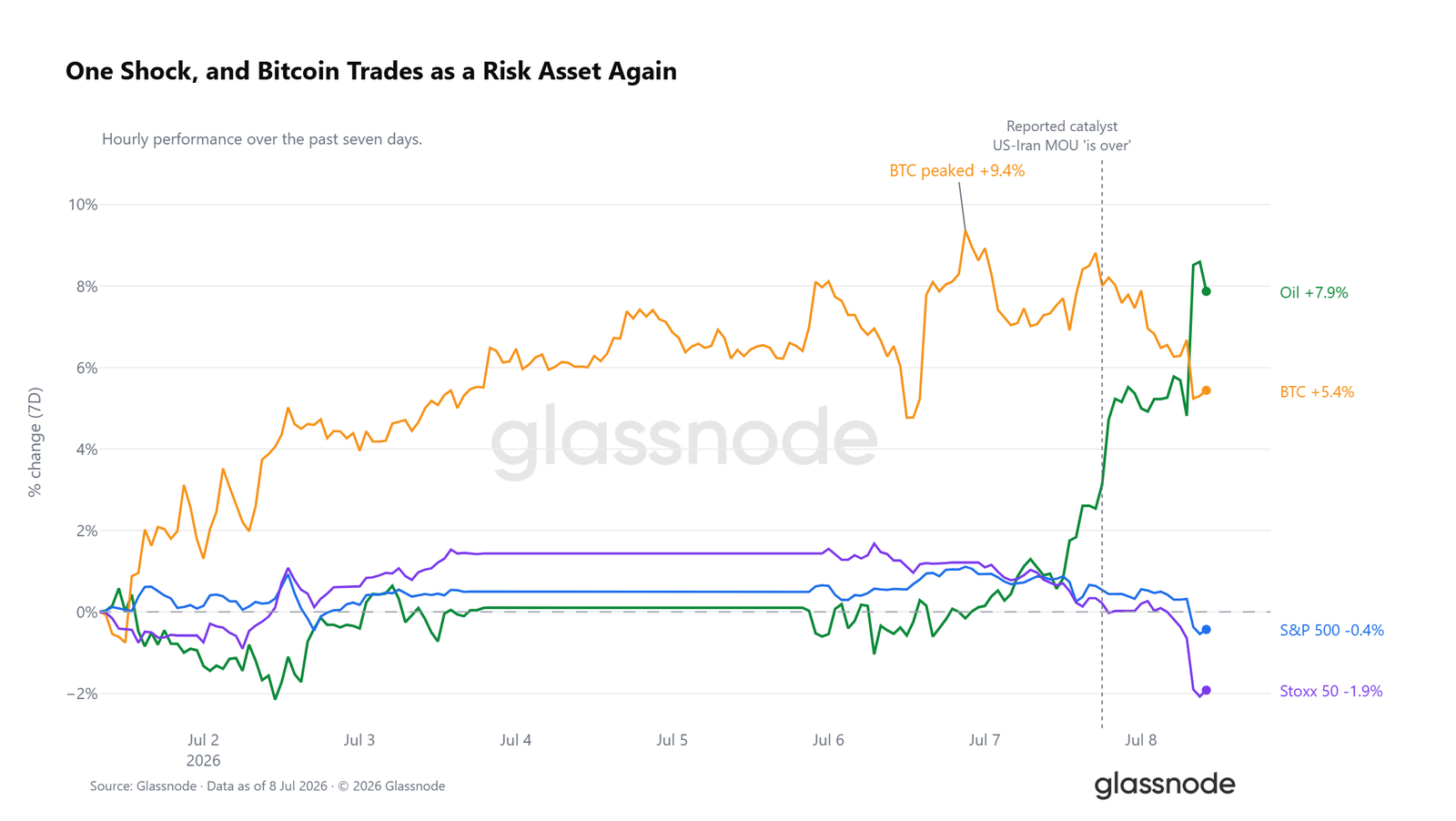
US-Iran tensions are back at the center of the market. Fresh U.S. strikes on Iranian targets and renewed concerns over shipping through the Strait of Hormuz sent oil prices sharply higher, while the U.S. dollar and Treasury yields also firmed as investors repriced inflation risk. The moves weren't dramatic in isolation, but together they reminded markets that geopolitics can still reshape the macro backdrop in a matter of hours. When oil, the dollar and yields move in the same direction, the effects rarely stay confined to the energy market.
Meanwhile, AI has quietly graduated from "tech trend" to full-blown macro theme. This time it's not just traders saying so, it's the Fed. The FOMC's minutes from its June 16–17 meeting, released earlier this week, put "ongoing investment in artificial intelligence" on the same list of market-moving forces as the Middle East conflict and incoming inflation data. Fed staff went further, noting that the AI buildout is actively boosting real investment spending on data centers, high-tech equipment, and software: a genuine contributor to GDP, not a side story. They also flagged that continued AI-driven demand had pushed their 2026–2027 inflation outlook higher, even as they trimmed their growth forecast slightly, and named the economic effects of AI investment and adoption as a specific source of uncertainty in their forecast.
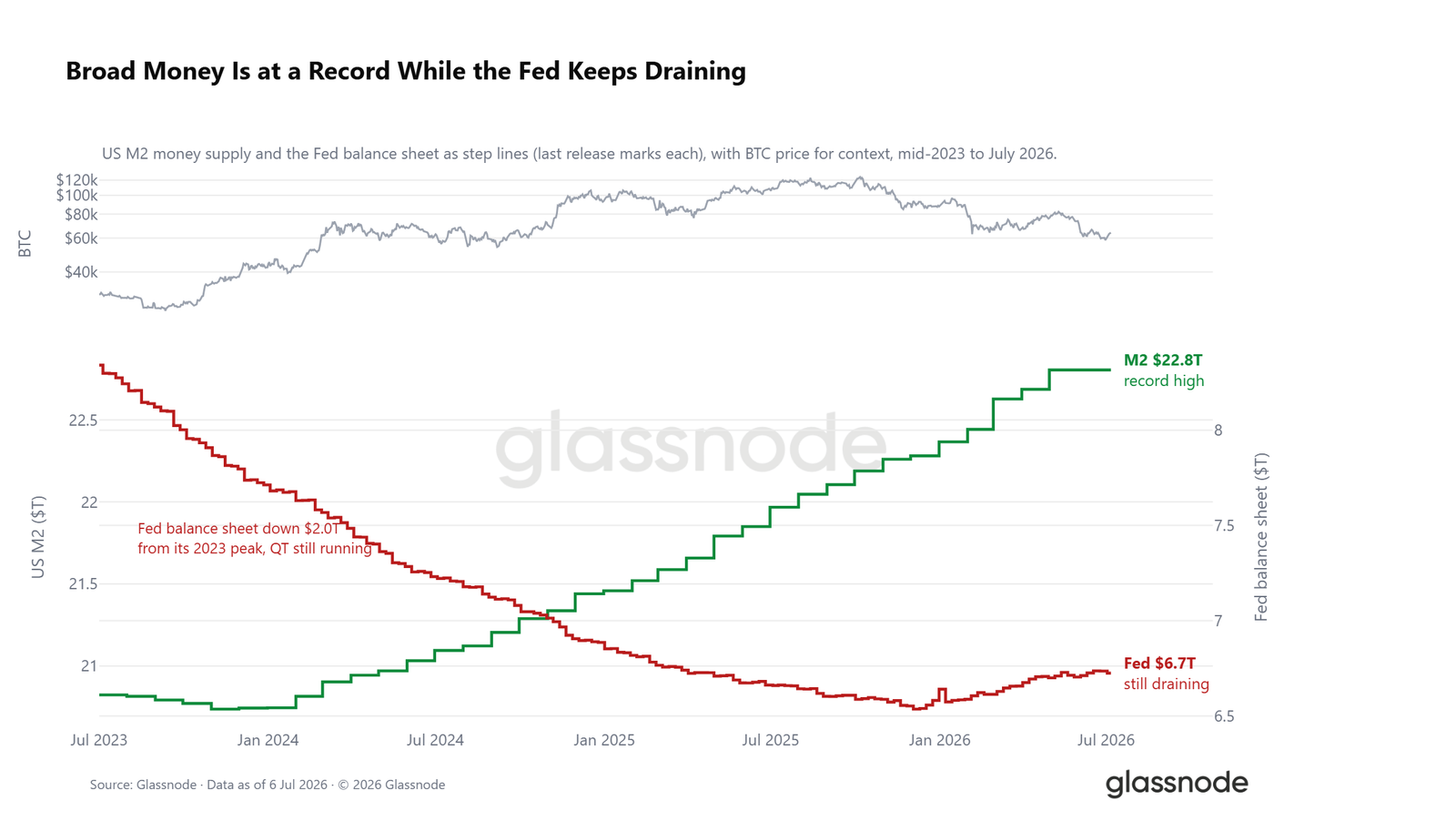
That leaves investors with an increasingly complicated liquidity picture. US M2 money supply continues to expand, and the Federal Reserve ended quantitative tightening last December, replacing balance-sheet runoff with reserve-management operations designed to keep banking reserves ample. On paper, those developments appear supportive for risk assets. In practice, markets remain divided over whether this represents a meaningful easing of financial conditions or simply technical balance-sheet management. That distinction matters because both crypto and high-growth technology stocks have become especially sensitive to changes in liquidity expectations.
Crypto's rally hit a wall this week. Bitcoin recovered part of June's decline in early July to above $61,000, but renewed geopolitical tensions quickly interrupted that rally, with Ether and Solana also moving lower. Unlike equities, crypto trades around the clock, making it one of the first major asset classes to absorb geopolitical and macro headlines before traditional markets reopen. The price action was another reminder that Bitcoin increasingly trades alongside broader risk assets rather than outside the financial system.
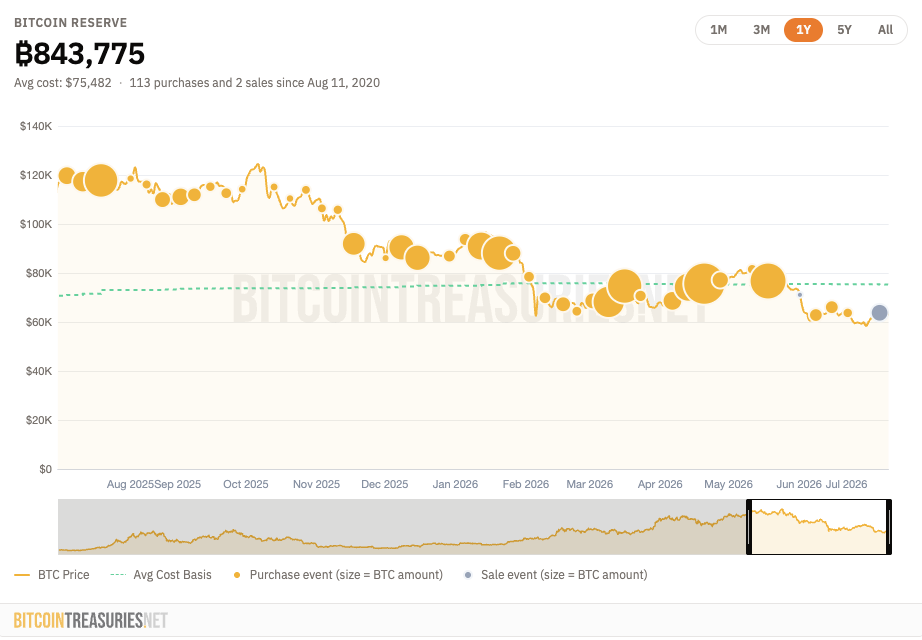
And Strategy is now unmistakably behaving like a seller. Regulatory filings show the company sold roughly 3,588 BTC in late June and early July to fund distributions on its preferred stock and replenish its U.S. dollar reserve. The sales are small relative to its overall holdings and do not change its long-term commitment to Bitcoin. They do, however, represent a notable shift: rather than treating Bitcoin as a one-way accumulation strategy, Strategy is now using its holdings as part of active treasury management. As financing costs remain elevated, balance-sheet discipline is becoming a bigger part of the Bitcoin story as well.
Unpopular Opinion: AI Isn't Over. The Chip Trade Might Be.
SK Hynix's Nasdaq debut suggests institutional appetite for AI infrastructure remains remarkably strong. The offering was more than seven times oversubscribed, reinforcing that investors still believe demand for AI memory and computing power has years of runway ahead. So why has Morgan Stanley's Mike Wilson become more cautious on semiconductor stocks?
His argument isn't that AI demand is slowing. It's that the market has become increasingly demanding of the companies supplying that demand. Semiconductor stocks have led much of this year's rally, driving analysts to repeatedly raise earnings forecasts and valuation multiples. As expectations climb, the hurdle for outperforming rises with them. Companies aren't just expected to deliver strong results. They're expected to deliver results that are even stronger than a market that already assumes exceptional growth.
Wilson argues that this changes where investors may find the next leg of returns. Instead of continuing to chase the companies building AI infrastructure, he sees greater opportunity in the hyperscalers deploying it. Microsoft, Amazon and Meta are collectively planning hundreds of billions of dollars in AI-related capital expenditure over the next several years. If the infrastructure build-out continues as expected, those companies—not just chipmakers—could become the next beneficiaries of the AI cycle.
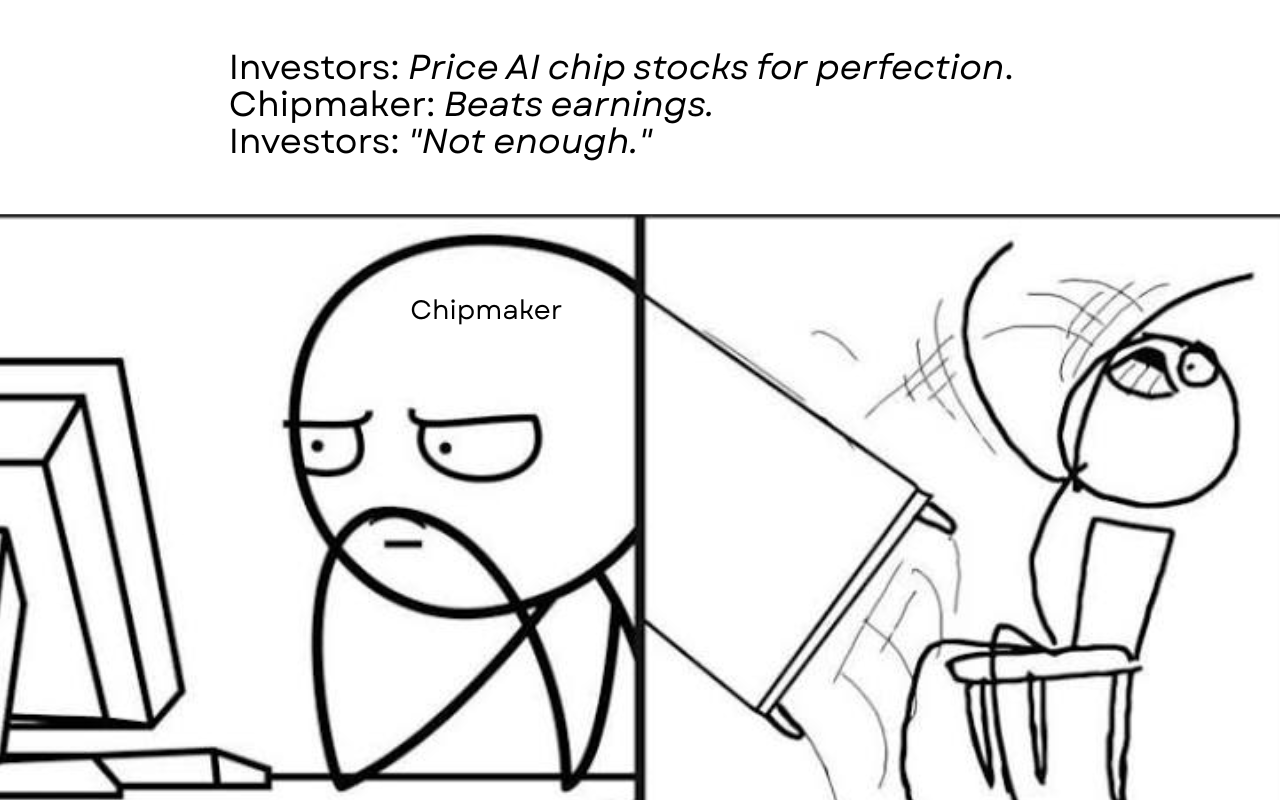
Samsung offered a timely illustration of that dynamic. The company projected record quarterly operating profit, beating analyst expectations as strong demand for AI memory chips continued to support pricing. Under most circumstances, those results would have been celebrated. Instead, Samsung shares fell sharply. The selloff wasn't a verdict on Samsung's business. It was a reminder that stock prices reflect expectations, not report cards. After a powerful rally over the past year, investors had already priced in an extraordinary quarter. A record profit was no longer enough. The market immediately shifted to a harder question: can results keep getting even better from here?
That's ultimately what Wilson is warning about. His call isn't that AI is over, or even that chipmakers are in trouble. It's that when expectations become the story, consensus often matters more than performance. The companies delivering the biggest earnings gains aren't always the ones delivering the biggest returns.
One Surprising Number

Lionel Messi has converted just four of his last eight World Cup penalties. Not long ago, a 50% conversion rate would have sounded impossible for one of football's greatest finishers. But that's the thing about expectations: once excellence becomes the norm, every miss feels bigger than it really is. Markets work the same way. This week, companies didn't disappoint because they performed poorly—they disappointed because investors had already expected perfection.
[Predict Market Moves]{https://prediction.mexc.com/prediction-markets/all}
Before You Go: Two Events to Watch
• Football Fiesta: The knockout stage is heating up, and so is MEXC's $500,000 Football Fiesta. Make football match predictions, build your trading streak, and unlock rewards from first-prediction bonuses to combo rewards.
• Don't Miss the AI Wave: AI is still the market's favorite argument. Open a RealStocks account, complete simple tasks, and share in the $1,000,000 SK Hynix reward pool.
[Join Football Fiesta]{https://www.mexc.com/campaigns/PredictionParty?utm_source=mexc&utm_medium=ann}
Stay Updated
Follow us on Telegram to be notified whenever a new digest drops.
[Follow MEXC on Telegram]{https://t.me/MEXC_OfficialAnnouncements}